USAID DEC
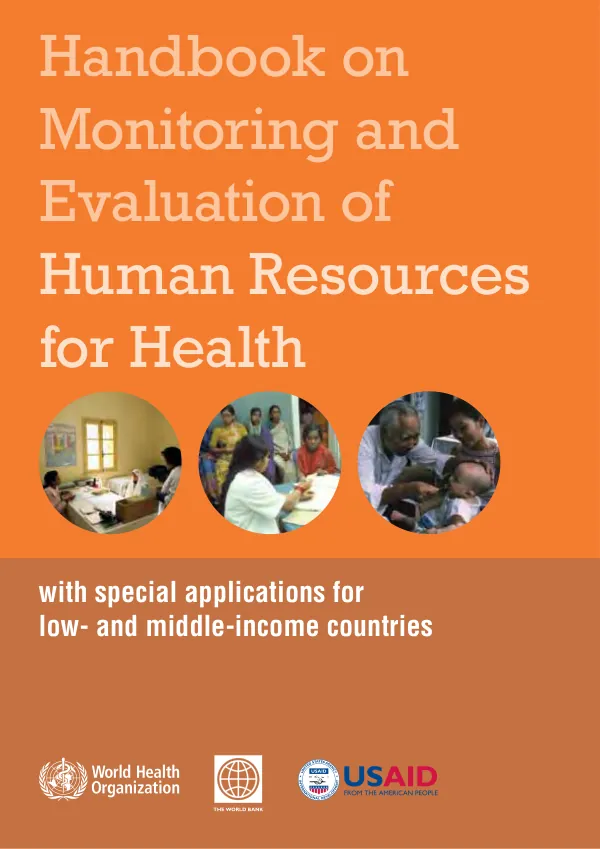
Handbook on monitoring and evaluation of human resources for health, with special applications for low- and middle-income countries
Sign inU.S. AGENCY FOR INTERNATIONAL DEVELOPMENT (USAID)
Handbook on monitoring and evaluation of human resources for health, with special applications for low- and middle-income countries
In many countries, shortage and maldistribution of trained health workers is one of the most important constraints to strengthening the delivery of primary and other health services, including curative, promotional, preventive and rehabilitative services.
Dal Poz, Mario R., ed.; Gupta, Neeru, ed. · 1970
Sign in to readA free account is required to download.
Abstract
At the same time, many countries currently lack the technical capacity to accurately monitor their own health workforce: data are often unreliable and out-of-date, common definitions and proven analytical tools are absent, skills and experience for assessing crucial policy issues are lacking. This handbook aims to strengthen that technical capacity. It offers health managers, researchers and policy makers a comprehensive and standard reference for monitoring and evaluating human resources for health. It brings together an analytical framework with strategy options for improving the health workforce information and evidence base, as well as country experiences to highlight approaches that have worked. The handbook is the result of a collaborative effort between the United States Agency for International Development (USAID), the World Bank and the World Health Organization (WHO). (Author abstract, modified)
Connected topics