USAID DEC
Heroin and Opiates: Information for Users, Families, and Friends
Opiates, a group of drugs used medically to relieve pain, have a high potential for abuse.
2013 · 2 pages
Sign in to readA free account is required to download.
Abstract
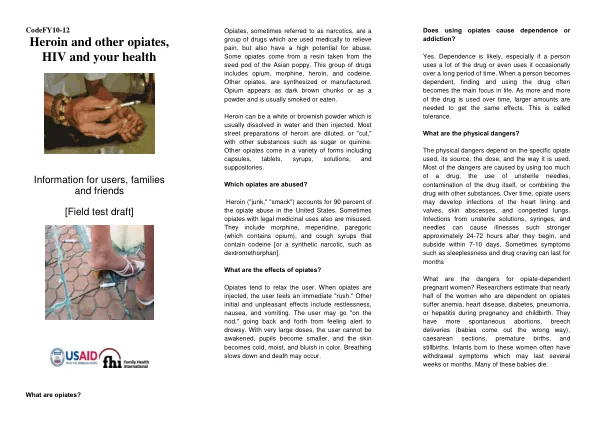
They can be derived from the Asian poppy or synthesized. Opium appears as dark brown or as a powder and is usually smoked or injected. Heroin, a white or brownish powder, is often diluted with other substances. Other opiates come in various forms, including capsules, tablets, syrups, solutions, and suppositories. Heroin accounts for 90% of opiate abuse, with other opiates with legal medicinal uses also being misused. These include morphine, meperidine, paregoric, and cough syrups containing codeine or synthetic narcotics. Opiates tend to relax users, but can cause dependence and addiction. Dependence is likely, especially with frequent or prolonged use, leading to tolerance and a need for larger doses. The physical dangers of opiates includes heart problems, skin infections, and skin infections caused by unsterile needles and contaminated solutions. Pregnant women who use opiates are at risk of miscarriage, premature delivery, and premature delivery complications. Infants born to addicted mothers may experience withdrawal symptoms, and the risk of sudden infant death syndrome (SIDS) is increased. Treatment options for opiate addiction include detoxification, therapeutic communities, outpatient drug programs, and methadone maintenance. Methadone, a manufactured drug, can help people lead productive lives while reducing the need for illegal drugs. Narcotic antagonists, such as naloxone, can block the "high" of opiates without causing physical addiction. Heroin use can lead to serious complications during pregnancy, including miscarriage and premature delivery. Pregnant women should not be detoxified from opiates due to the increased risk of spontaneous abortion and premature delivery. Treatment with methadone is advised, and infants born to mothers taking methadone can be treated in an antenatal care hospital or specialist drug service. Sharing equipment can spread HIV among heroin users, and using heroin may prevent the use of condoms, increasing the risk of HIV transmission. Antiretroviral drugs, such as efavirenz and nevirapine, can cause withdrawal symptoms and increase the risk of overdose and death.
Related documents