MINISTRY OF HEALTH
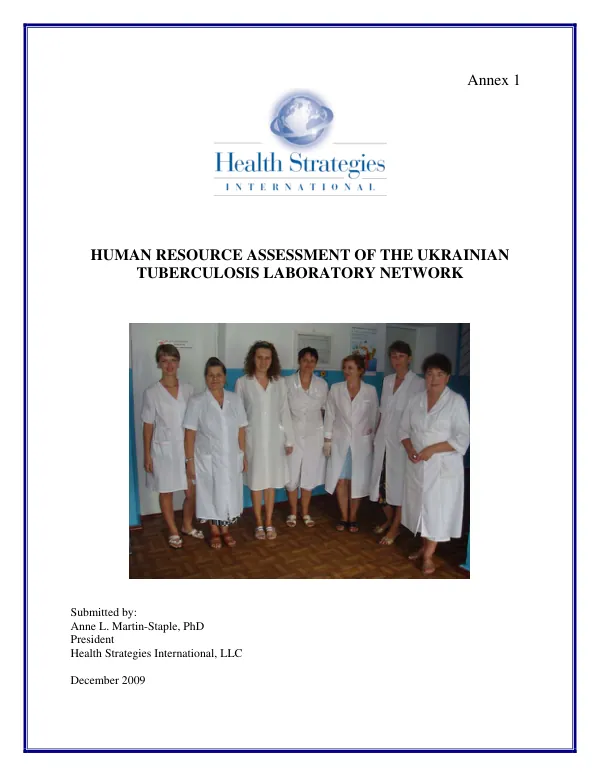
Human Resource Assessment of the Ukrainian Tuberculosis Laboratory Network
The Ukrainian Tuberculosis Laboratory Network faces significant human resource challenges.
2009 · 78 pages
Sign in to readA free account is required to download.
Abstract
The network's workforce is characterized by a high proportion of older staff, with nearly 40% of laboratory personnel at retirement age. This "graying" of the workforce is a concern, as it may lead to a shortage of experienced professionals in the future. The majority of workers have been employed for many years, with low staff turnover rates. However, retirement is the most common reason for resignation, followed by low salary levels and other job opportunities. The HR assessment identified a significant shortfall of almost 16,000 TB laboratory workers nationally, which would require an additional US$10 million per year to the civil service wage bill if filled. Within the 10 PATH pilot Oblasts, only 28% of required positions are currently filled. The shortfall is concentrated in the most important two cadres: doctors and laboratory technicians. The assessment did not confirm attrition as a significant factor related to the TB laboratory HR shortfall, with staff turnover rates being low. Several factors affect morale and job commitment among TB laboratory staff, including low compensation, heavy and increasing workloads, and adverse work conditions. Staff perceive that the availability of personal protection gear, particularly HEPA-filtered masks, is lower than the actual supply, adding to workers' safety concerns. While job security and financial incentives are the overriding factors for low attrition rates, other significant indicators associated with job longevity include altruistic motivation, enjoyment from working in a close team, and working in a constructive work environment. The National Reference Laboratory (NRL) is a critical component of the TB laboratory network, responsible for overseeing the TB laboratory system. However, the NRL is currently understaffed and not fully operational, with an estimated cost of US$139,000 annually to reach full HR capacity of 24 staff. When fully functional, the NRL will have responsibility for external quality control, monitoring and evaluation of the laboratory network, training, and analytical work. This national-level facility is envisioned to oversee the functioning of the laboratory network and coordinate efforts of all three laboratory levels. The TB laboratory network faces significant challenges, including a staffing shortfall, low morale, and adverse work conditions. Strengthening and empowering the NRL is crucial to ensuring a more efficient and productive TB laboratory network. Addressing the staffing shortfall, improving working conditions, and providing adequate compensation and incentives are essential to retaining and recruiting skilled professionals to the TB laboratory network.
Related documents