USAID. MISSION TO PHILIPPINES
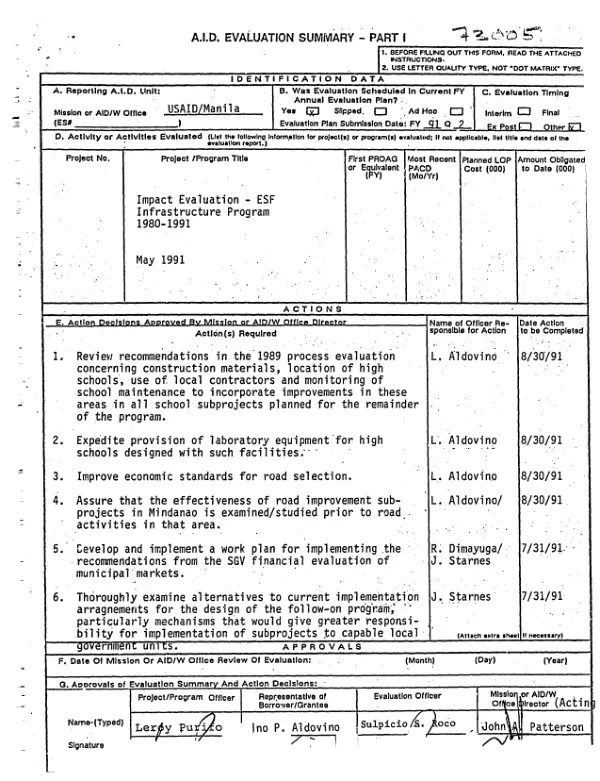
Impact evaluation - ESF infrastructure program, 1980-1991
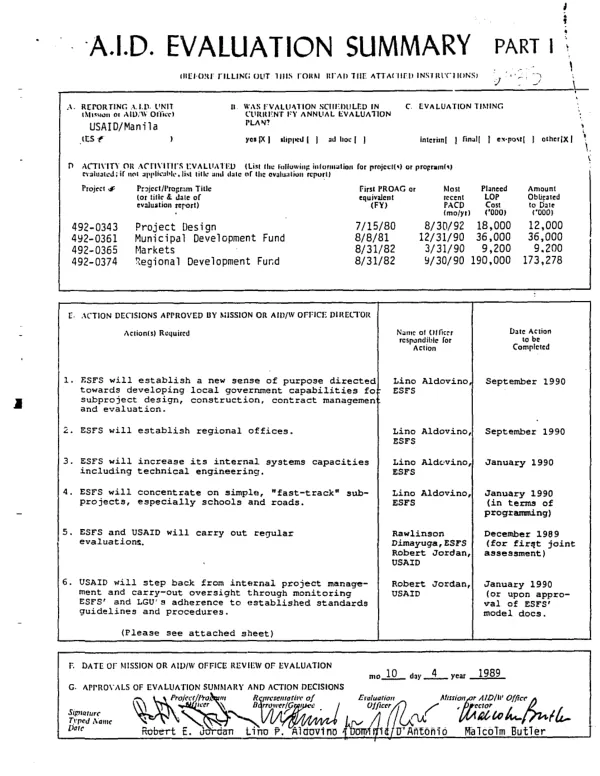
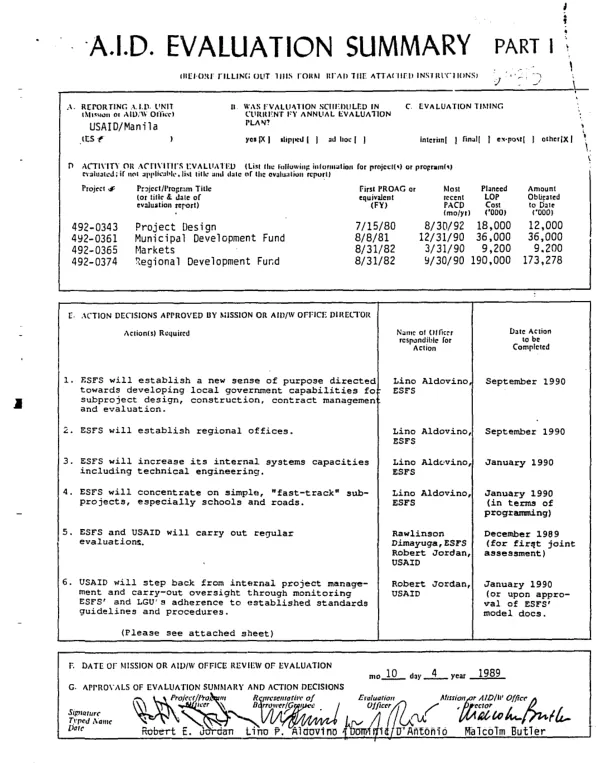
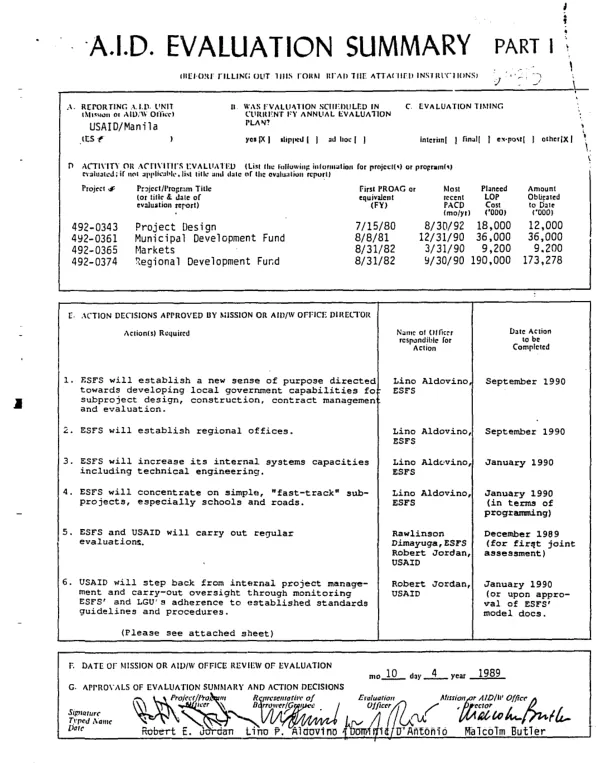
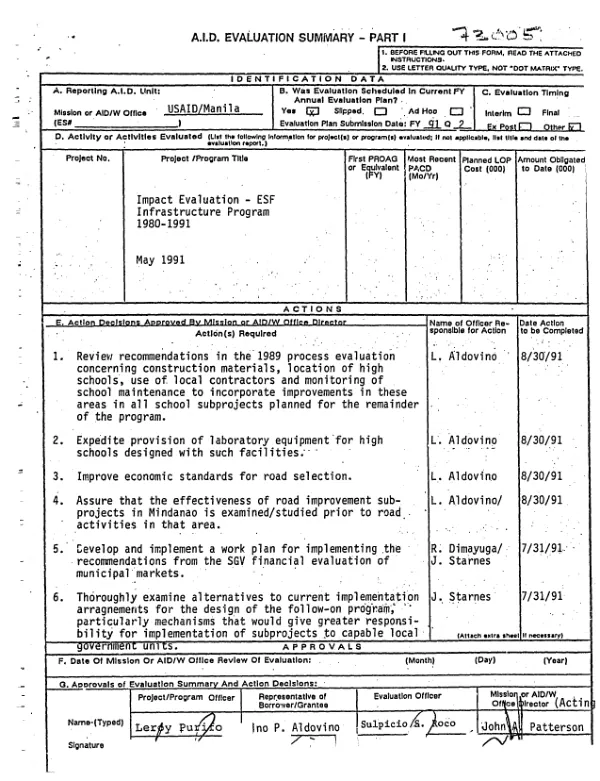
Summarizes evaluation (XD-ABD-082-A) of an Economic Support Fund program to support infrastructure development in the Philippines.
1991
Sign in to readA free account is required to download.
Abstract
The evaluation focused on the program"s social and economic impact and covered the period 1980-1991. In all the ESF program has provided some $200 million in funding for more than 3,400 small-scale capital development projects -- school buildings, road improvements, municipal markets, etc. These projects are distributed nationwide; however, Region III (Central Luzon) has received a major portion of the funds, reflecting the original intention of the program to improve social and economic conditions in the communities around the Clark and Subic U.S. military bases. Results have been largely beneficial and have produced important social and economic benefits for poorer segments of the population. School construction is clearly the most successful element, with more than 2,300 school buildings constructed. Road improvements (over 1,000 funded) have also been generally successful, despite a number of projects of highly questionable utility. Political interest has strongly affected the selection of projects, especially during the program"s early years. The component"s greatest impact appears to have been in provinces of middle economic status, with the lowest level of impact in Mindanao. Farmers and agricultural workers report that farm-to- market roads are more effective in increasing production under existing farming systems than in inducing major changes toward adoption of new systems. Most markets funded by the program are on unsound financial footing and suffer from poor maintenance practices, inadequate refuse disposal, and improper drainage systems. These problems indicate the municipalities" inability to operate facilities that should be profitable businesses. However, despite poor management, the markets have encouraged new business formation, generated employment, and improved the supply of consumer goods. The program"s largest disappointments have been the failed efforts to build slaughterhouses and solid waste facilities. Money spent on expanding regional and provincial hospitals could have had more impact if spent in other ways, except in the more developed regions, where hospitals play an important part in the health system. The program spans two Philippines administrations, and during its life positive steps have been taken to improve effectiveness and impact. This includes eliminating funding for small barangay roads, and improving standards for feasibility studies. However, the pace of implementation has dropped markedly since 1986, and operating costs are high. Alternatives to the current implementation arrangements should be explored before proceeding with any follow-on project. Particular attention should be given to the possibility of transferring management responsibility and funds directly to the development budgets of capable local governments for small infrastructure projects.