JOHN SNOW INTERNATIONAL
Improved Warehousing in Amhara Region
Improved Warehousing in Amhara Region Debre Birhan zone in Ethiopia has seen significant improvements in storage capacity, reduction of expired commodities, and accelerated identification and shipment of health commodities.
2009 · 2 pages
Sign in to readA free account is required to download.
Abstract
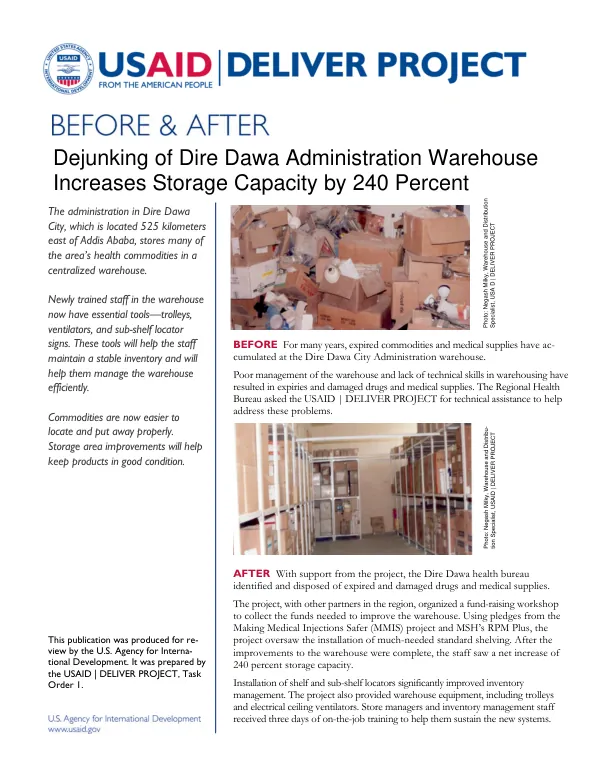
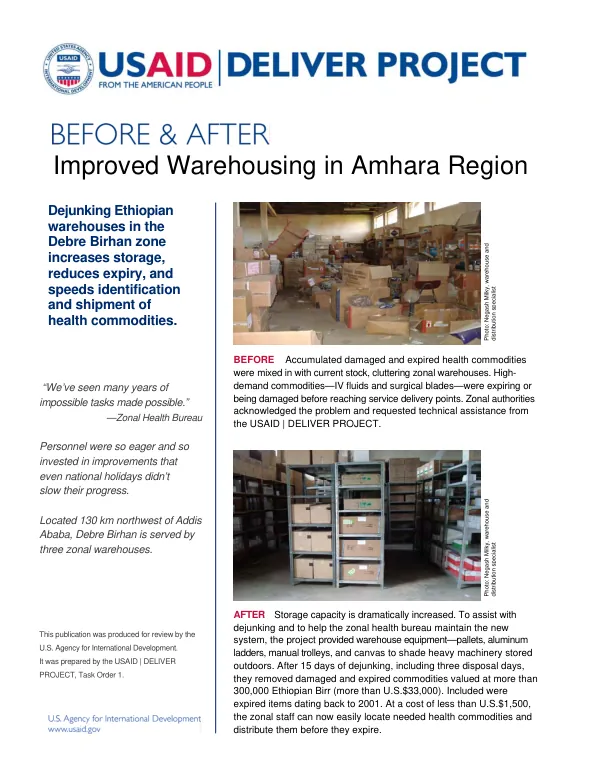
The zonal health bureau, in collaboration with the USAID | DELIVER PROJECT, implemented a comprehensive dejunking initiative to address the issue of accumulated damaged and expired health commodities. Prior to the intervention, high-demand commodities such as IV fluids and surgical blades were expiring or being damaged before reaching service delivery points. The zonal authorities requested technical assistance from the USAID | DELIVER PROJECT to address the problem. The project provided warehouse equipment, including pallets, aluminum ladders, manual trolleys, and canvas to shade heavy machinery stored outdoors. The zonal staff conducted a 15-day dejunking exercise, including three disposal days, which resulted in the removal of damaged and expired commodities valued at more than 300,000 Ethiopian Birr (approximately $33,000). The expired items dated back to 2001. The dejunking initiative has enabled the zonal staff to easily locate needed health commodities and distribute them before they expire. The cost of the equipment provided by the project was less than $1,500. The improved warehousing system has significantly enhanced the zonal health bureau's ability to manage health commodities effectively. The initiative has also improved the overall efficiency of the health system in Debre Birhan zone. The success of the dejunking initiative is attributed to the commitment and dedication of the zonal staff. Despite working on national holidays, the staff remained focused on completing the task. The initiative has set a positive precedent for other zonal health bureaus in the region to adopt similar practices. The improved warehousing system has the potential to improve health outcomes in the region by ensuring that essential health commodities are available and accessible to those who need them. The USAID | DELIVER PROJECT, implemented by John Snow, Inc., has played a crucial role in supporting the zonal health bureau in improving its warehousing capacity. The project's technical assistance and provision of equipment have enabled the zonal staff to manage health commodities more effectively. The success of the initiative is a testament to the importance of investing in health system strengthening initiatives that improve the availability and accessibility of essential health commodities.
Related documents