USAID DEC
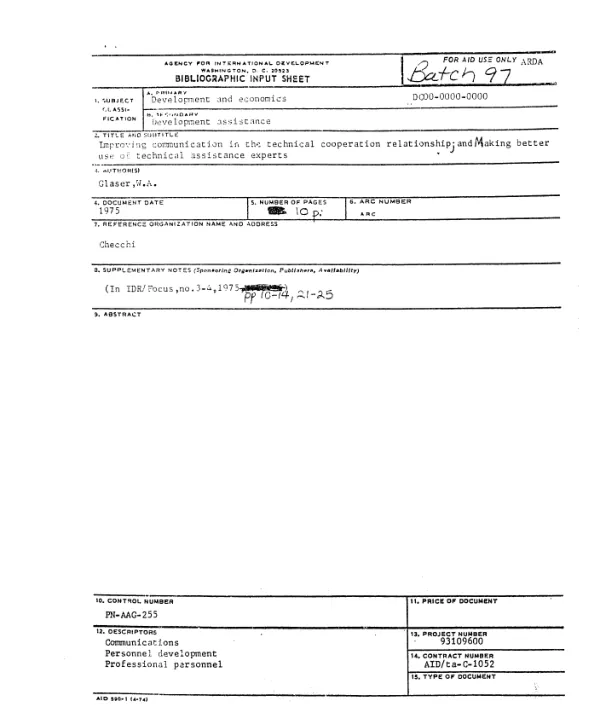
IMPROVING COMMUNICATION IN THE TECHNICAL COOPERATION RELATIONSHIP AND MAKING BETTER USE OF TECHNICAL ASSISTANCE EXPERTS
Sign inCHECCHI AND CO. CONSULTING, INC. (CCCI)
IMPROVING COMMUNICATION IN THE TECHNICAL COOPERATION RELATIONSHIP AND MAKING BETTER USE OF TECHNICAL ASSISTANCE EXPERTS
Both papers focus on the assignment and utilization of technical assistance experts in developing countries.
GLASSER, W. A. · 1970
Sign in to readA free account is required to download.
Abstract
Heretofore, insufficient emphasis has been placed on effective cross-cultural communication. Experts should receive adequate and country-specific briefing, preferably visiting the project as short-term consultants prior to long-term assignment. Techniques and biases specific to the donor country should be recognized and integrated into the planning and implementation of multidonor projects. Emphasis should be placed on developing an atmosphere of trust and collaboration in expert-counterpart and high level donor-host relationships. Continuous, frank communication with an understanding of each other"s roles, expectations and philosophies is preferable to periodic, formalized review. The author is a proponent of the establishment of a "career system" for technical assistance experts through measures designed to insure job security, provide adequate amenities and foster customary professional recognition. An expert"s contributions might be acknowledged and recorded in published form; length of service, income and benefits should be set by contract. Recurring short-term assignment of experts who can secure leave and integrate overseas assignments with their home organization work is proposed as a viable alternative to the usual full-time, long-term freelance expert. Such an arrangement should provide adequate job security and would also enhance project success by allowing an opportunity for constant feedback and new inputs from a well-stocked home base. It would also sustain a more compatible and less pressure-prone, professional relationship between experts and their counterparts.