TETRA TECH ARD, INC.
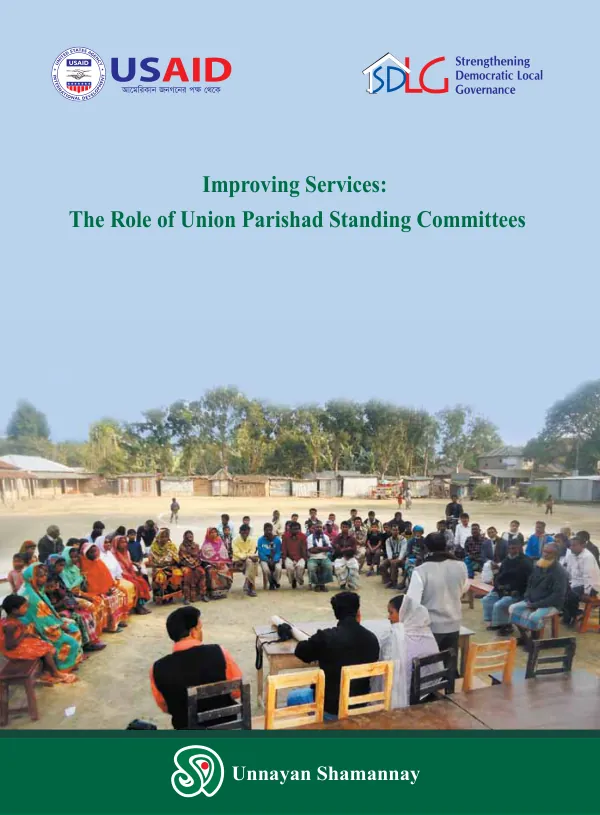
Improving Services: The Role of Union Parishad Standing Committees
In Bangladesh, the role of Union Parishad Standing Committees (SCs) is critical in improving service delivery for citizens.
2014 · 44 pages
Sign in to readA free account is required to download.
Abstract
The Standing Committees are one of three main institutional avenues for people's participation in local decision-making processes. However, the SCs have been largely ineffective due to inefficiency, lack of resources, political influences, and corruption. The Strengthening Democratic Local Governance (SDLG) project has attempted to activate the SCs and facilitate their engagement in their activities. The SDLG project has been conducting practical research that feeds into advocacy as well as into the modules and trainings. The project has also helped strengthen and build capacities of Local Government Units (LGUs) associations as effective advocacy units for policy reform. From 2011 to 2013, the SDLG project trained 600 local government councils in 450 unions, 50 municipalities, and 100 upazilas. It trained both local council officials and secretaries for all 600 councils and a group of citizens (Citizens in Governance, CiG) for 500 union and paurasabha (municipal) communities. The study aimed to analyze the current level of activities and functions of SCs, their involvement with local people, and the perceptions of local community regarding their performance. The study also presented a policy framework on better functioning of standing committees of UPs to strengthen local governance. The study team interviewed a variety of stakeholders involved in some selected SCs, including UP chairmen and secretaries, president and members of relevant SCs, relevant government officials at both upazila and union level, and partner non-government organizations (NGOs) working at other USAID-funded sector projects. The study found that the role and importance of SCs of the LGUs were not properly understood by the elected representatives and citizens in the past. However, SDLG intervention in some selected regions attempted to activate the SCs and facilitate their engagement in their activities. The SCs can intervene to improve services at the local level by resolving problems in service delivery identified through monitoring or reporting issues to the UP monthly. The study also found that the SCs have the potential to play a critical role in ensuring improved service delivery for citizens, but their effectiveness depends on the level of awareness and participation of citizens and the support of local government officials. The study identified several good practices and the process of institutionalization of policies after activation of selected standing committees (SCs) at the union level. The study team collected information from upazila and union level stakeholders who are directly related to these SCs. Focus group discussions (FGDs) and key informant interviews (KIIs) were conducted to identify examples of SC intervention and its impacts. The study also found that the interaction between different committees formed under directives of national government ministries and the local government standing committees is critical in ensuring effective service delivery. The study recommended that the government should provide necessary support and resources to the SCs to enable them to play a critical role in ensuring improved service delivery for citizens. The study also recommended that the government should establish a clear policy framework for the functioning of SCs and provide necessary training and capacity building to the SC members. The study also recommended that the government should ensure the participation of citizens in the decision-making process of the SCs and provide necessary support to the SCs to enable them to resolve problems in service delivery identified through monitoring.
Related documents