 1991
1991USAID DEC
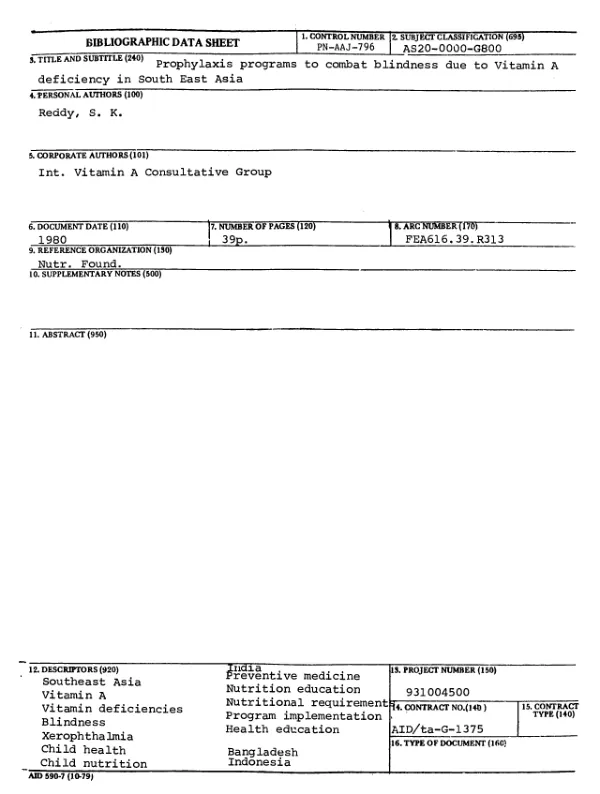
Indonesia : nutritional blindness prevention project, characterization of vitamin A deficiency and xerophthalmia and the design of effective intervention program
Sign inHELEN KELLER WORLDWIDE. HELEN KELLER INTERNATIONAL (HKI)
Evaluates activities in Indonesia in a project to investigate the causes and prevention of nutritional blindness/xerophthalmia.
1980
Abstract
Contractor"s final report covers the period 9/76-7/81; no methodology is given. Four studies were undertaken. Study I was a 2-year prospective study of the symptoms and responsiveness to vitamin A treatment of 5,000 rural pre-schoolers in West Java. Studies II and III were prospective, clinical, biochemical, bacteriologic, and histopathologic studies of children with corneal and non-corneal xerophthalmia, respectively. Study IV was a national survey of the prevalence of nutritional blindness. The project found xerophthalmia to be a serious problem in Indonesia with 60,000 new juvenile cases occurring annually. Mortality, especially among untreated cases, is high. Vitamin A deficiency was the root cause of all nutritional blindness encountered. Xerophthalmics ate fewer green leafy vegetables (glv"s -- a source of provitamin A) and consumed less edible fat, essential to absorption and utilization of vitamin and provitamin A. Oral administration of 200,000 IU of oil-miscible vitamin A can prevent xerophthalmia when taken every 4-6 months and can cure it when given twice within 2 weeks after diagnosis. The disease was often precipitated by measles; corneal involvement was frequently accompanied by protein-energy malnutrition. Bitot"s spots indicate active vitamin A deficiency, but severe corneal xerophthalmia can occur in the absence of obvious conjunctival changes.
Connected topics
Classification