USAID DEC
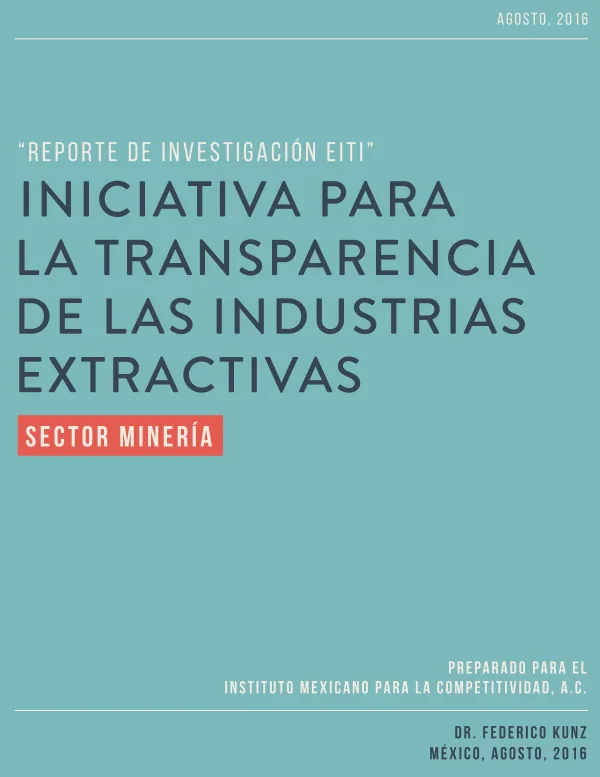
Iniciativa para la Transparencia de las Industrias Extractivas: Sector Minería
The Mexican mining industry is subject to various regulations and laws that govern its operations.
2016 · 74 pages
Sign in to readA free account is required to download.
Abstract
The industry is considered a federal competence, with the Secretariat of Economy being the primary authority responsible for its regulation and promotion. The Secretariat is supported by two subordinate general directorates: the Directorate General of Mining Development and the Directorate General of Mining Regulation. The mining industry in Mexico is characterized by a significant number of laws, regulations, and official norms that govern various aspects of its operations, including environmental protection, labor safety, and fiscal matters. The mining sector is also subject to the Ley Minera, which regulates the granting of mining concessions and the rights and obligations of their holders. The Directorate General of Mining Regulation is responsible for managing information related to mining concessions and other figures provided for in the law. The mining sector in Mexico is composed of various actors, including public and private entities, as well as civil society organizations. The Coordinación General de Minería of the Secretariat of Economy is responsible for applying mining regulations and promoting the development of the industry. The Servicio Geológico Mexicano, a decentralized organism, is responsible for developing geological knowledge and conducting exploration activities. The Fideicomiso de Fomento Minero, a public entity, is responsible for financing, particularly small and medium-sized mining. The mining industry in Mexico is subject to various taxes and fees, including the Impuesto Sobre la Renta and the Impuesto al Valor Agregado. The sector is also subject to specific rights provided for in the federal law, including those related to the holding of mining concessions, income from extractive activities, and sales of gold and silver. At the state and municipal levels, mining companies are required to contribute to the public treasury, but they cannot be taxed specifically for their mining activities. The main beneficiaries of the mining industry in Mexico are individuals who exploit their mines, typically on a small scale, and the shareholders or partners of mining companies. The largest mining groups are of Mexican capital and are listed on the Mexican Stock Exchange, while foreign capital is concentrated in one of the major mining companies, smaller companies, and exploration companies. The exploration of minerals in Mexico has been carried out on a detailed level in approximately 30% of the country's territory, with a significant participation of foreign capital, mainly from Canadian companies listed on the Toronto Stock Exchange, as well as American, Australian, and other companies. The information related to mineral exploration is managed primarily by the Directorate General of Mining Development and the Servicio Geológico Mexicano. The mining industry in Mexico has been of vital importance throughout its history, serving as the primary factor of colonization, the main industry, and a source of foreign exchange and employment. The sector continues to play a significant role in the country's economy, serving as a pole of regional development and the first link in many manufacturing product chains. The majority of the mining sector's fiscal contribution goes to the federal government, with the exception of a certain percentage of a new mining right that is allocated to specific projects at the municipal level. The rest of the revenue is deposited into the Treasury of the Federation, along with other government income, to cover the Federal Public Expenditure Budget, a portion of which is distributed to the federal entities in accordance with applicable legislation. There is no information that can be linked to the origin of mining income with specific destinations of public expenditure.
Related documents