USAID. MISSION TO PERU
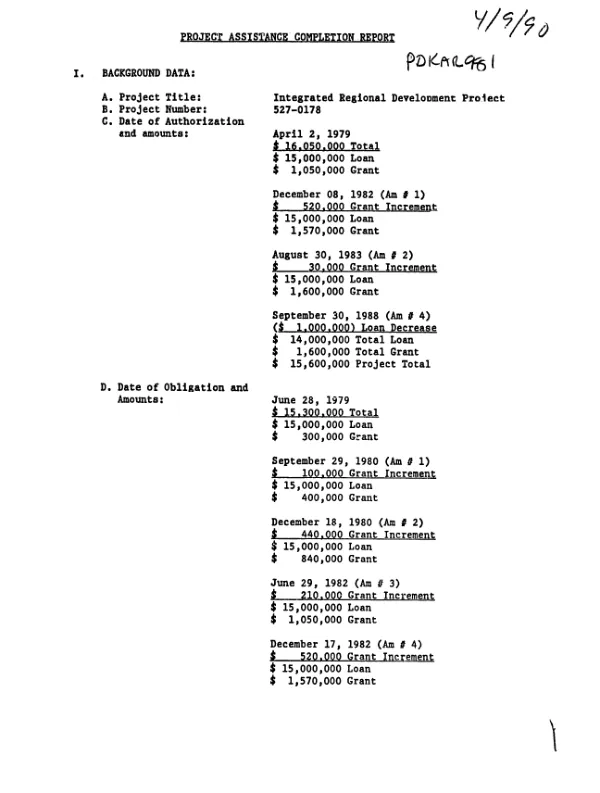
Integrated regional development : final evaluation
Evaluates pilot project in Peru"s Junin and Cajamarca departments to strengthen decentralized regional planning and implement market town/rural area subprojects.
Chetwynd, Eric, Jr.; Hatch, John · 1985
Sign in to readA free account is required to download.
Abstract
Final special evaluation covers the period 1979-6/85 and is based on site visits and interviews with involved personnel and beneficiaries. Despite many obstacles, the project made substantial, albeit uneven, progress toward its objectives. Regional planning, focused on urban-rural linkages, was improved through the establishment of PRODERINS (departmental organizations created to implement the project, which became models of efficiency and dedication). Although practical applications were less than desired, public works projects implemented by the PRODERINS - many with self-help labor - have increased employment and income opportunities (e.g., roads from market towns to farm areas improved marketing opportunities for farmers and created commerce and food processing jobs in the towns). However, the process of integrating the PRODERINS into Departmental Development Corporations (CORDES), ongoing since 1983, is proving a delicate business at best. Following, also in 1983, establishment of the National Institute for Municipal Development and of a project TA unit aimed at strengthening CORDES" ability to assist municipalities through training and TA, reasonable progress has been made in involving municipalities in Peruvian decentralization. The Key Market Town Development Fund, intended for a variety of market town investments, was implemented inflexibly by the Housing Bank and used only to fund electrification and one slaughterhouse/trout processing facility. The project generated a wealth of information on decentralization in Peru, e.g.: despite promising new legislative empowerment to municipalities, Peru"s budgetary and administrative processes are antithetical to decentralization; trainable human resources for development are available at the departmental level; strengthening market town/farm area linkages is a viable development concept; municipalities are a critical potential source of capital, intellect, and labor for development; and local participation is vastly underutilized in rural areas. There is a strong rationale for continued A.I.D. assistance to decentralized development in Peru. Recommendations for closing out the project and beginning a new decentralization program are provided.
Related documents