USAID DEC
Journey of Sustainable Cinnamon
Cinnamon is one of the most widely imported spices in the world, second only to black pepper and capsicum.
2021 · 3 pages
Sign in to readA free account is required to download.
Abstract
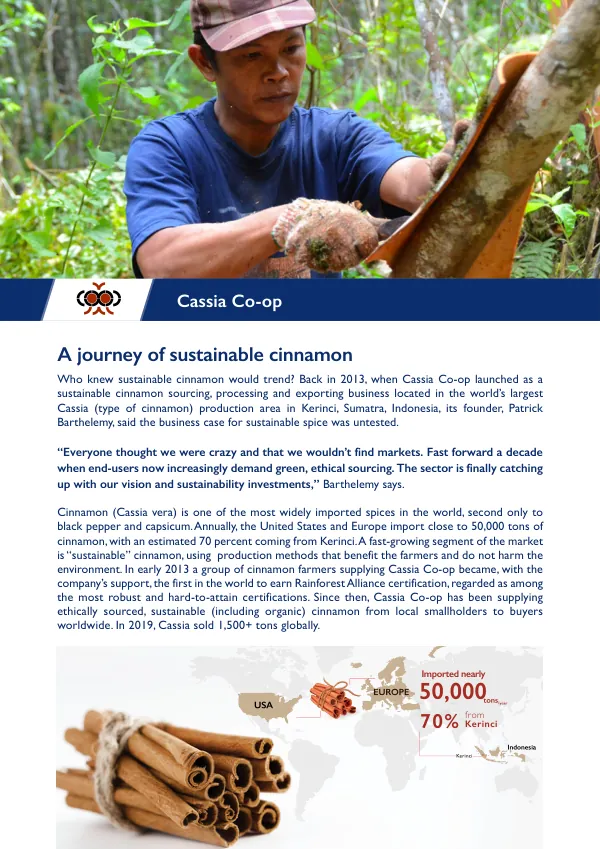
Annually, the United States and Europe import close to 50,000 tons of cinnamon, with an estimated 70 percent coming from Kerinci, Indonesia. The global cinnamon market size was valued at $760 million in 2018, with Cassia cinnamon projected to be the fastest growing cinnamon submarket. Sustainable sourcing of spice globally has more than tripled in the last four years, from some 13,000 tons sold annually to an estimated at least 40,000 tons in 2020. The average cinnamon export price stood at around $4 per ton in 2019, surging by 17 percent against the previous year, for an estimated global cassia (broken /powder /sticks) export market of $300 million. Growing consumer awareness regarding healthy foods and ingredients has driven cinnamon sales forward, with cinnamon's anti-oxidant, anti-inflammatory properties making it a key ingredient in various products. Cinnamon is also a key source of the nutrients and minerals traditionally used to treat coughs, arthritis, and sore throats. In 2018, North America dominated the global cinnamon market, accounting for more than one-third of overall revenue, and the spice's scope continues to expand. It is forecasted to be the fastest growing segment of the spice market, as compared to other cinnamon types, well into 2025. The estimated compound annual growth rate (CAGR) until 2025 is 14.2%. Cassia Co-op, a sustainable cinnamon sourcing, processing, and exporting business located in Kerinci, Sumatra, Indonesia, has been a key player in the sustainable cinnamon market. The company has been supplying ethically sourced, sustainable (including organic) cinnamon from local smallholders to buyers worldwide since 2013. In 2019, Cassia sold 1,500+ tons globally. The company's social and environmental investments include paying smallholder producers above-market wages, encouraging farmers to adopt Good Agriculture Practices (GAP) through training, and providing no-cost agriculture inputs and certification support. Cassia Co-op's commitment to sustainability extends to its production practices, including crop diversification (intercropping) and vertical integration. The company supports farmers in growing secondary crops such as patchouli, which enables the company to maintain regular contact with farmers and ensure reliable supply. Cassia Co-op is also expanding the production, harvesting, and distilling of patchouli into an essential oil as part of its intercropping strategy and diversification plan. The company's efforts have been estimated to offset approximately 300,000 metric tons of CO2e over a 15-year period, based on current and projected export volumes and nursery production levels.
Related documents