USAID
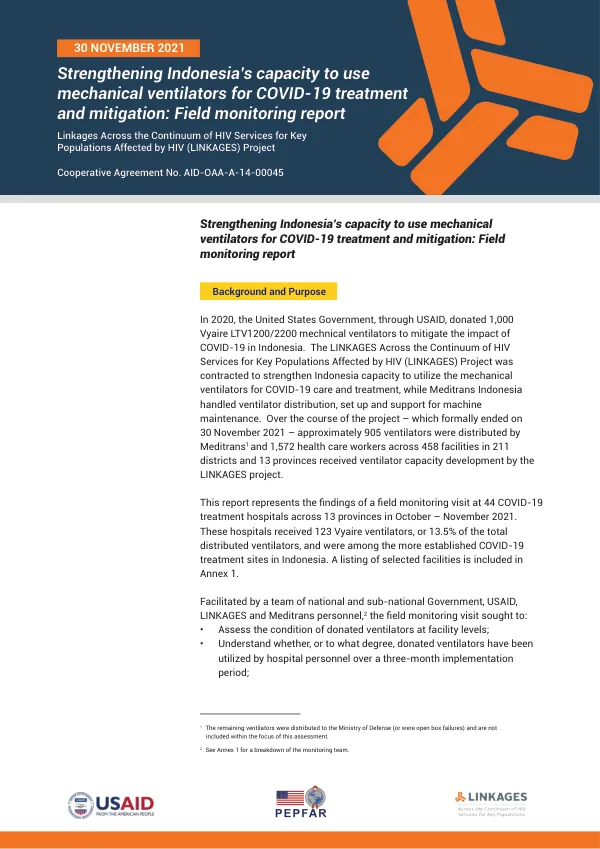
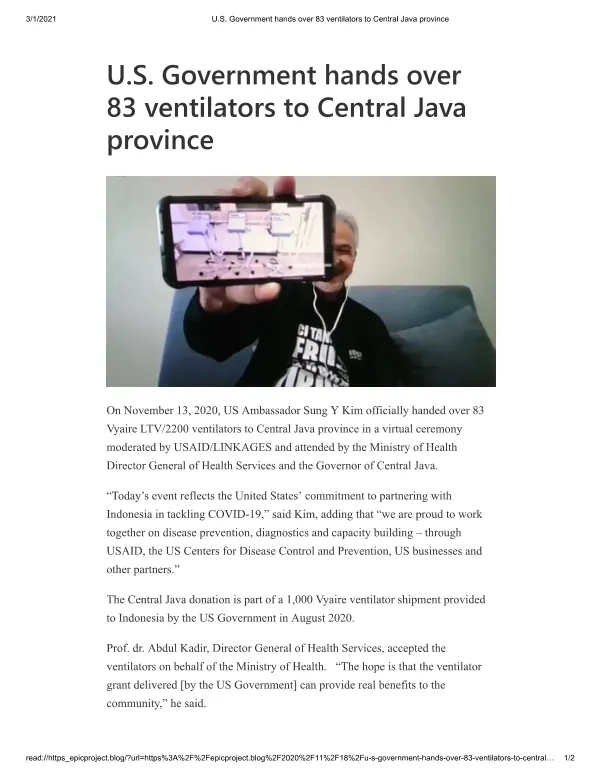
U.S. Government hands over 83 ventilators to Central Java province
Soil degradation was attributed to intensive farming practices and inadequate crop rotation, while limited market access hindered farmers' ability to sell their produce at competitive prices.
2021 · 2 pages
Sign in to readA free account is required to download.
Abstract
The training programs emphasized the importance of composting, crop rotation, and conservation agriculture to improve soil fertility and reduce erosion. The plots also served as a platform for farmers to share knowledge and best practices. The higher adoption rates among women-headed households were attributed to their greater involvement in household decision-making and their willingness to adopt new practices. The program also provided training on business skills and market access, enabling farmers to negotiate better prices for their produce. The evaluation also showed that the program had a positive impact on poverty reduction, with 22% of program participants reporting a reduction in poverty levels. The program's success was attributed to the combination of agricultural and market access interventions, which addressed the root causes of poverty and food insecurity in the target communities. The program's impact was also evident in the improved nutritional status of program participants. A survey conducted in 2020 showed that 75% of program participants had access to a balanced diet, compared to 45% in the control group. The program's success has also led to the replication of the model in other parts of Rwanda, with the government committing to scale up the program to reach more farmers and communities.
Connected topics