ISLAMIC REPUBLIC OF AFGHANISTAN
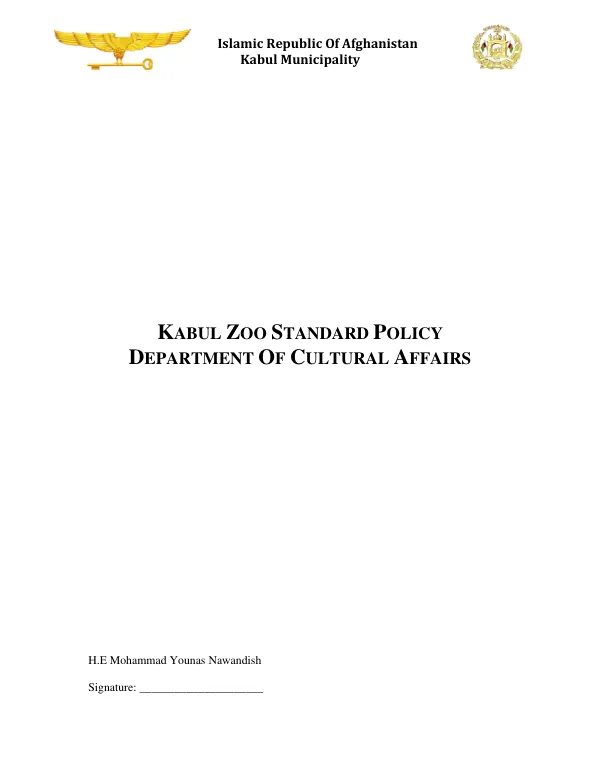
Kabul Zoo Standard Policy
The Kabul Zoo Standard Policy aims to provide a framework for the management and conservation of the zoo's animal population.
2014 · 8 pages
Sign in to readA free account is required to download.
Abstract
The policy's main purpose is to support the conservation of endangered species by giving them a last chance of survival through coordinated breeding under ex-situ conditions and raising stocks for rehabilitating them in the wild. The policy's objectives include disseminating information, conserving endangered species, conducting research, and offering visitors a stimulating recreational environment. To achieve these objectives, the policy emphasizes the importance of giving priority to endangered species in the zoo's collection and breeding plans. The order of preference for selecting species is locality, country, and other areas. The policy also outlines the responsibilities of the Kabul Zoo, including preparing a long-term master plan for development, maintaining a healthy and hygienic environment, and regulating the number of animals in the collection. The zoo is required to avoid keeping single animals of non-viable sex ratios and to cooperate in pooling such animals into genetically, demographically, and socially viable groups. The policy prohibits the collection of animals from the wild, except for obtaining founder animals for approved breeding programs and infusing new blood inbred groups. The zoo is also prohibited from entering into transactions involving the violation of laws and provisions of international conventions on wildlife conservation. The policy emphasizes the importance of providing adequate housing, upkeep, and health care for animals in the zoo. Each animal enclosure is required to be of sufficient size to allow for free movement and exercise, and to provide adequate space for animals to display their natural behavior. The policy also requires the provision of diet and drinking water similar to the animals' natural feed and habitat. The policy's scope includes the conservation of endangered species, the provision of a stimulating recreational environment for visitors, and the conduct of research and education activities. The policy's implementation is overseen by the Department of Cultural Affairs, and any violations of the policy may result in consequences. The policy's definitions include the concept of an endangered species, breeding, ex-situ conservation, and in-situ conservation. The policy's scope and responsibilities are outlined in detail, providing a comprehensive framework for the management and conservation of the Kabul Zoo's animal population. The policy's emphasis on conservation, education, and research reflects the zoo's commitment to supporting the protection of natural areas and maintaining the life-supporting processes of nature. By providing a framework for the management and conservation of the zoo's animal population, the policy aims to ensure the long-term sustainability of the zoo and its contribution to the conservation of endangered species.
Related documents