USAID. MISSION TO ECUADOR
Land titling project
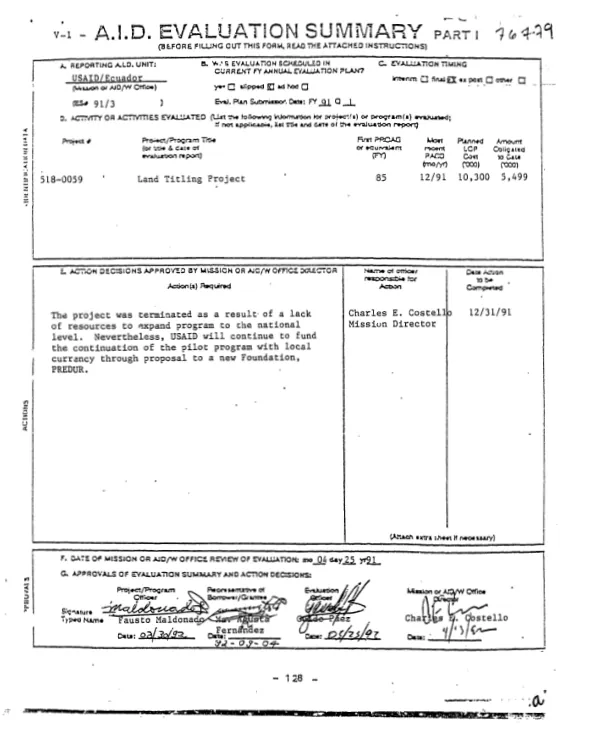
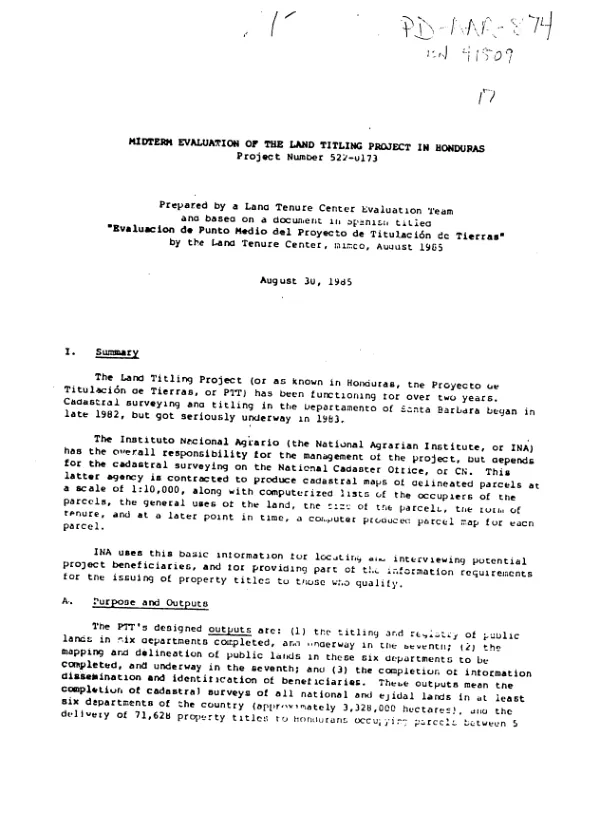
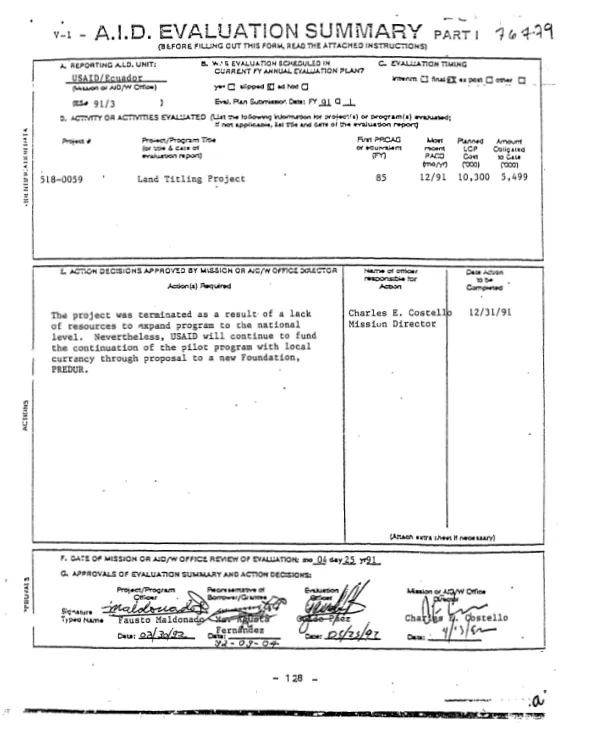
Summarizes final evaluation (XD-ABE-004-A) of a pilot project to assist Ecuador"s National Program for Rural Cadasters and Titling (CATIR) in establishing a permanent land information system in selected cantons.
1992
Sign in to readA free account is required to download.
Abstract
The evaluation covered the period FY85-12/90. The project made impressive progress in developing a methodology and procedures for compiling and processing cadastral data in two cantons. Cooperation and coordination among collaborating organizations were high and administration efficient. The project was able to attract highly qualified field workers by offering per diems drawn from P.L. 480 funds. If the project can no longer pay the per diem, it is likely to lose trained personnel. The project produced a high-quality product, a complete inventory of all properties, including unique identifying coordinates, physical characteristics, data to calculate economic values, and ownership and use rights. The automated methodology developed by he project could be adapted for urban regions. The project"s decentralized approach offers immediate benefits at the local level in terms of actualized property records, improved tax bases, and information for local development projects. However, CATIR should recruit more women for data collection efforts in the field, especially for highland areas, where migration has led to a feminization of agriculture. The project prepared a draft of a new property registry law and provided a force toward change. However, while this draft law adequately addresses the reforms needed to maintain the cantonal land information system, there are no legal provisions for an institutional base or mechanisms for coordinating cadastral systems. The Government of Ecuador demonstrated strong and consistent support for the pilot project and promises continued support for a national program. Whether this commitment could survive a change in administration is uncertain, since the implementing agencies were established by executive decree. Despite the recommendation of the evaluation team, the project was terminated due to a lack of resources to expand the program to the national level. Nevertheless, USAID/E will fund a continuation of the pilot program with local currency through a new foundation, PREDUR.
Related documents