CENTER FOR EDUCATIONAL DEVELOPMENT
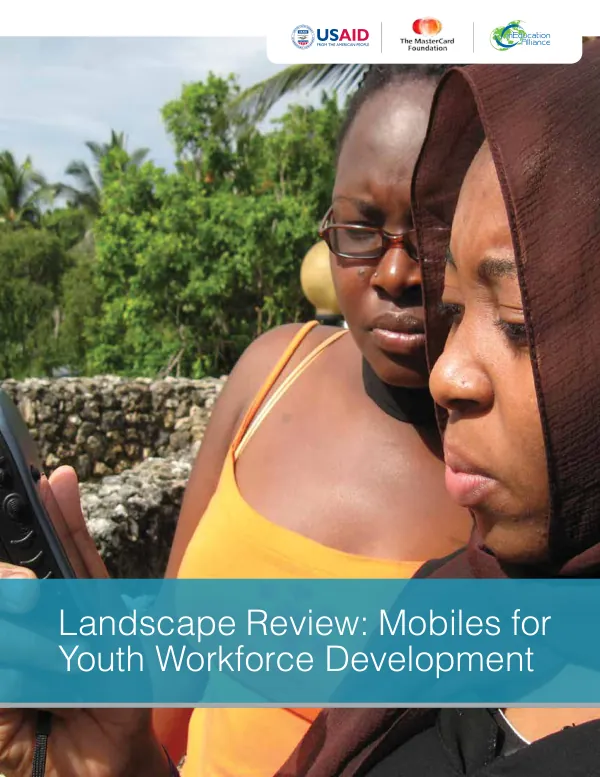
Landscape Review: Mobiles for Youth Workforce Development
Mobiles for Youth Workforce Development is a critical component of addressing the challenges faced by young people in the workforce.
2013 · 184 pages
Sign in to readA free account is required to download.
Abstract
The initiative aims to leverage mobile technology to enhance job-relevant skills, increase labor demand, and address job-search constraints. Research has shown that mobile-enabled workforce education and training can lead to significant improvements in employment outcomes for youth. Strengthening job-relevant skills through mobile-enabled workforce education and training is a key area of focus for the initiative. Research findings indicate that mobile technologies can be used to deliver high-quality training programs, improve access to education and training, and enhance the employability of young people. For example, a study in Kenya found that mobile-enabled training programs led to a 60% increase in job placement rates among youth. The use of mobiles to address job-search constraints is another critical area of focus for the initiative. Research has shown that mobile technologies can be used to provide job seekers with access to employment information, job matching services, and career guidance. For example, a study in South Africa found that a mobile-based job matching service led to a 25% increase in job placements among youth. Mobiles for entrepreneurship and enterprise development are also a key area of focus for the initiative. Research has shown that mobile technologies can be used to provide entrepreneurs with access to business training, mentorship, and market information. For example, a study in India found that a mobile-based entrepreneurship program led to a 50% increase in business start-ups among youth. Reducing social constraints to employment is also a critical area of focus for the initiative. Research has shown that mobile technologies can be used to address social constraints such as lack of information, lack of access to education and training, and lack of social connections. For example, a study in Uganda found that a mobile-based program that provided job seekers with access to employment information and job matching services led to a 30% increase in job placements among youth. The initiative also focuses on scale and sustainability in mobile-enabled workforce development. Research has shown that mobile technologies can be used to deliver large-scale workforce development programs, improve access to education and training, and enhance the employability of young people. For example, a study in Brazil found that a mobile-enabled workforce development program led to a 40% increase in job placement rates among youth. Key findings from the research include the importance of mobile-enabled workforce education and training, the use of mobiles to address job-search constraints, and the potential of mobiles for entrepreneurship and enterprise development. Recommendations include the need for further research on the effectiveness of mobile-enabled workforce development programs, the development of mobile-enabled job matching services, and the provision of business training and mentorship to entrepreneurs. The initiative has also identified several key informants who have provided valuable insights into the use of mobile technologies for workforce development. These informants include policymakers, practitioners, and researchers who have experience in implementing mobile-enabled workforce development programs.
Related documents