USAID DEC
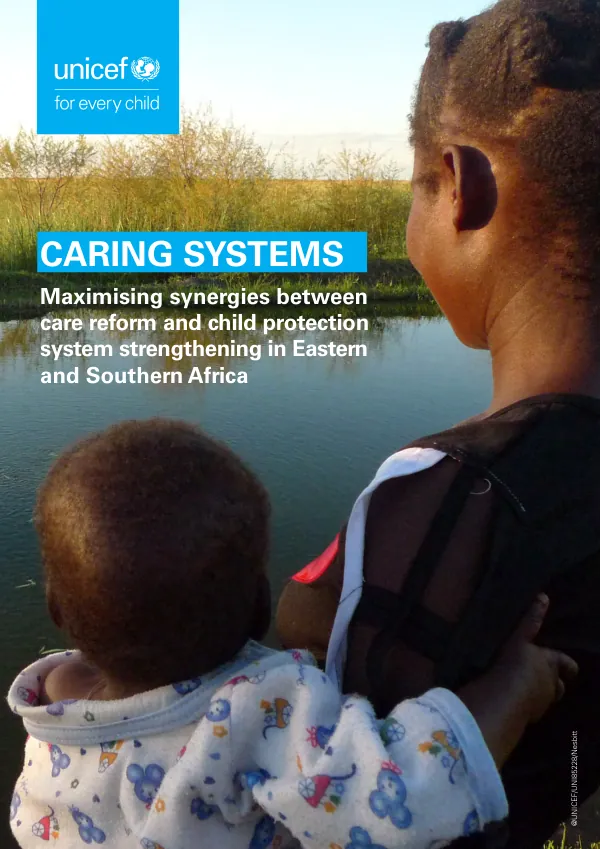
Caring Systems: Maximising synergies between care reform and child protection system strengthening in Eastern and Southern Africa
Sign inUNICEF
Caring Systems: Maximising synergies between care reform and child protection system strengthening in Eastern and Southern Africa
Care reform can be defined as changes to the systems and mechanisms that promote and strengthen the capacity of families and communities to care for their children, address the care and protection needs of vulnerable or at-risk children, and prevent separation from their families.
2021 · 44 pages
Sign in to readA free account is required to download.
Abstract
The goal of care reform is to lead to improvements in the care system, which is the legal and policy framework, structures, and resources that determine and deliver alternative care, prevent family separation, and support families to care for children well. Care reform is closely linked to child protection system strengthening, which involves preventing and responding to the violence, abuse, neglect, and exploitation of children. A child protection system is defined as formal and informal structures, functions, and capacities that have been assembled to prevent and respond to violence, abuse, neglect, and exploitation of children. This system comprises the same key components as the care system, but with a remit that extends to preventing, mitigating, addressing, and responding to all forms of abuse, exploitation, and neglect. A system strengthening approach is essential for care reform because it addresses the large numbers of children at risk of separation, unnecessarily separated, or who are unsafe in their families or alternative care. Systemic and scaled change is needed to address the magnitude of this problem, and a systems approach can unite stakeholders together to advocate for enhanced provision and ensure that limited resources are used effectively. Care and child protection are inextricably linked, and care reform requires the broader child protection system to be operating effectively. The components of systematic care reform include developing an over-arching strategy and plan guided by evidence and data, engaging a range of actors and establishing effective coordination mechanisms, engaging communities in care reform, raising awareness, and changing norms. Other key components include promoting the participation of children, care leavers, and caregivers, developing policies, legislation, and guidance on care, strengthening the social service workforce, ensuring that there are gatekeeping mechanisms and prevention and response services in place, financing care reform, and establishing accountability mechanisms to monitor reform and make adjustments as needed. In Eastern and Southern Africa, governments are increasingly recognizing the importance of ensuring that children can grow up safe and well cared for in nurturing families. Investments are being made in policies and mechanisms to strengthen families, reduce reliance on residential care, and promote family-based alternative care. However, evidence suggests that more needs to be done in the region, and a recent evaluation found that key stakeholders do not always fully understand what system strengthening is and why it is important. There remains a tendency to focus on some aspects of children's care without considering the wider systems of protection and support that need to be in place to ensure all children are well cared for.