MEDICAL SERVICE CORP. INTERNATIONAL
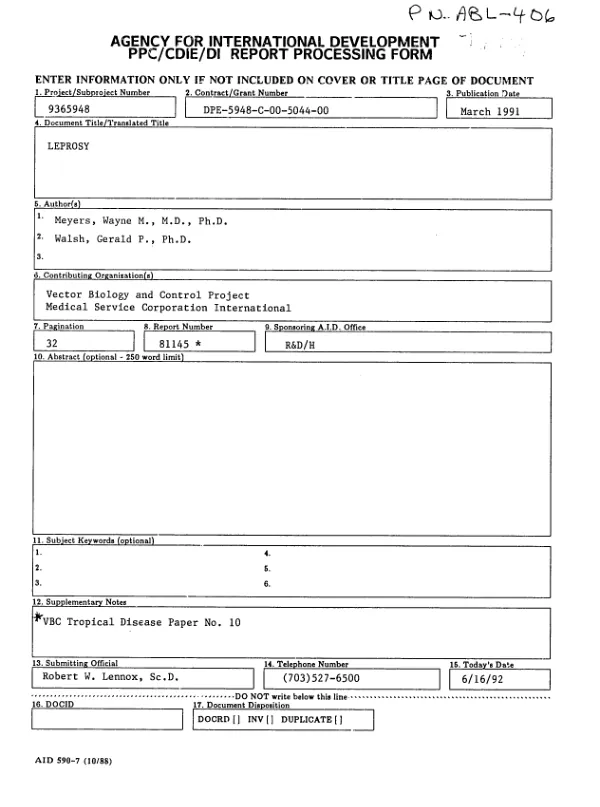
Leprosy
Leprosy, also known as Hansen"s disease, afflicts an estimated 10-12 million people worldwide, more than half of them in Africa and India.
Meyers, Wayne M.; Walsh, Gerald P. · 1991
Sign in to readA free account is required to download.
Abstract
The disease affects cooler parts of the body, e.g., skin, eyes, and often results in loss of sensation and paralysis, which cause deformity and mutilation. Authorities disagree about the exact mode of transmission; some place it in prolonged skin-to-skin contact, others in secretions of the upper respiratory tract or in transplacental transmission; armadillos, chimpanzees, and monkeys have been implicated as reservoirs of the disease. Incubation is prolonged and variable, but usually lasts 2-5 years. Recent trials of multidrug therapy, combining dapsone, rifampicin, and clofazimine, have demonstrated a drastic reduction in prevalence, suggesting it might be possible to interrupt transmission. Trials of the bacillus Calmette Guerin vaccine in Uganda, Mali, Burma, Papua New Guinea, and Venezuela have shown varied protective effects, ranging from 80% in Uganda to 20% in Burma. Early detection and effective treatment can prevent disability and deformity, but case detection is severely handicapped by the social stigma associated with leprosy, which results in registration of less than half of all cases.
Connected topics
Related documents