USAID DEC
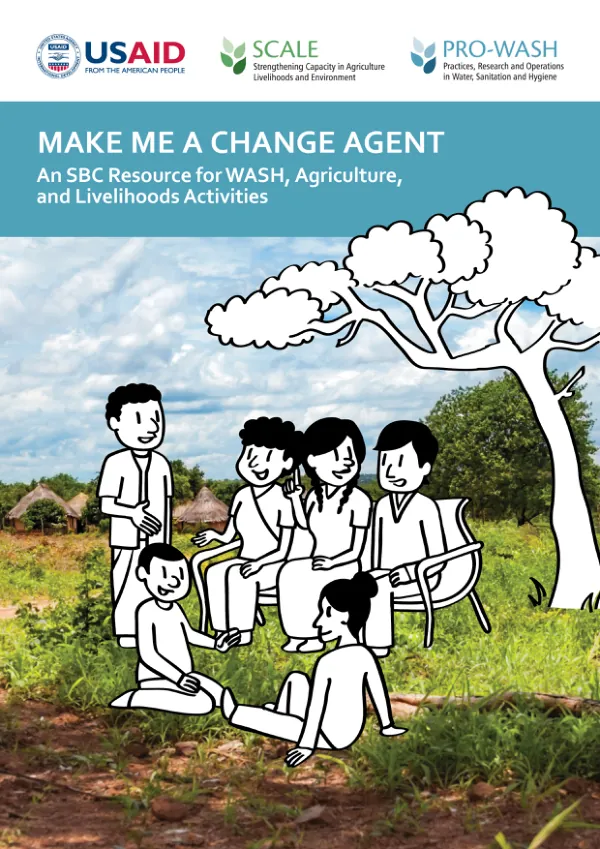
Make Me a Change Agent: An SBC Resource for WASH, Agriculture, and Livelihoods Activities
Sign inMERCY CORPS INTERNATIONAL
Make Me a Change Agent: An SBC Resource for WASH, Agriculture, and Livelihoods Activities
The Make Me a Change Agent (MMCA) guide is a resource for promoting behavior change in water, sanitation, and hygiene (WASH), agriculture, and livelihoods activities.
2020 · 192 pages
Sign in to readA free account is required to download.
Abstract
The guide is a collaborative effort between the SCALE and PRO-WASH initiatives, which aim to improve the quality of activities and strengthen the capacity of implementing partners in these areas. The MMCA guide is designed to support facilitators in conducting training sessions that promote behavior change among community members. The guide consists of seven lessons, each focusing on a specific aspect of behavior change, including effective communication, empathy, and respect, effective facilitation, negotiated behavior change, storytelling, and learning through cross-site visits. Lesson 1, Welcome and Introductions, sets the stage for the training session by introducing the facilitator and participants, and establishing a positive and inclusive learning environment. The lesson includes a pre-test and post-test to assess participants' knowledge and attitudes before and after the training. Lesson 2, Behavior Change through Effective Communication, emphasizes the importance of clear and effective communication in promoting behavior change. The lesson includes role-plays and handouts to help participants practice good communication skills, such as listening and active listening. Lesson 3, Communicating with Empathy and Respect, focuses on the importance of empathy and respect in building trust and promoting behavior change. The lesson includes handouts and role-plays to help participants practice empathy and respect in their communication. Lesson 4, Behavior Change through Effective Facilitation, highlights the role of facilitation in promoting behavior change. The lesson includes handouts and role-plays to help participants practice effective facilitation skills, such as building blocks for effective facilitation and adult learning principles. Lesson 5, Negotiated Behavior Change, focuses on the importance of negotiation and joint decision-making in promoting behavior change. The lesson includes handouts and role-plays to help participants practice negotiation and joint decision-making skills. Lesson 6, Storytelling for Behavior Change, emphasizes the power of storytelling in promoting behavior change. The lesson includes handouts and role-plays to help participants practice storytelling skills, such as developing closed-ended and open-ended stories. Lesson 7, Learning through Cross-Site Visits, highlights the importance of learning from others in promoting behavior change. The lesson includes handouts and role-plays to help participants practice cross-site visit skills, such as observing and learning from others. The MMCA guide is designed to be flexible and adaptable to different contexts and settings. The guide includes a range of handouts and role-plays to help facilitators tailor the training session to the needs of their participants. The guide also includes a quality improvement and verification checklist to help facilitators assess the effectiveness of the training session. Overall, the MMCA guide provides a comprehensive resource for promoting behavior change in WASH, agriculture, and livelihoods activities. The guide is designed to support facilitators in conducting effective training sessions that promote behavior change among community members.