USAID. BUR. FOR LEGISLATIVE AND PUBLIC AFFAIRS (LPA)
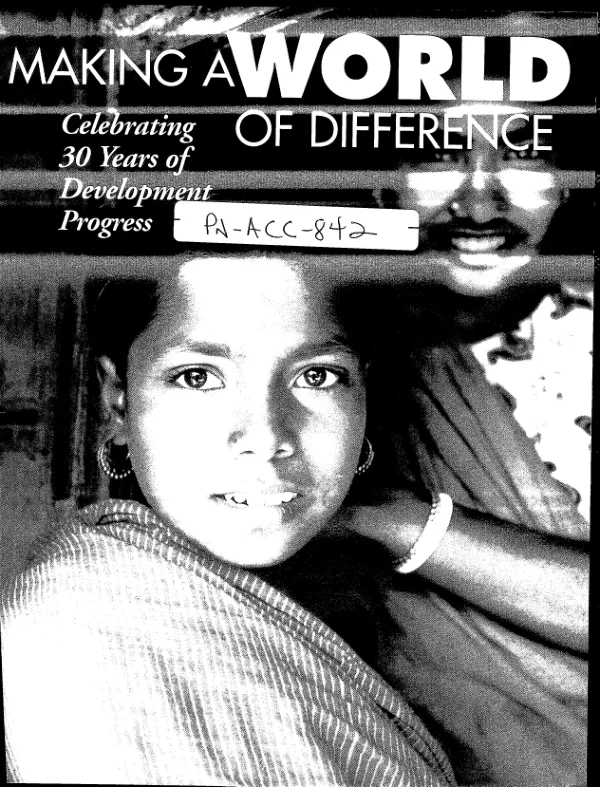
Making a world of difference : celebrating 30 years of development progress
Just three decades ago, conditions in the developing world were extremely bleak: 53% of the people were illiterate, with women accounting for 62% of these illiterates; the average woman had 6 children; more than 1 in 8 of those children did not live to see their first birthday; nearly 12 million infants died every year, mostly from easily preventable diseases; 4 out of 10 people suffered from malnutrition and 3 out of 4 did not have access to clean water or sanitation; life expectancy was just over 50 years; 4 out of 5 developing countries were not democracies; and annual per capita income in the developing world was about $700, with more than half of the people living on less than a dollar a day.
1998
Sign in to readA free account is required to download.
Abstract
This report documents the impact of international foreign assistance on catalyzing developing country efforts to alleviate these conditions, with emphasis on disease control, clean water and sanitation, the Green Revolution, oral rehydration therapy, and economic growth. As a result of these efforts, from 1968 to 1998 in the developing world: literacy has risen by almost 50%; girls and women have significantly closed the gap in gender disparity in education; the average woman now has 3, not 6, children; infant mortality has been halved; 5 million fewer children die every year; 1 out of 6, not 4 out of 10, people suffer from malnutrition; the percentage of population with access to clean water has tripled, and access to sanitation has more than doubled; life expectancy has risen by more than a decade; 71 more nations have become free or partly free; annual per capita income has risen by more than 60%, and the percentage of people living in absolute poverty has been cut almost in half. Concluding sections of the report propose goals for the international community in the 21st century, the dangers of not attaining them, and the sharp challenges facing the future: the world"s population is still increasing by the equivalent of an additional New York City every month; 95% of the world"s population growth in the coming decades will occur in the cities of the developing world; by 2015, the number of cities with a population of more than 1 million is expected to nearly double in Latin America, triple in Asia, and quadruple in Africa; an estimated 1 in 8 plant species will be threatened with extinction in the next few decades; more than 800 million people still face malnutrition; more than 100 million children are not in school, and 180 million children under the age of 14 work as child laborers; about 70% of the people living in poverty are women; there are 5,000 new HIV infections daily around the world; an area of rainforest the size of a football field is destroyed every second.