LOUIS BERGER INTERNATIONAL, INC. (LBII)
Framework for US assistance in southern Africa; country resource paper : Namibia
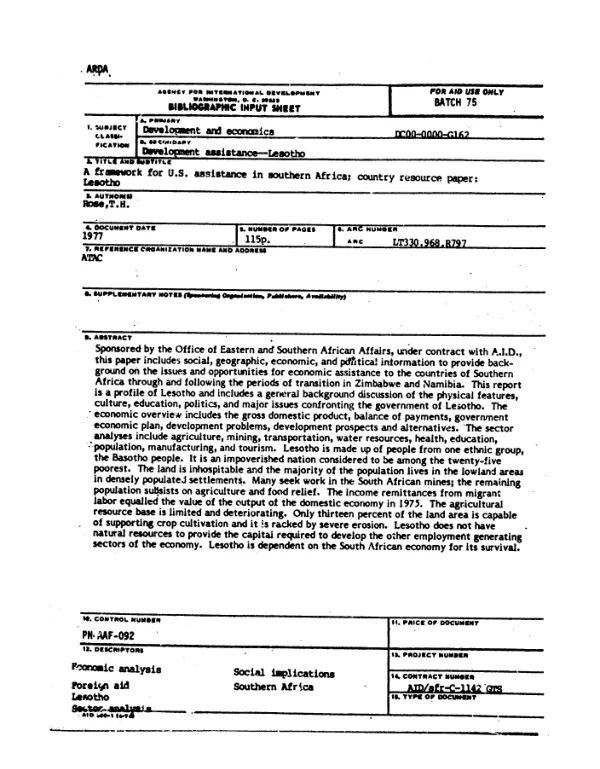
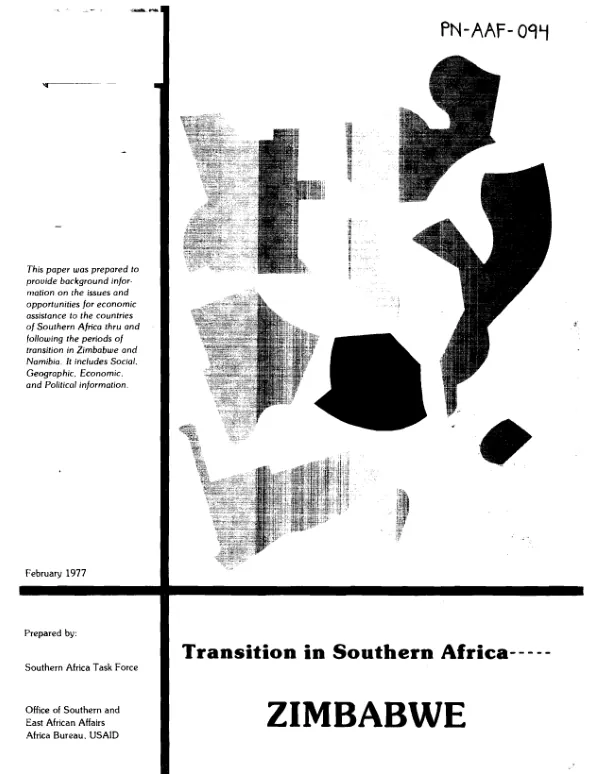
This paper includes social, geographic, economic, and political information to provide background on the issues and opportunities for economic assistance to the countries of Southern Africa through and following the periods of transition in Zimbabwe and Namibia.
Wilcox, S. C. · 1970
Sign in to readA free account is required to download.
Abstract
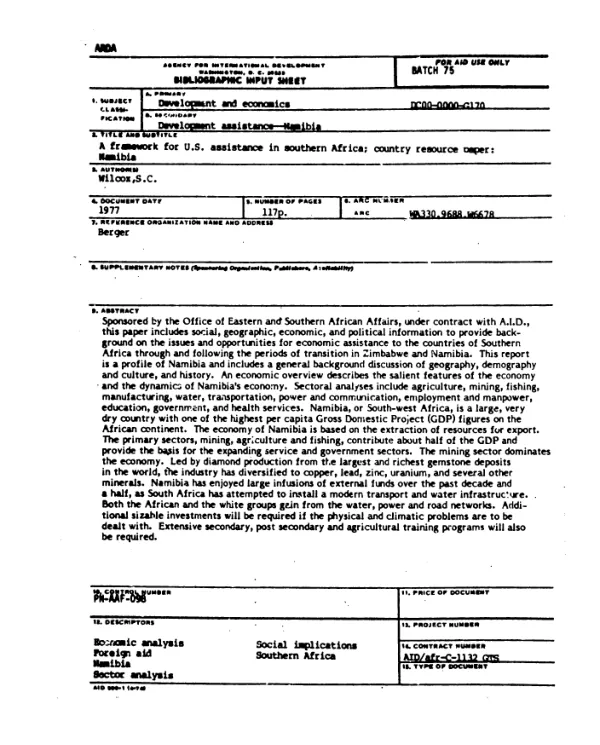
This report is a profile of Namibia and includes a general background discussion of geography, demography and culture, and history. An economic overview describes the salient features of the economy and the dynamics of Namibia"s economy. Sectoral analyses include agriculture, mining, fishing, manufacturing, water, transportation, power and communication, employment and manpower, education, government, and health services. Namibia, or Southwest Africa is a large, very dry country with one of the highest per capita Gross Domestic Project (GDP) figures on the African continent. The economy of Namibia is based on the extraction of resources for export. The primary sectors, mining, agriculture and fishing, contribute about half of the GDP and provide the basis for the expanding service and government sectors. The mining sector dominates the economy. Led by diamond production from the largest and richest gemstone deposits in the world, the industry has diversified to copper, lead, zinc, uranium, and several other minerals. Namibia has enjoyed large infusions of external funds over the past decade and a half, as South Africa has attempted to install a modern transport and water infrastructure. Both the African and the white groups gain from the water, power and road networks. Additional sizable investments will be required if the physical and climatic problems are to be dealt with. Extensive secondary, post secondary and agricultural training programs will also be required.