MEDICAL SERVICE CORP. INTERNATIONAL
Malaria control in Ghana : plan of action, Accra, Ghana, 26 April 1989
In Ghana, malaria is the leading cause of death among children and accounts for more sick days at all ages than any other disease.
Lobel, Hans O.; Beier, John C. · 1989
Sign in to readA free account is required to download.
Abstract
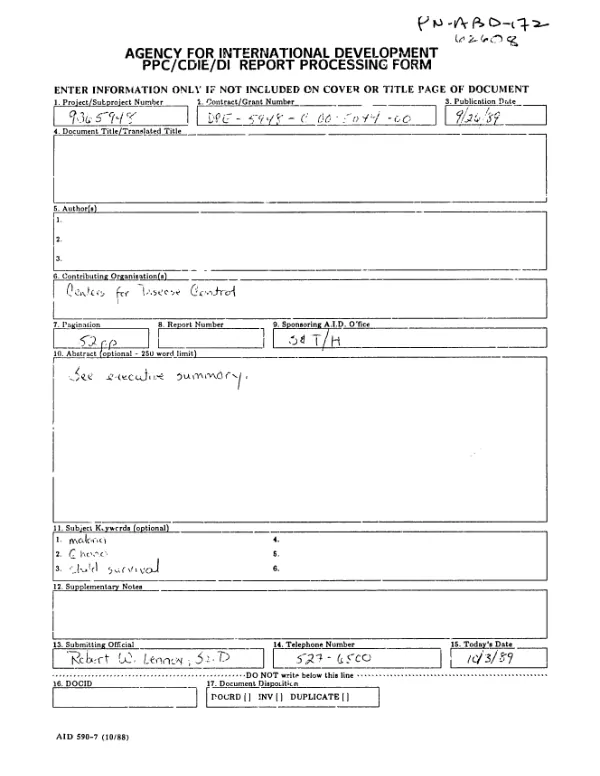
With almost half of outpatient visits and child hospitalizations attributed to malaria, the problem has placed a heavy burden on the country"s health delivery system. This report presents statistics on the disease and assesses the country"s malaria control activities and policies. Despite the severity of the problem, the Government of Ghana did not consider malaria a priority until recently, when several cases of chloroquine-resistant P. falciparum malaria were reported. In response, the Ghanaian Ministry of Health has begun developing a national plan for malaria control. It is recommended that A.I.D. support the development and implementation of the program by including malaria control in its family planning and child survival activities. At this time, no other agency is providing any assistance to Ghana for malaria control. Objectives of A.I.D. activities should be to: (1) ensure effective malaria treatment in high-risk groups, (2) monitor the clinical and parasitological response to therapy and the patterns of severe illness and death, (3) survey knowledge, attitudes, and practices relating to malaria, (4) provide training and health education, and (5) facilitate operational research.