USAID. BUR. FOR RESEARCH AND DEVELOPMENT. OFC. OF HEALTH
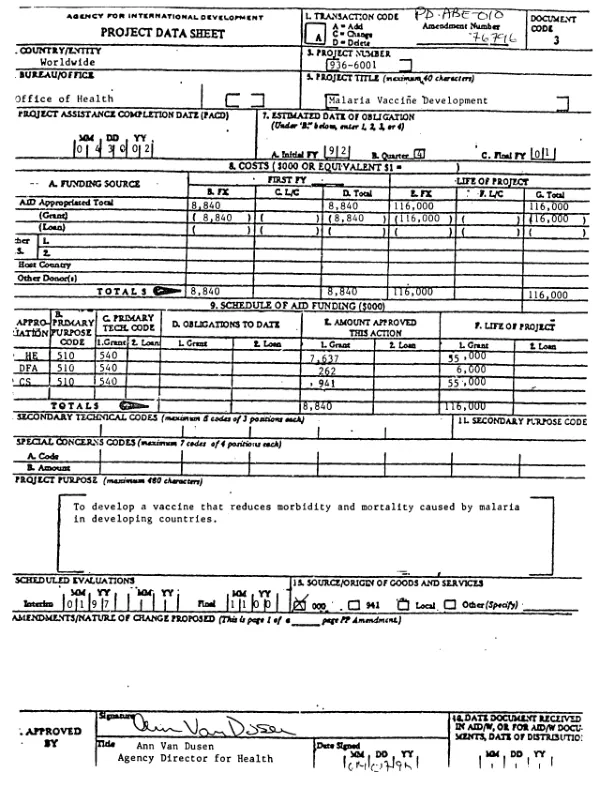
Malaria vaccine development
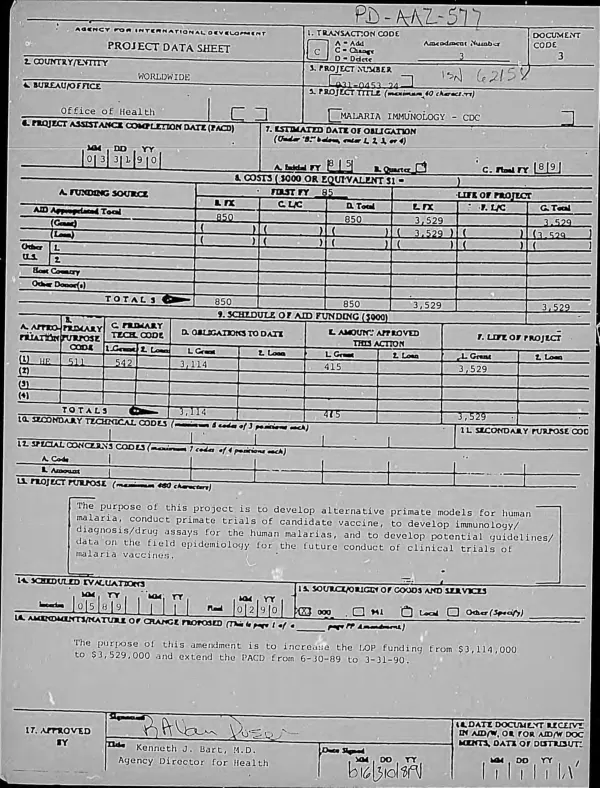
Project to develop anti-malarial vaccines for field testing.
1992
Sign in to readA free account is required to download.
Abstract
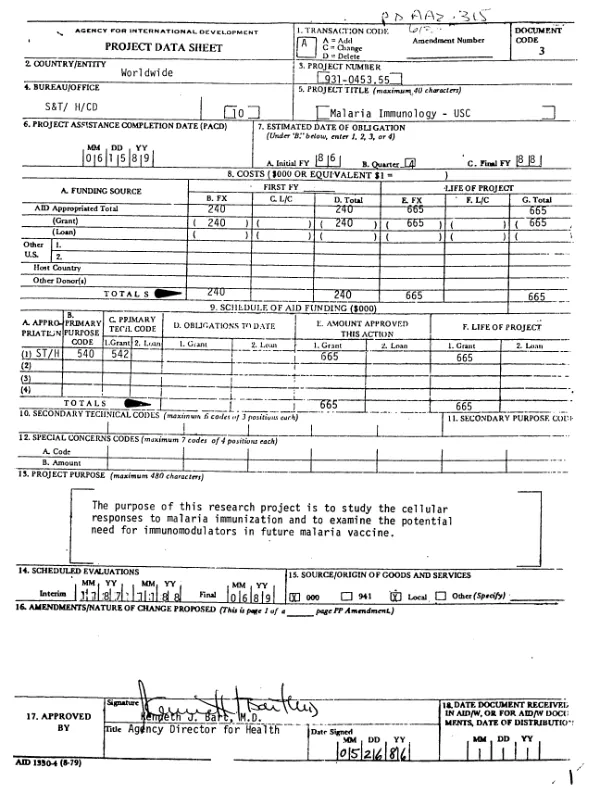
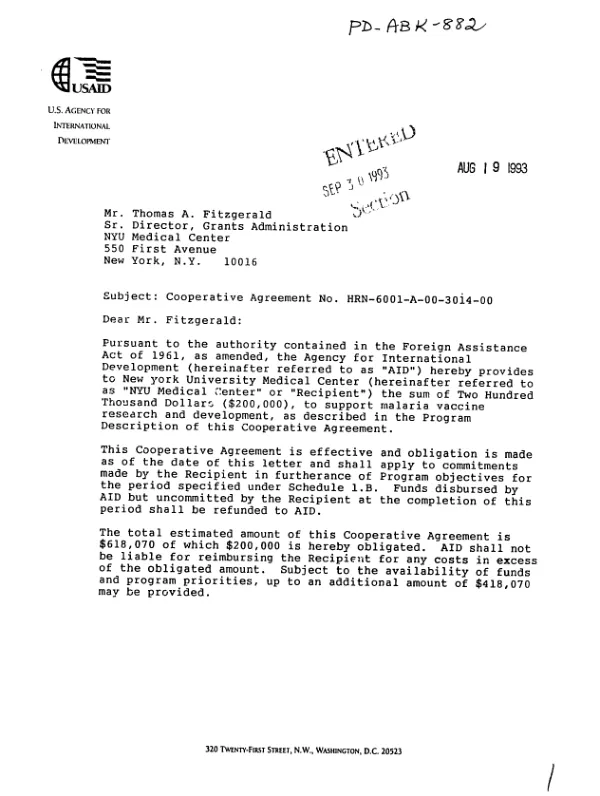
This 10-year umbrella project, which consolidates projects 9365967 and 9365979 and continues project 9310453, will include basic research, applied research in vaccine production, primate testing, U.S. clinical testing, field testing in endemic populations, and support services. The project will support basic laboratory research in malaria immunity at 15 universities and research institutes under the aegis of the U.S. National Institutes of Health/National Institute of Allergy and Infectious Diseases (NIH/NIAID). Primary research aims are to: (1) identify and isolate malaria parasite antigens at the sporozoite, liver, and blood stages for possible development into vaccines; (2) define these antigens with respect to structure and gene sequence; (3) develop methodologies (e.g., isolation, synthetic, and recombinant DNA technologies) to produce antigens in the large quantities needed for pre-clinical trials; (4) characterize antigens with regard to localization in parasites and host cells, and their ability to induce humoral and cell-mediated immunity; and (5) modify antigens to increase their immunogenicity. Secondary research aims are to: (1) study immune response in naturally acquired malaria, with emphasis on cell-mediated immunity; (2) develop assays of immune function; (3) study the role of transmission blocking immunity when used with antigens against other forms of the parasite; (4) study interactions between simultaneously administered antigens; (5) study adjuvant compounds that enhance immune response to vaccines; and (6) study interactions between vaccines and natural immunity. The research agenda will be modified annually as necessary. Results will be published in the scientific literature. Applied research will focus on the production and testing of experimental vaccines. (1) NIAID will award a contract for production of experimental vaccines. (2) The vaccines will be tested at the U.S. Centers for Disease Control (CDC) on two species of new world monkeys (the owl monkey and the squirrel monkey). (3) Preliminary testing of the vaccines in humans -- both Phase I (safety and immunogenicity) and Phase II (efficacy) trials -- will be conducted at U.S. university hospitals under contract to NIAID or the Walter Reed Army Institute of Medical Research. (4) In cooperation with Papua New Guinea"s Institute of Medical Research, a malaria vaccine testing facility will be constructed in Maprik, a malaria-endemic area. Following the completion of baseline studies, developmental studies, and operational research, Phase I, Phase II, and Phase III (expanded efficacy trials) vaccine testing is envisioned. (5) CDC, in cooperation with the Kenya Institute of Medical Research, will establish a research facility in Kenya, with emphasis on exploring natural acquisition of immunity or tolerance to sporozoites. The support component will fund: (1) a contract for project management; (2) a central primate care and housing facility; and, (3) primate conservation efforts of the Pan American Health Organization (PAHO) and Government of Peru.
Related documents