FINTRAC
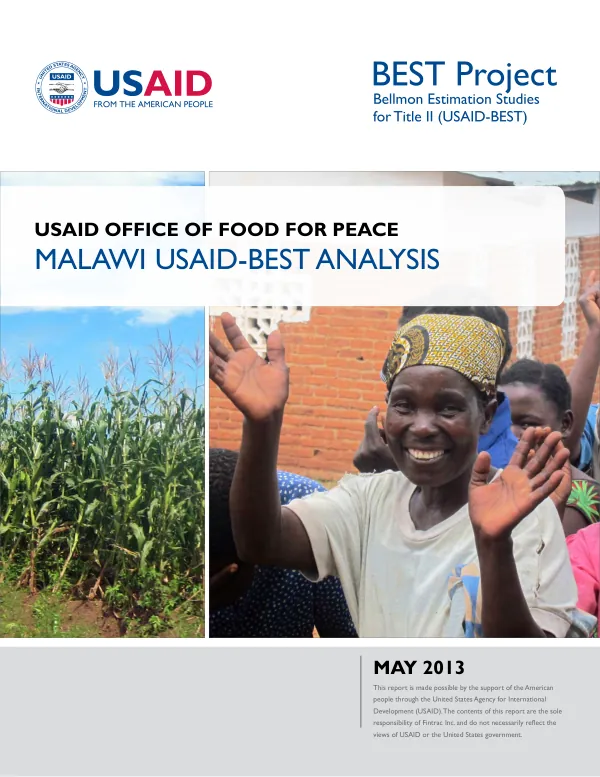
Malawi USAID-BEST Analysis
The agricultural market in Malawi is characterized by significant food deficits, particularly in maize, the country's primary staple crop.
2013 · 154 pages
Sign in to readA free account is required to download.
Abstract
National food deficits have been a persistent issue, with maize shortages affecting over 70% of the population. Local food deficits are also prevalent, with many communities experiencing limited access to food due to geographical and economic constraints. Market sites in Malawi, including major towns and rural areas, have been assessed to determine the current state of agricultural markets. Findings indicate that commodity markets are dominated by maize, with other staple crops such as beans and cassava playing a secondary role. The market structure is characterized by a high level of competition among traders, with multiple buyers and sellers operating in each market site. The USAID Office of Food for Peace has been instrumental in supporting food security programs in Malawi. These programs have been implemented by various organizations, including the World Food Programme (WFP), the United States Department of Agriculture (USDA), and the Malawi government. The programs have focused on improving food availability, access, and utilization, with a particular emphasis on supporting smallholder farmers and vulnerable populations. Recommendations for program design have been developed based on the analysis of local markets and food security programs. Geographic targeting is recommended to focus on areas with high levels of food insecurity, while seasonal targeting is suggested to take advantage of the country's two main cropping seasons. Household and individual targeting are also recommended to ensure that programs reach the most vulnerable populations. The monetization feasibility analysis has been conducted to determine the potential for monetizing food assistance programs in Malawi. The analysis has considered various options, including cash, vouchers, and donor purchases. The results indicate that local food procurement through cash, vouchers, and donor purchases is a viable option for monetizing food assistance programs in Malawi. This approach has the potential to improve the efficiency and effectiveness of food assistance programs, while also supporting local economic development. The analysis has also considered additional considerations for program design, including the need for flexible programming to respond to changing market conditions and the importance of building capacity among local stakeholders. Overall, the findings of this analysis provide valuable insights for USAID food assistance programming decisions in Malawi.