ENERGY/DEVELOPMENT INTERNATIONAL
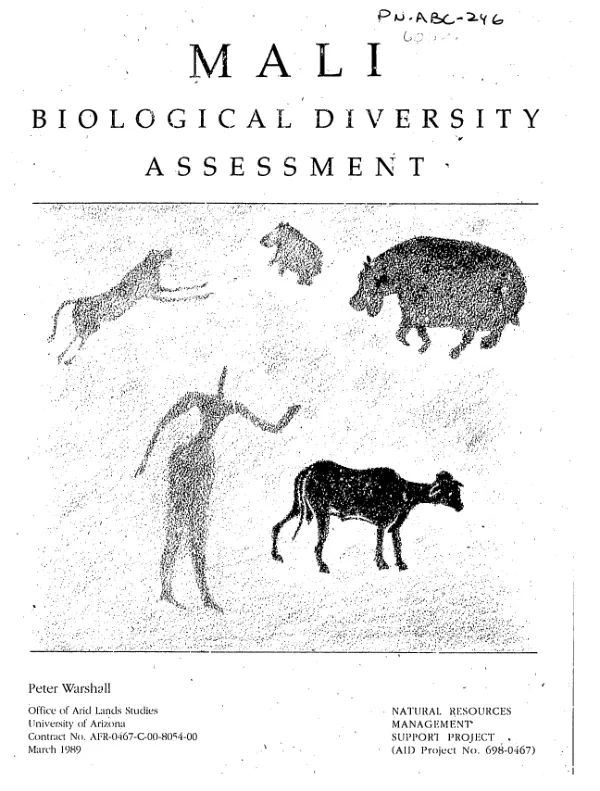
Mali biological diversity assessment
Three decades of social upheaval, exacerbated by a 16-year drought, have made it difficult to preserve Mali"s extensive biological resources.
Warshall, Peter · 1989
Sign in to readA free account is required to download.
Abstract
This study of biological diversity, the first ever written for Mali, assesses: (1) the preservation of biological diversity in national parks and faunal reserves, including detailed information on biotic communities, protected areas, and animal and plant species; (2) the relationships between biological diversity and development and economic activities such as gathering wild plants for food and crafts, tourism, pest control for cash crops, fire management, human disease control, forestry, grazing, fishing, and mining; and (3) the social, political, and economic incentives and disincentives for maintaining biological diversity, especially at the national level (in terms of policy, environmental regulations, economics, research, education, and religion) and at the critically important local level. A final section lists 40 potential biological diversity projects and presents detailed information on 4 long-term priority projects: (1-3) establishment of two new national parks and (if cost-effective) the restructuring of an existing park; and (4) a project to combine economic development with biological diversity concerns in the inner Niger delta by writing land tenure and resource management agreements and investigating management practices for the Selingue Dam. Ways in which USAID/M - which currently lacks the funds to support these priority projects - can contribute to biological diversity are noted in conclusion. Contains numerous tables and a 7-page bibliography.