USAID DEC
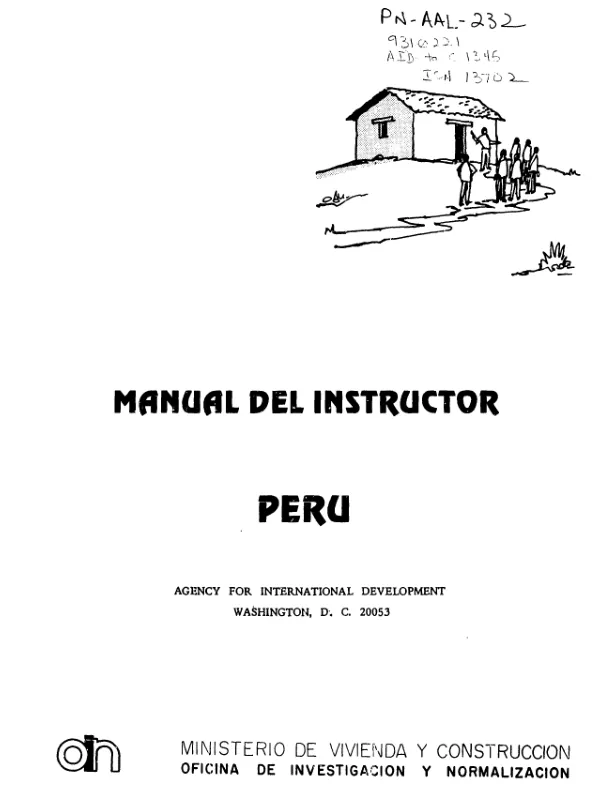
Manual del Instructor: Construcción de Casas en Zonas Propensas a Terremotos
The seismic hazard in Peru is a significant concern due to the country's location on the Pacific Ring of Fire.
2010 · 19 pages
Sign in to readA free account is required to download.
Abstract
The Earth's surface is composed of large plates that move and interact with each other, resulting in the formation of faults and the occurrence of earthquakes. In Peru, the Nazca Plate is being subducted beneath the South American Plate, creating a zone of high seismic activity. The forces generated by an earthquake can cause significant damage to buildings, particularly those with weak foundations or poorly constructed walls. When an earthquake strikes, the ground beneath a building begins to move, causing the walls to shift and potentially collapse. The severity of the damage depends on the height and weight of the walls and roof, as well as the type of construction materials used. In areas prone to earthquakes, it is essential to design buildings that can withstand the forces generated by seismic activity. One key principle is to construct walls that are low and lightweight, with a strong foundation to prevent collapse. The use of lightweight roofing materials, such as paja, calamina, Eternit, or hojas de palmera, is also recommended. The shape of a building can also play a crucial role in its ability to withstand earthquakes. A square or rectangular shape is generally more resistant to seismic forces than a building with a long, narrow shape. In areas prone to earthquakes, it is recommended to construct buildings with a "L" or "T" shape, which can help to distribute the forces generated by an earthquake more evenly. In addition to the shape and construction materials used, the placement of doors and windows can also affect a building's ability to withstand earthquakes. It is essential to balance the number of openings on each side of a building to prevent uneven forces from being applied to the walls. This can be achieved by placing doors and windows in a way that distributes the weight and stress evenly throughout the building. The construction of a building in an earthquake-prone area requires careful planning and attention to detail. A strong foundation is essential to prevent collapse, and the use of reinforced materials, such as adobe with a canal system, can help to increase the building's resistance to seismic forces. The Adobe Modern system, developed by the Peruvian Ministry of Housing and Construction, is a new approach to building construction that uses a combination of traditional and modern techniques to create a stronger and more resilient building. In conclusion, the seismic hazard in Peru is a significant concern that requires careful consideration when designing and constructing buildings. By using lightweight materials, constructing walls with a strong foundation, and balancing the placement of doors and windows, builders can help to create buildings that are more resistant to seismic forces and can withstand the forces generated by earthquakes.
Related documents