USAID. BUR. FOR SCIENCE AND TECHNOLOGY. OFC. OF RURAL AND INSTITUTIONAL DEVELOPMENT
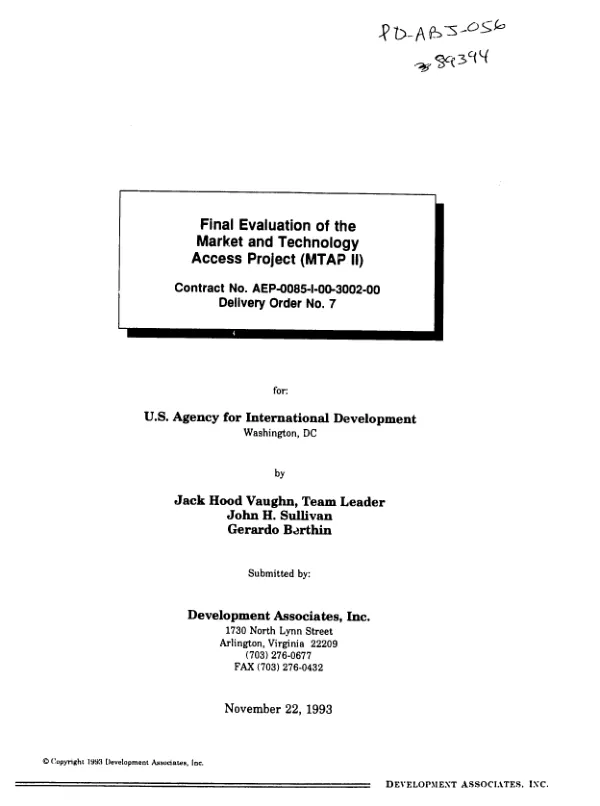
Market and technology access project
Summarizes mid-term evaluation (XD-AAZ-894-A) of a project to develop and test methods for establishing joint ventures between small and medium-sized LDC and U.S.
1989
Sign in to readA free account is required to download.
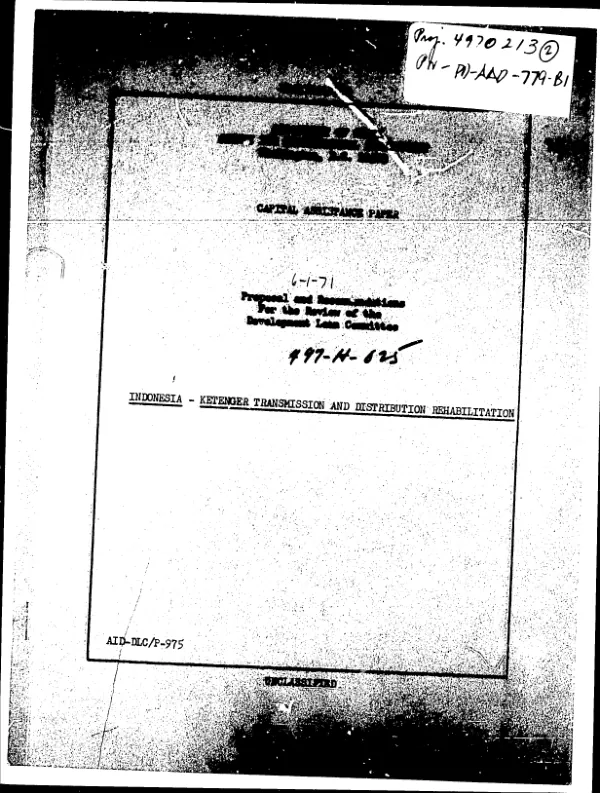
Abstract
firms in an effort to increase LDC access to new markets and technologies. The evaluation covered the period 1983-6/88. If this project did not exist, it would have to be invented. Its two-pronged strategy of researching approaches to LDC/U.S. joint ventures and conducting field trials with intermediary organizations in Central America, the Near East, and Asia has proven effective in establishing trade and investment programs in LDC settings. The program has increased the capacity of LDC firms for joint ventures in most of the targeted countries, an increase that would generally not have occurred without the project"s lead. This is certainly true in the case of Thailand and Yemen. Firms in Turkey and Costa Rica claimed they could have operated without A.I.D. support, but only more slowly and at a substantially lower level. Where successful, the project has created a long-lasting capacity for continuing joint venture development. The project"s cost-sharing and profitmaking feature has been particularly successful. This feature not only costs A.I.D. less than traditional promotion projects, but also serves to screen out bidders who cannot effectively fulfill project objectives. The selected intermediary organizations shared costs (from 20% to 60%) and aggressively pursued profit opportunities. Project management has been mixed. Except for Costa Rica and Thailand, USAID"s have adopted a hands-off approach. Arthur Young & Co., the research contractor, has generally performed in a thoughtful and satisfactory manner. It is still too early to determine the number of jobs generated, comparative expenses and revenues, level of effort, and sustainability, though Young & Co. should have provided more detailed reporting in these areas. Three lessons were learned. (1) Trade and investment programs must have a lifespan of at least 5-10 years. (2) The selection of participating countries should not be based solely on a Mission"s willingness to participate. What is important is the existence of a market orientation in the country and a Mission staff committed to working with the private sector. (3) Industry expertise on the part of the intermediary contributes to venture success by increasing the intermediary"s credibility with its clients. It also serves to reduce the learning curve associated with each venture. Action decisions are to: (1) work with the contractor to improve reporting of project data, and (2) expand the project to include new countries and new and different types of intermediaries.
Related documents
![Final evaluation report : institutional support grant number ANE-0050-G-SS-9037[-00] with the American Society of Agricultural Consultants International](https://covers.devme.ai/gen/8268.webp)
![Final evaluation report : institutional support grant number ANE-0050-G-SS-9037[-00] with the American Society of Agricultural Consultants International](https://covers.devme.ai/gen/77245.webp)