USAID DEC
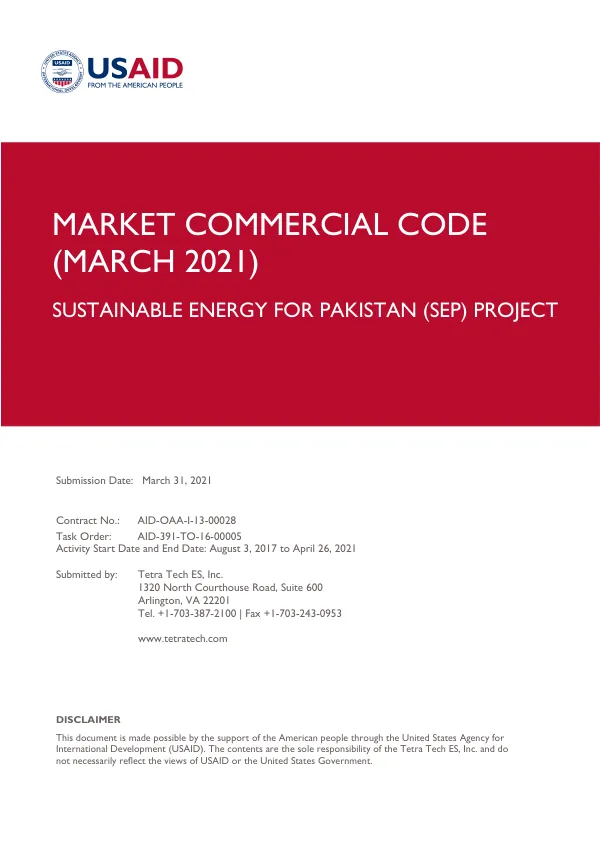
Market Commercial Code (MARCH 2021) for Sustainable Energy for Pakistan (SEP) Project
Sign inTETRA TECH ESI, INC.
Market Commercial Code (MARCH 2021) for Sustainable Energy for Pakistan (SEP) Project
The Sustainable Energy for Pakistan (SEP) Project, implemented by Tetra Tech ES, Inc.
2021 · 191 pages
Sign in to readA free account is required to download.
Abstract
under contract AID-OAA-I-13-00028, aimed to develop a commercial market for sustainable energy in Pakistan. The project's objectives were to increase the share of renewable energy in the country's energy mix, improve energy efficiency, and promote the use of clean energy technologies. The project's scope included the development of a commercial market code, which outlined the rules and regulations for the participation of market players, including operators, market participants, and service providers. The code specified the roles and responsibilities of each entity, including the rights and obligations of market participants, procedures for becoming a market participant, and the registration and termination of market participation. The commercial market code also addressed the issue of contracts and contract registration, including the characteristics of standardized contracts, customized contracts, and legacy contracts. The code specified the requirements for commercial metering, including meter reading and data collection, meter reading verifications, and storage and custody of commercial metering data. The balancing mechanism for energy was another key aspect of the commercial market code, which included the determination of imbalance amounts, applicable marginal prices, and receivable and payable amounts. The code also addressed additional market charges, including must-run generation, ancillary services, and compensation for the provision of ancillary services. The project's implementation focused on the development of a market settlement system, which included the determination of market settlement statements, payment notifications, and credited amounts. The code also specified the procedures for firm capacity certification, including the determination of initial firm capacity, review of firm capacity certification, and issuance of firm capacity certificates. The balancing mechanism for capacity was another critical component of the commercial market code, which included the procedures for running the balancing mechanism for capacity, determination of receivable and payable amounts, and compliance with capacity obligations. The code specified the capacity obligations of market participants, demand forecasts, and ex-ante verification of capacity obligations. The project's yearly settlement process included the determination of yearly settlement statements, charges and compensations for excess losses of a transmission system provider, and payment notifications and credited amounts. The code also addressed the payment system, including the components of the payment system, market operator payments calendar, and payment procedures. The commercial market code was a critical component of the SEP project, which aimed to develop a sustainable energy market in Pakistan. The code provided a framework for the participation of market players, including operators, market participants, and service providers, and outlined the rules and regulations for the commercial market. The code's implementation was critical to the success of the project, which aimed to increase the share of renewable energy in the country's energy mix and promote the use of clean energy technologies.
Related documents