USAID DEC
Mastering Difficult Conversations
Difficult conversations are discussions between two or more people where the stakes are high, opinions differ, emotions run strong, and the outcome significantly impacts their lives, with a significant risk of negative consequences.
26 pages
Sign in to readA free account is required to download.
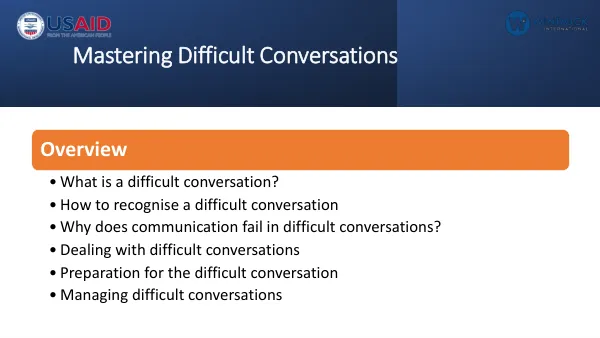
Abstract
These conversations often involve physical signs of stress and anxiety, such as sweating, increased heart rate, shallow breathing, stomach ache, dry throat, and tension. Emotional signs include a strong emotional response, such as fear or anger, while behavioral signs may include avoiding or engaging in unhelpful behaviors, such as leaving the conversation, becoming quiet, not saying what you really think, raising your voice, and so on. The higher the stakes in a conversation, the less likely individuals are to handle it effectively. This is because they are used to communicating in everyday low-stakes exchanges, which makes them less attentive and more automatic with their responses. In high-stakes conversations, individuals must be mindful of everything involved in the communication, including thoughts, emotions, words, voices, facial expressions, and behaviors. The stress response is likely to be triggered in these situations, which can hinder communication. The consequences of failing to communicate effectively in a difficult conversation can be extreme and affect various aspects of life, such as career, relationships, and health. There are three ways to deal with difficult conversations: avoidance, performing poorly, and performing effectively. Preparation is crucial for effective communication in these situations. This involves deciding exactly what is being dealt with, understanding why the discussion is taking place, choosing the right time and location, and recognizing that everyone will find the conversation difficult. Dealing with second-thoughts is also essential, as it can help individuals stay focused and communicate effectively. Effective communication in difficult conversations requires a shared understanding and a willingness to engage in open and honest dialogue. This involves creating a pool of shared meaning, where views, facts, opinions, theories, emotions, and experiences are understood and valued by everyone involved. The greater the shared meaning, the better the decision. To manage difficult conversations, individuals must approach the conversation with themselves first, noticing when safety is at risk and making it safe to share. They must also master their stories, dealing with strong emotions, speak honestly without offending, explore others' paths, and turn difficult conversations into actions.