USAID DEC
Mejoramiento del Desempeño de las Estufas Eficientes Mediante Análisis de Ingeniería
Sign inPATRIMONIO NATURAL
Mejoramiento del Desempeño de las Estufas Eficientes Mediante Análisis de Ingeniería
In Colombia, near two million people, many living below the national poverty line, use firewood as their primary source of energy.
2015 · 80 pages
Sign in to readA free account is required to download.
Abstract
Artisanal stoves, which are inefficient and generate indoor air pollution, have significant negative effects on human health and impose a huge economic burden on the country. Additionally, they are at the center of environmental impacts such as greenhouse gas emissions and unsustainable wood use in forests. The development of a sustainable market for efficient stoves has been hindered by large subsidies in existing projects. Locally available biomass stoves have a very low thermal efficiency of around 13% due to their multifunctional design. The efficient stove model developed by Patrimonio Natural lacks technical certifications and has an estimated efficiency of around 25%, which contrasts with values of around 40% reported in international literature for similar equipment. The cost of stoves in Colombia is very high, around USD 400, and increases to USD 700 when transportation costs are added. Materials and designs have not taken into account the cultural and environmental context of different Colombian regions, making it difficult to adopt this technology. To address these challenges, several needs have been identified to strengthen the context of efficient stoves in Colombia, including reducing local production and distribution costs, addressing socio-cultural and environmental issues in different regions, and conducting evaluation and certification processes for existing and future efficient stove solutions. The project "Mejoramiento de las Estufas Eficientes Mediante Análisis de Ingeniería" aims to provide tools to address some of these problems and challenges from a technical perspective. The project's specific objectives are: I. Characterizing the experimental functioning of each of the two prototypes of efficient stoves developed by Patrimonio Natural to calibrate and validate the analytical model. II. Developing a physical analytical model to estimate the thermal efficiency of the stove based on its geometry, operating conditions, physical configuration, and materials used in its manufacture. The model will be presented as a Microsoft Excel spreadsheet for easy use by non-specialist users. III. Proposing a series of recommendations for modifying the current design of the efficient stoves to improve their thermal efficiency without complicating their manufacture or significantly increasing their production cost. IV. Proposing a series of alternatives for materials and manufacturing processes to adapt efficient stoves to artisanal capabilities, tools, and cultural contexts. The project's methodology involves conducting a series of experiments to characterize the functioning of the efficient stoves, developing a physical analytical model to estimate their thermal efficiency, and proposing recommendations for modifying the current design and alternative materials and manufacturing processes. The project's expected outcomes include the development of a physical analytical model to estimate the thermal efficiency of efficient stoves, a series of recommendations for modifying the current design to improve thermal efficiency, and a series of alternatives for materials and manufacturing processes to adapt efficient stoves to artisanal capabilities and cultural contexts. The project's expected impact includes reducing the cost of efficient stoves, improving their thermal efficiency, and increasing their adoption in different regions of Colombia. The project's expected benefits include reducing greenhouse gas emissions, improving indoor air quality, and promoting sustainable wood use in forests.
Related documents
Documents in this collection
 2016
2016USAID DEC
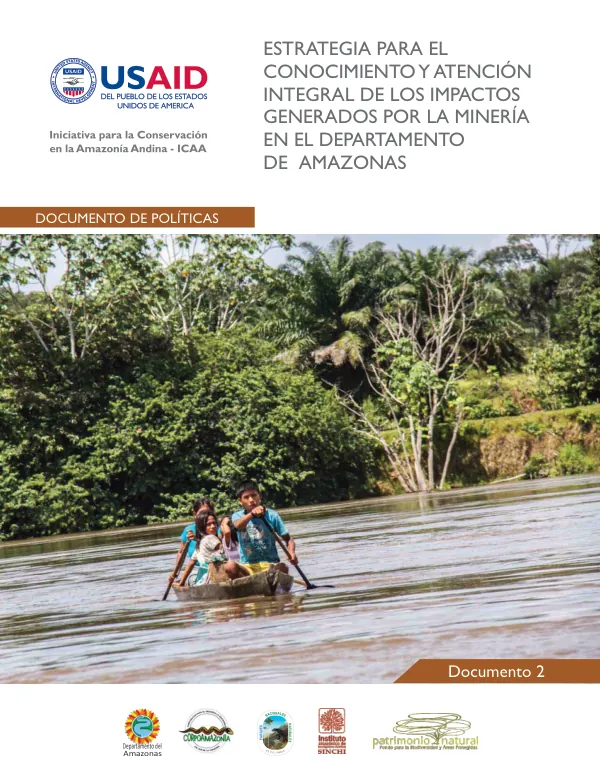
Estrategia para el Conocimiento y Atención Integral de los Impactos Generados por la Minería en el Departamento de Amazonas
Open record 2018
2018USAID DEC