USAID DEC
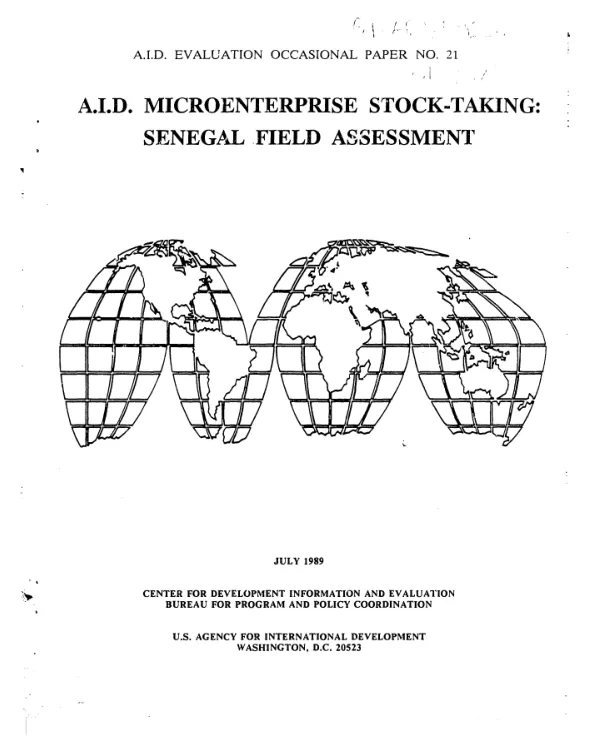
Microenterprise stock-taking : the community and enterprise development project -- Kaolack, Senegal
Sign inDEVELOPMENT ALTERNATIVES, INC. (DAI)
Microenterprise stock-taking : the community and enterprise development project -- Kaolack, Senegal
The A.I.D.
De Santis, Dennis|Howald, Barbara|Sposato, Steve · 1989
Sign in to readA free account is required to download.
Abstract
Community and Enterprise Development (CED) Project in Senegal administers a $600,000 loan fund in the Sine Saloum region. This stocktaking report assesses the impact of the project and details the key factors influencing the performance of two components that finance loans through the fund. The performance of the small-scale enterprise (SSE) credit component has been positive. About 315 loans have been made to 241 enterprises; of the 104 loans that have come due, most were paid on time or early, or were rescheduled, and only 3% have defaulted. This performance can be traced to the fact that the component has had the flexibility to streamline its delivery structure and improve overall efficiency; has operated in a generally favorable business environment and has decentralized the lending sector, ensuring good pre-loan client knowledge, close supervision, and immediate follow-up for non-payment. The PVO component, in which indigenous PVO's provide services to village level groups, has made 136 loans, which are just now coming due. Although the overall economic impact of the loans has been negligible (due to their small size), the credit has served to increase the villagers' level of confidence. Credit has been only a small part of this component's activities; community-based PVO's have lacked the financial expertise to administer credit projects and thus required a high degree of staff training in business administration and credit management. From the SME component, it was learned that lending projects should: (1) begin with the goal of building sustainable financial institutions and work towards that goal over the long run; (2) limit and prioritize objectives to assure that objectives are congruent and not mutually exclusive; (3) have socioeconomic impact indicators built into project design;(4) be flexible enough to allow for mid-course design changes; and (5) have simple, direct, and decentralized loan delivery systems to work closely with the small-scale borrower. Moreover, it was found that lending projects servicing larger microenterprises tend to create more new employment while small microenterprises tend to reduce underemployment. Additional lessons can be learned from the PVO component. (1) Group solidarity guarantees can be as effective as financial guarantees in assuring loan repayment if the group has strong social and cultural ties. (2) If a lending project works through PVO's, final responsibility for loan approvals and monitoring must rest with the real lender. (3) PVO projects do not create new employment but rather tend to redefine or expand existing employment in the village.