USAID DEC
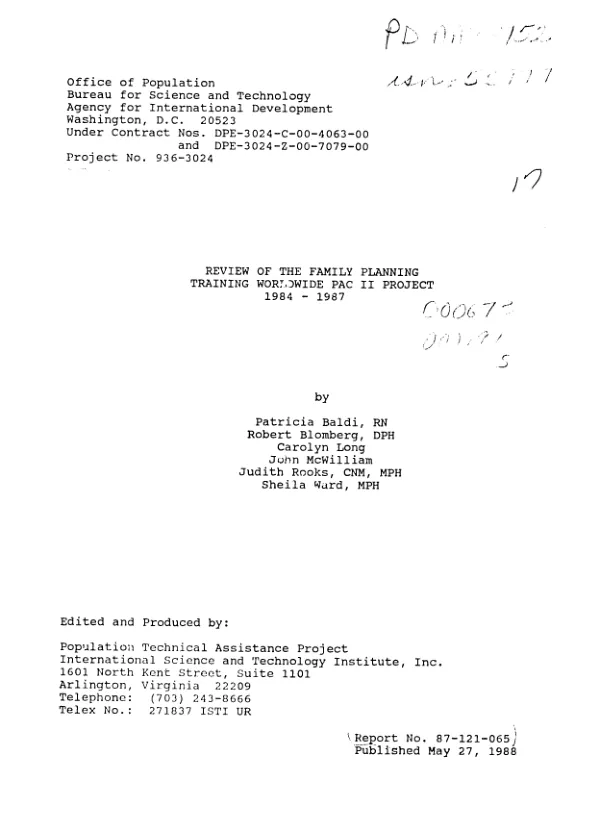
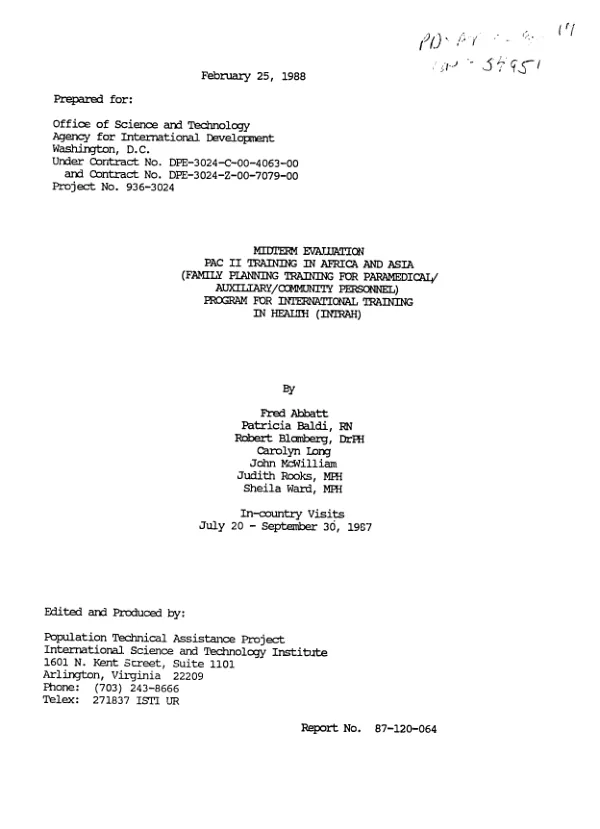
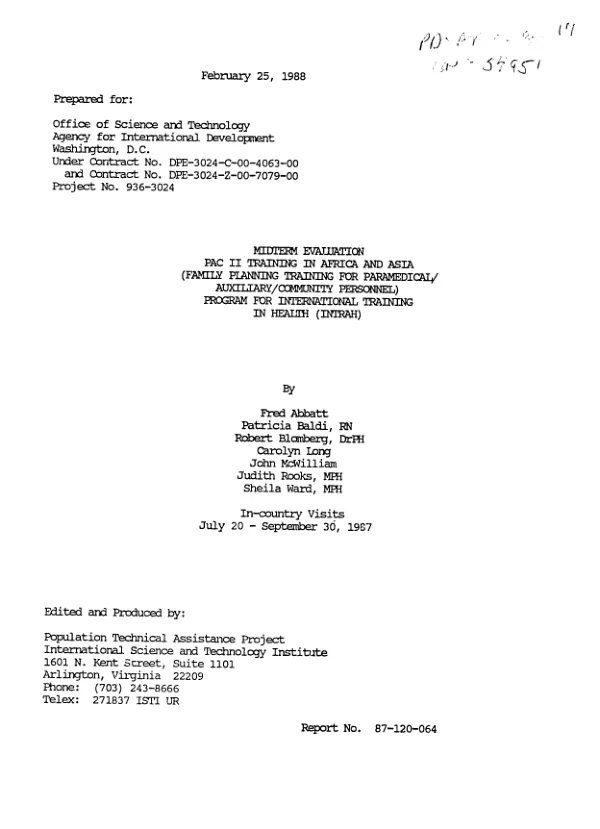
Midterm evaluation PAC II training in Africa and Asia (family planning training for paramedical/auxiliary/community personnel) : program for international training in health (INTRAH)
Sign inINTERNATIONAL SCIENCE AND TECHNOLOGY INSTITUTE, INC. (ISTI)
Midterm evaluation PAC II training in Africa and Asia (family planning training for paramedical/auxiliary/community personnel) : program for international training in health (INTRAH)
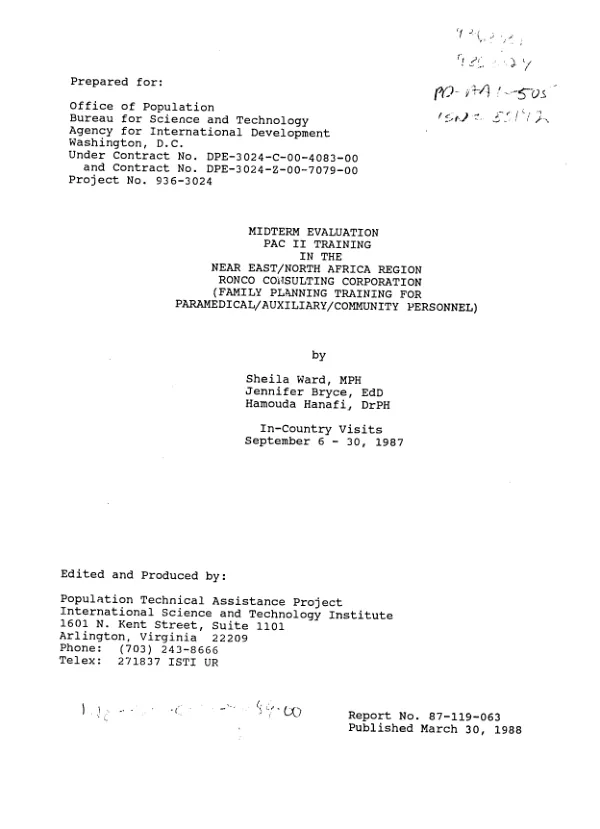
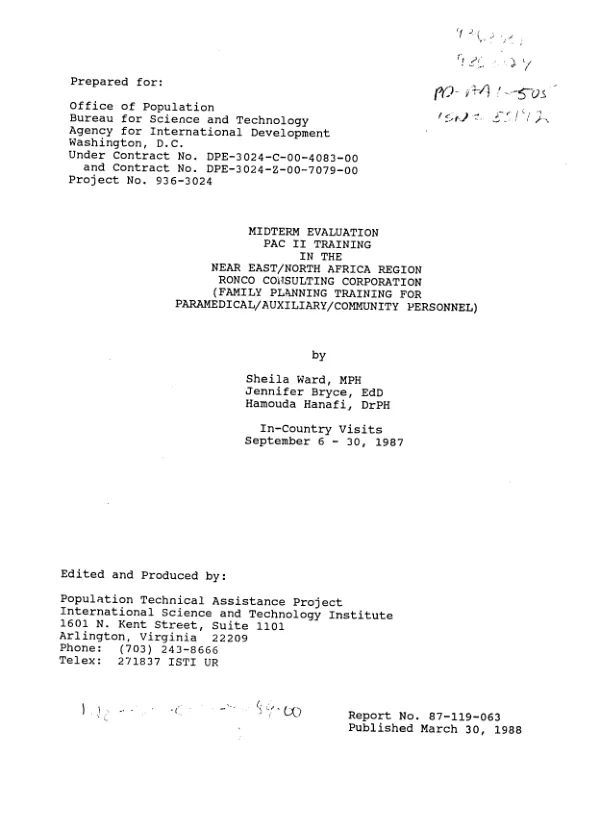
This is one of three reports that evaluate at midterm A.I.D.'s Family Planning Training for Paramedical/Auxiliary/ Community Personnel II (PAC II) project.
Abbatt, Fred|Baldi, Patricia · 1988
Sign in to readA free account is required to download.
Abstract
It reviews progress made by the contractor, Program for International Training in Health (INTRAH), in meeting project goals between 1984 and 1987. PAC II's main purpose is to increase the capability of less developed country (LDC) institutions (both in-country and regional), to train PAC workers to provide family planning services. The contract called for allocating 80% of contract resources to Africa, where provision of family planning services is still relatively undeveloped and the need for training for providers of these services is acute. The strategy employed in Africa was to develop a group of core trainers from within the institutions, mostly Ministries of Health, targeted for assistance. Although INTRAH has introduced a good number of African family planning trainers to new experiential training methods, the evaluation found that there were neither time nor resources to provide the broad spectrum of skills deemed necessary. Gaps were identified in the areas of needs assessment and design of training programs, evaluation, and curriculum development. At this point, it is apparent that it will be several years before host country training in Africa is institutionalized. In Africa, most training has been targeted toward clinical providers. In contrast, in Asia efforts have focused on training for various groups of community-based distributors, including some very successful efforts with young village women and traditional medical practitioners. Most of the organizations assisted, however, were judged well along in their ability to operate in a self-sufficient manner, and INTRAH assistance, while helpful, was not deemed critical. Development of regional training institutions was designated as a major focus of activities in Asia, where two existing regional institutions were already successfully providing training. Under the contract, participants from some African institutions have benefited from exposure to CBD training activities in the Asian setting. Of the five regional institutions targeted for assistance in Africa, however, none was deemed to have begun to achieve institutional self-sufficiency. Project management has been competent with most quantitative goals met or surpassed. The greatest weakness was in the area of evaluation, both with respect to training trainers how to evaluate their own efforts and with respect to self-assessment of project performance. (Author abstract)
Related documents
Documents in this collection
 1988
1988USAID DEC
Midterm evaluation PAC II training in Africa and Asia (family planning training for paramedical/auxiliary/community personnel) : program for international training in health (INTRAH)
Open record 1988
1988USAID DEC