MINISTRY OF EDUCATION
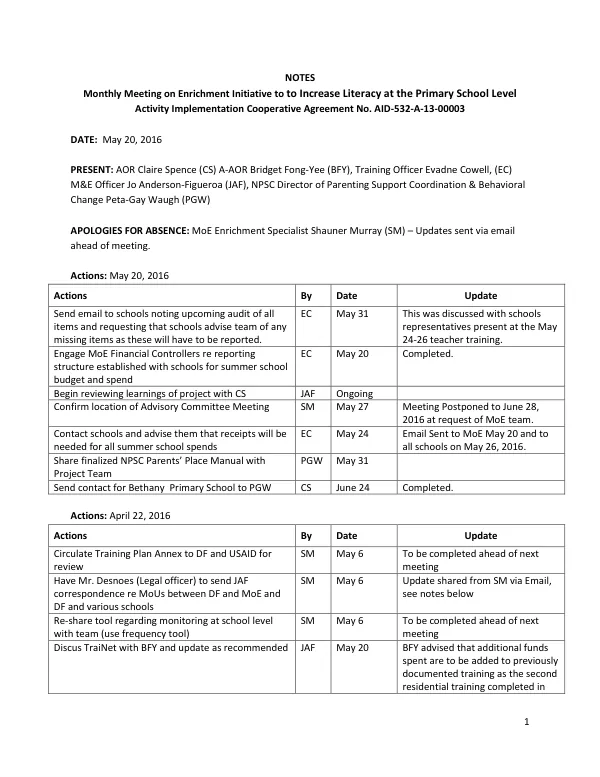
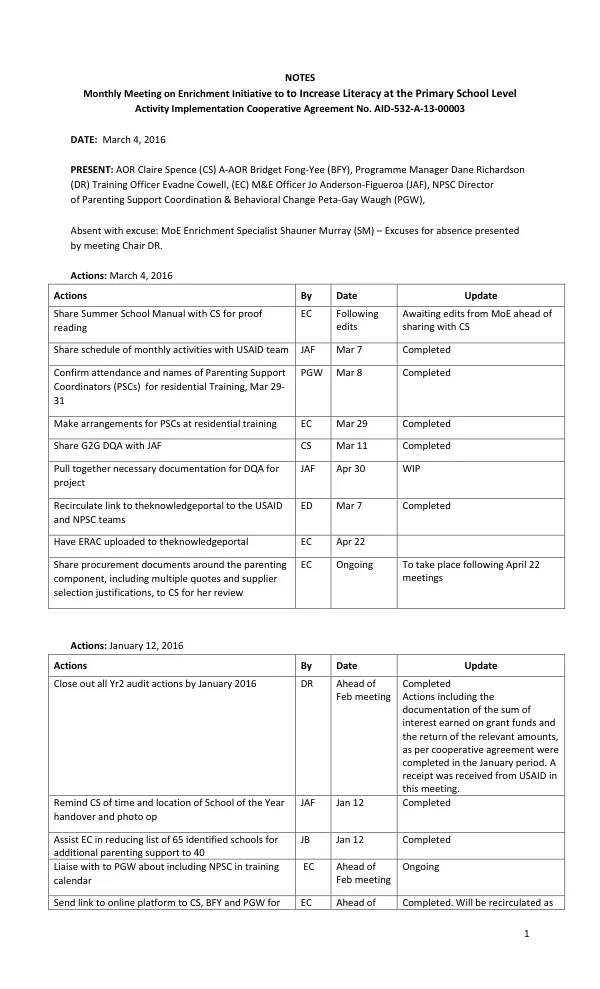
Minutes - Activity Implementation Meeting No. 1
The Enrichment Initiative to Increase Literacy at the Primary School Level is a project implemented by the National Parenting Support Commission (NPSC) in collaboration with the Ministry of Education (MoE) and the Development Fund (DF).
2016 · 5 pages
Sign in to readA free account is required to download.
Abstract
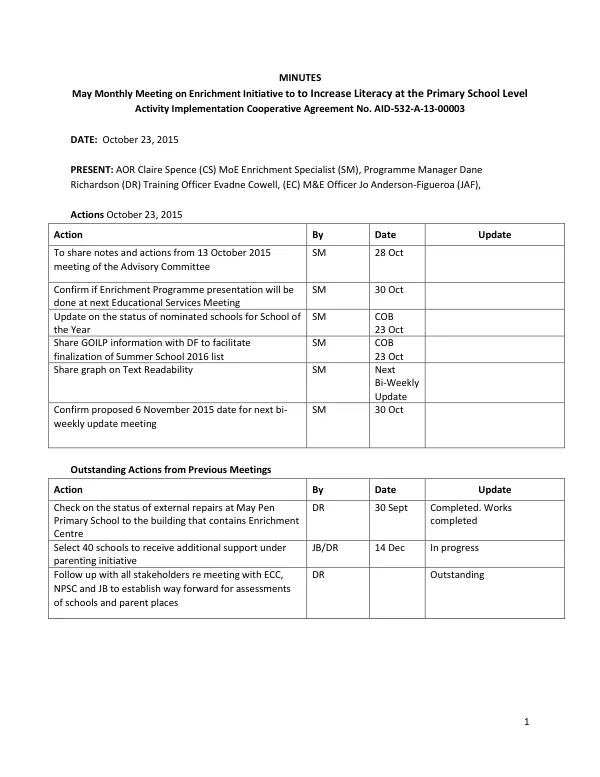
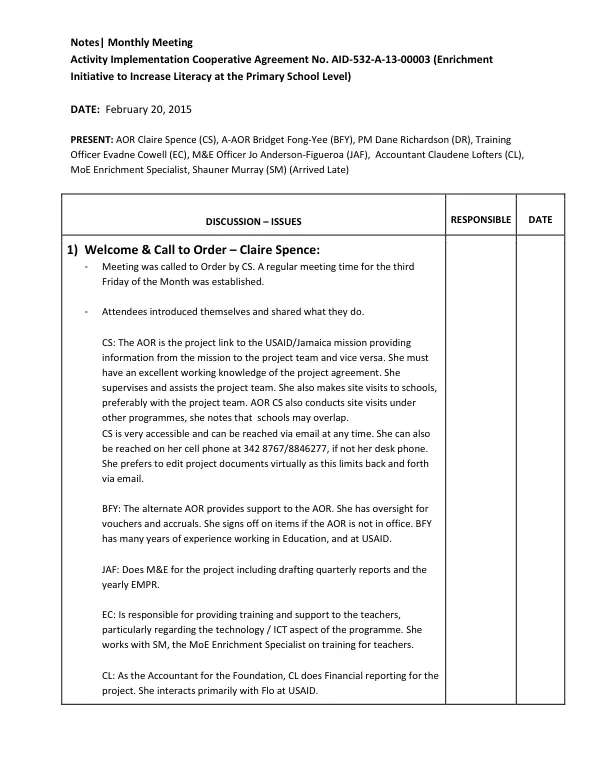
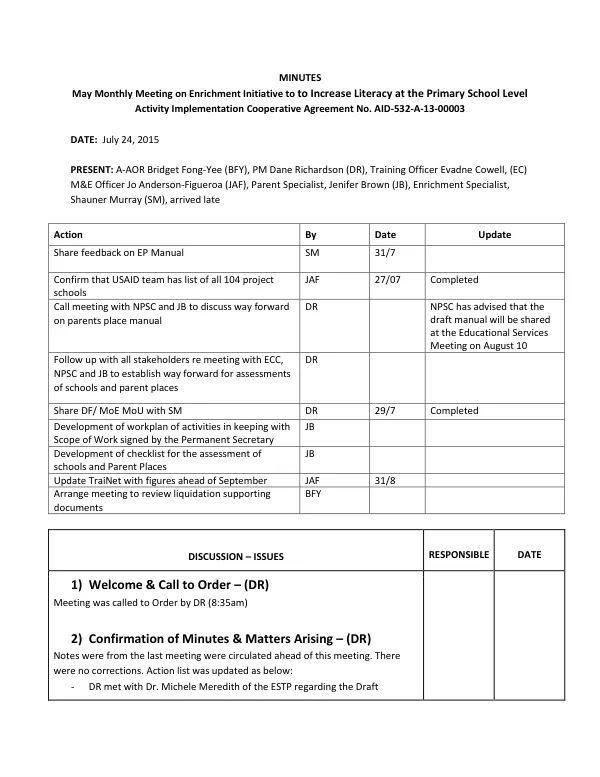
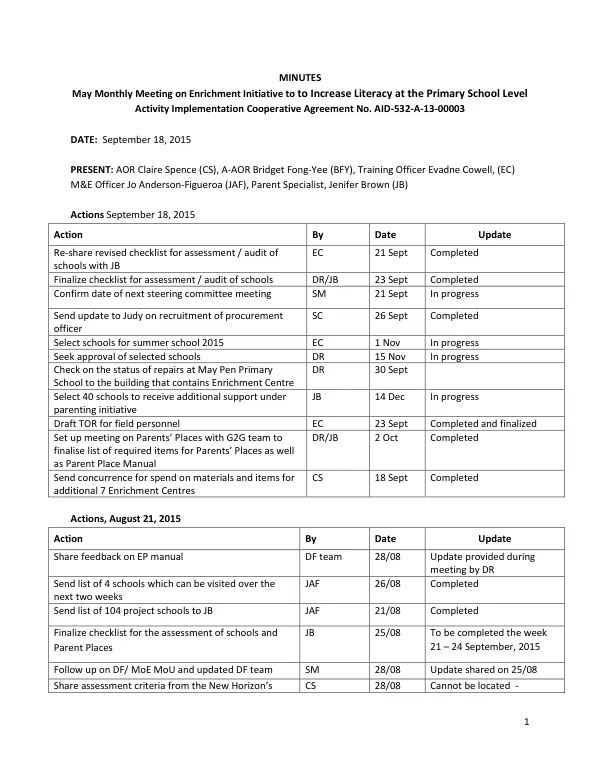
The project aims to improve literacy levels among primary school students through parental engagement and support. The project began in 2015, with a focus on 40 priority schools across the country. The NPSC has established Parent Places in these schools, which serve as hubs for parental engagement and support. The Parent Places are equipped with resources, including books and educational materials, to assist parents in supporting their children's literacy development. The project has implemented various interventions to improve literacy levels among primary school students. These include teacher training programs, which have been conducted in collaboration with the MoE. The training programs have focused on areas such as gender-aware instruction, mathematics, and the integration of technology in the classroom. The NPSC has also provided support for the renovation of schools and the delivery of resources, including educational materials and equipment. Parental engagement is a critical component of the project. The NPSC has established a Parent Support Manager (PSM) program, which provides support to parents in their efforts to engage with their children's education. The PSMs work closely with teachers and school administrators to develop action plans for parental involvement and to provide support to parents in their efforts to support their children's literacy development. The project has made significant progress in improving literacy levels among primary school students. According to data collected by the project team, there has been a notable increase in parental attendance at school events and a significant improvement in the quality of parental engagement. The project has also reported a notable increase in the number of parents who are actively involved in their children's education. The project has also made significant progress in terms of procurement and resource delivery. The NPSC has procured resources, including books and educational materials, to support the Parent Places and to assist parents in supporting their children's literacy development. The project has also reported a significant improvement in the quality of school infrastructure, with the renovation of schools and the delivery of resources. The project has also made significant progress in terms of partnership and collaboration. The NPSC has established partnerships with various stakeholders, including the MoE and the DF, to support the project's objectives. The project has also reported a significant improvement in the quality of collaboration between the NPSC and the MoE, with the two organizations working closely together to support the project's objectives. The project has also made significant progress in terms of monitoring and evaluation. The project team has established a monitoring and evaluation framework to track progress and to identify areas for improvement. The project has also reported a significant improvement in the quality of data collection and analysis, with the project team using data to inform decision-making and to improve project outcomes. The project has also made significant progress in terms of sustainability. The NPSC has established a plan to ensure the long-term sustainability of the project, including the establishment of a Parent Support Manager program and the provision of resources to support parental engagement. The project has also reported a significant improvement in the quality of collaboration between the NPSC and the MoE, with the two organizations working closely together to support the project's objectives. The project has also made significant progress in terms of impact. The project has reported a notable increase in literacy levels among primary school students, with a significant improvement in the quality of parental engagement and a notable increase in parental attendance at school events. The project has also reported a significant improvement in the quality of school infrastructure, with the renovation of schools and the delivery of resources. The project has also made significant progress in terms of recommendations. The project team has identified several recommendations for future projects, including the establishment of a Parent Support Manager program and the provision of resources to support parental engagement. The project has also reported a significant improvement in the quality of collaboration between the NPSC and the MoE, with the two organizations working closely together to support the project's objectives. The project has also made significant progress in terms of timeframes. The project has been implemented over a period of several months, with a focus on improving literacy levels among primary school students. The project has also reported a significant improvement in the quality of collaboration between the NPSC and the MoE, with the two organizations working closely together to support the project's objectives. The project has also made significant progress in terms of geographic focus. The project has been implemented in several regions across the country, with a focus on improving literacy levels among primary school students. The project has also reported a significant improvement in the quality of collaboration between the NPSC and the MoE, with the two organizations working closely together to support the project's objectives.