USAID
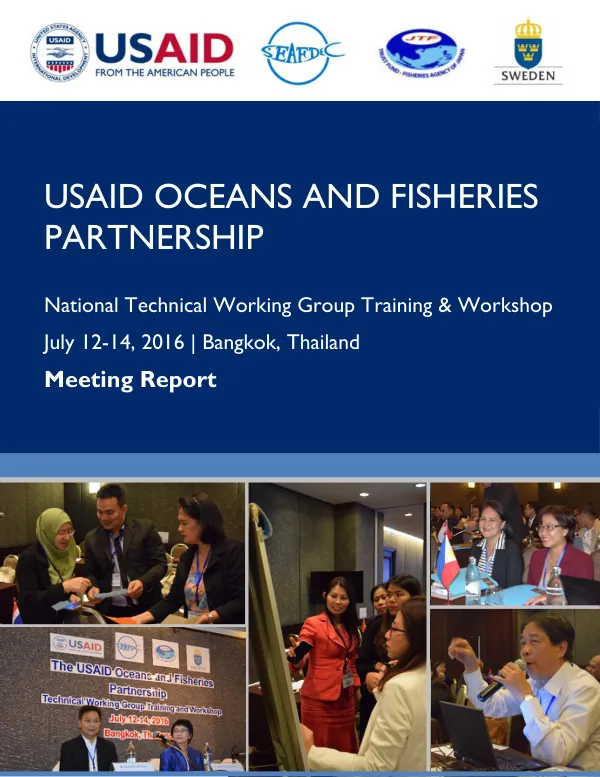
National TWG Training & Workshop Report: The Oceans and Fisheries Partnership
The Oceans and Fisheries Partnership is a collaborative effort between the United States Agency for International Development (USAID) and the Southeast Asian Fisheries Development Center (SEAFDEC) to promote sustainable fisheries management and improve the livelihoods of small-scale fishers in Southeast Asia.
2016 · 93 pages
Sign in to readA free account is required to download.
Abstract
The partnership aims to address key challenges in the region's fisheries sector, including overfishing, destructive fishing practices, and inadequate fisheries management. The partnership focuses on four key workstreams: catch documentation and traceability, public-private partnerships, ecosystems approach to fisheries management, and human welfare. The catch documentation and traceability workstream aims to develop a system to track the origin and movement of seafood from catch to market, while the public-private partnerships workstream seeks to engage the private sector in fisheries management and development. The ecosystems approach to fisheries management workstream focuses on promoting sustainable fishing practices and conserving marine ecosystems, while the human welfare workstream addresses the social and economic impacts of fisheries management on small-scale fishers and their communities. The partnership has made significant progress in its first year, with the development of a catch documentation and traceability system and the establishment of public-private partnerships in several countries. The partnership has also conducted training and capacity-building activities for national technical working groups (TWGs) in Southeast Asia, with a focus on building the capacity of TWGs to implement the partnership's workstreams. Country status presentations were also conducted during the workshop, with each country providing an update on its fisheries management and development efforts. The presentations highlighted the challenges and opportunities facing each country, as well as their progress in implementing the partnership's workstreams. The partnership has also developed a year 2 workplan and expansion plan, which outlines its goals and objectives for the next year. The plan includes the establishment of learning sites and expansion sites to support the implementation of the partnership's workstreams. The partnership has also identified key activities and indicators to measure its progress and impact. The workshop evaluation results indicate that the partnership's training and capacity-building activities were effective in building the capacity of TWGs in Southeast Asia. The evaluation also highlighted the need for continued support and capacity-building activities to ensure the successful implementation of the partnership's workstreams. The partnership has made significant progress in its first year, and its workstreams have the potential to make a positive impact on the livelihoods of small-scale fishers and their communities in Southeast Asia. The partnership's continued support and capacity-building activities will be critical to ensuring the successful implementation of its workstreams and achieving its goals and objectives.