USAID DEC
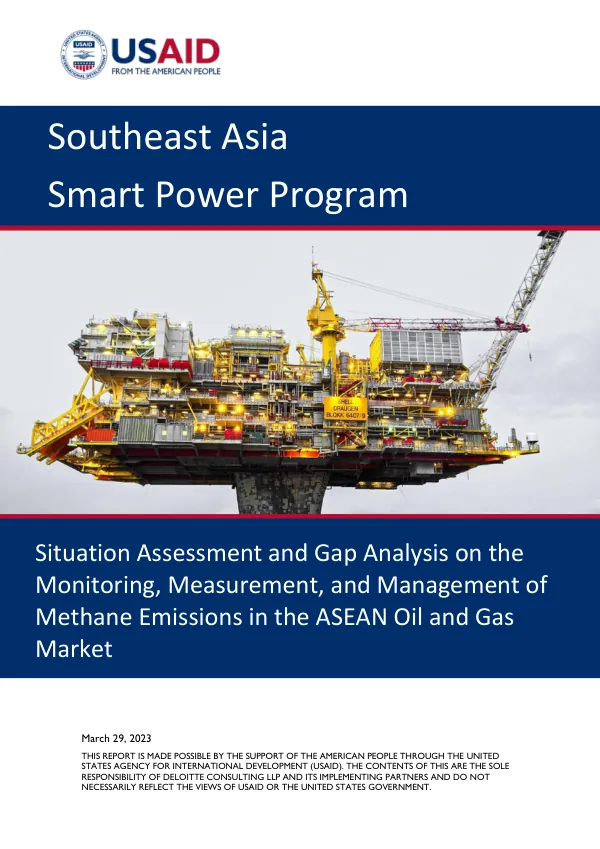
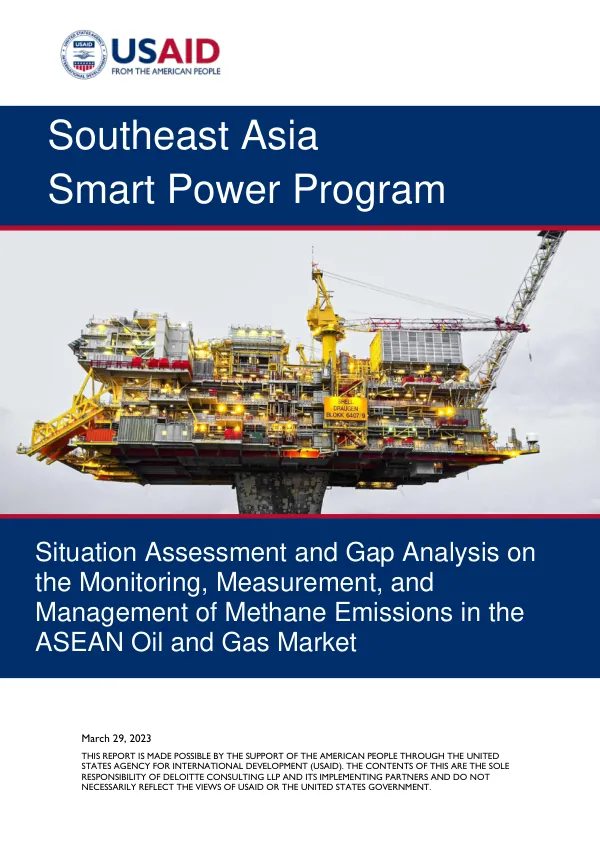
Situation Assessment and Gap Analysis on the Monitoring, Measurement, and Management of Methane Emissions in the ASEAN Oil and Gas Market
Sign inDELOITTE CONSULTING, LLP
Situation Assessment and Gap Analysis on the Monitoring, Measurement, and Management of Methane Emissions in the ASEAN Oil and Gas Market
The Association of Southeast Asian Nations (ASEAN) oil and gas sector is expected to experience a steady rise in methane emissions over the next decade.
2023 · 33 pages
Sign in to readA free account is required to download.
Abstract
Global figures indicate that 68 to 77 percent of regional methane emissions occur within the oil and natural gas production and processing segments, followed by transmission and storage, which account for 17 to 19 percent. Reducing methane emissions from the energy sector, particularly from the oil and gas sub-sector, presents a near-term cost-effective opportunity to limit global warming and improve air quality. Countries in ASEAN employ different methods and monitoring frequencies for measuring and reporting their emissions. As a result, there is a need for practical guidelines and compliance standards. The ASEAN oil and gas sector utilizes a range of commercially available methane detection and quantification technologies, each with its own advantages and disadvantages. Common methane emission detection technologies for leak detection and repair (LDAR) include stationary sensors, satellites, handheld monitors, unmanned aerial vehicles (UAVs) and drones, mobile ground labs (trucks), and piloted aircraft. A recent situation assessment and gap analysis identified opportunities for regional collaboration based on a matter of urgency and the interests of the countries. These opportunities were confirmed by a roundtable workshop organized in December 2022 in Bangkok, which is available at the ASEAN Centre for Energy (ACE)’s website. The workshop proposed three tracks for Monitoring, Reporting, and Verification (MRV) of methane emissions: a) MRV regulatory framework and guidelines, b) methane detection technology, and c) capacity building. Potential implementing partners include ASEAN institutions, U.S. government organizations, and non-governmental organizations. These organizations have solid footprints in the region and express their interest to join forces with national governments. As a next step, the USAID Southeast Asia Smart Power Program (SPP) will coordinate with oil and gas companies to develop practical guidelines and compliance standards for methane emissions monitoring and reporting in the ASEAN region. The ASEAN oil and gas sector is characterized by a diverse range of methane emission sources, including production, processing, transmission, and storage facilities. Methane emissions from these sources can be reduced through the implementation of effective monitoring and reporting systems, as well as the adoption of best practices for leak detection and repair. The development of practical guidelines and compliance standards for methane emissions monitoring and reporting will be essential for achieving this goal. The ASEAN Centre for Energy (ACE) has played a key role in promoting the adoption of innovative technologies for methane emission detection and quantification in the region. The organization has also facilitated the development of a regional framework for MRV of methane emissions, which includes guidelines for regulatory frameworks, methane detection technology, and capacity building. The implementation of this framework will require close collaboration among ASEAN institutions, U.S. government organizations, and non-governmental organizations. The reduction of methane emissions from the ASEAN oil and gas sector is a critical step towards achieving the region's climate change mitigation goals. The development of practical guidelines and compliance standards for methane emissions monitoring and reporting will be essential for achieving this goal. The implementation of effective monitoring and reporting systems, as well as the adoption of best practices for leak detection and repair, will also be critical for reducing methane emissions from the sector.
Related documents