RTI INTERNATIONAL
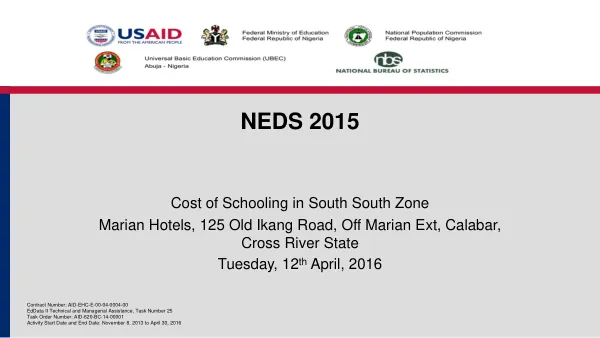
NEDS 2015: Cost of Schooling in South South Zone
The South South Zone of Nigeria is characterized by a high cost of schooling, with significant variations in household expenditures across different states, school types, and socioeconomic groups.
2016 · 15 pages
Sign in to readA free account is required to download.
Abstract
Per pupil household expenditures on education in 2015 averaged NEDS 2015, with total expenditures exceeding NEDS 2015. Per pupil household expenditures on education varied significantly by state, with the highest expenditures recorded in Cross River State, where the report was compiled. The report highlights the importance of understanding these variations in order to inform education policy and resource allocation. In 2015, per pupil household expenditures on education in Cross River State averaged NEDS 2015. Household expenditures on education also varied by school type, with private schools recording significantly higher expenditures than public schools. In 2015, per pupil household expenditures on education in private schools averaged NEDS 2015, compared to NEDS 2015 in public schools. The report suggests that these variations may be due to differences in school quality, access to resources, and parental expectations. In addition to these variations, household expenditures on education also differed by wealth quintile and residence. In 2015, per pupil household expenditures on education in the highest wealth quintile averaged NEDS 2015, compared to NEDS 2015 in the lowest wealth quintile. Similarly, households residing in urban areas recorded higher expenditures than those residing in rural areas, with per pupil household expenditures on education averaging NEDS 2015 in urban areas and NEDS 2015 in rural areas. The report also highlights the most commonly cited expenditures by school type, including tuition fees, uniforms, and textbooks. In 2015, the most commonly cited expenditures by school type were tuition fees, which averaged NEDS 2015 in private schools and NEDS 2015 in public schools. The report suggests that these expenditures may be a significant burden on households, particularly in low-income communities.
Related documents