MACRO INTERNATIONAL INC.
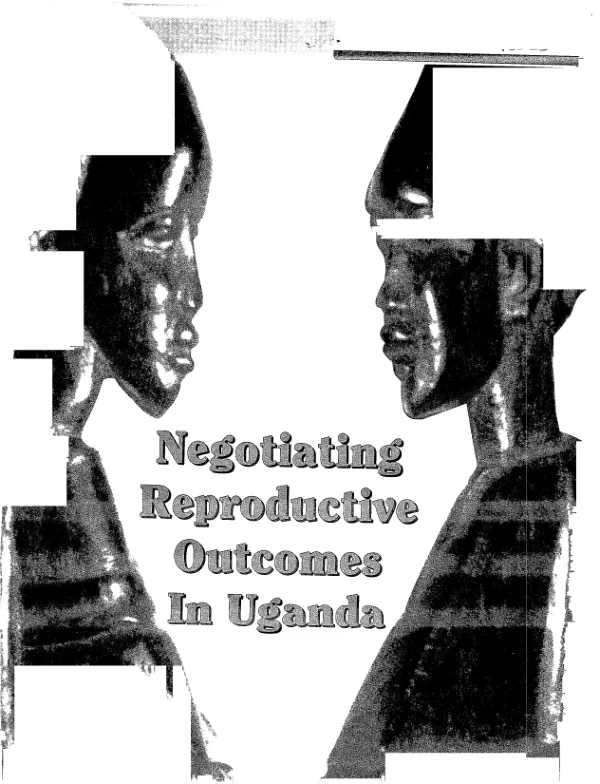
Negotiating reproductive outcomes in Uganda
In designing family planning programs that meet individual women"s needs, information on the circumstances governing reproductive decisions is crucial.
Blanc, Ann K.; Wolf, Brent · 1996
Sign in to readA free account is required to download.
Abstract
This study examined: how women and men in Uganda"s Masaka and Lira districts negotiate reproductive decisions; which characteristics of the individual, household, and community influence the negotiation process; and how the position of women influences their ability to negotiate the outcomes they desire. Through a focus group and a survey of 1,750 women aged 20-44 and 1,356 of their male partners, the study discovered that much of the process of negotiation is marked by bargaining behaviors, often nonverbal, and thus by mutual misperception and mistrust. Mistrust caused by suspicions of male infidelity was especially noticeable in the female focus group discussions, as was women"s acute awareness of their vulnerability to disease and the cultural norms that make it difficult for them to refuse sex. Men"s family planning choices are most often influenced by economic concerns, whereas women"s choices are influenced, in addition, by health concerns for herself and her children; these concerns are often so significant that the women will secretly use contraception despite the repercussions from discovery, which may include ousting from the household. In fact, women"s social and economic vulnerability frequently curtails their ability to openly express and argue for their own interests with their partner. The study points to the need for research designs that reflect more broadly the multiple actors who participate in reproductive decisionmaking and improved access to health and family planning services, which can help to strengthen women"s negotiation role in the sexual partnership.