EVALUATION TECHNOLOGIES, INC.
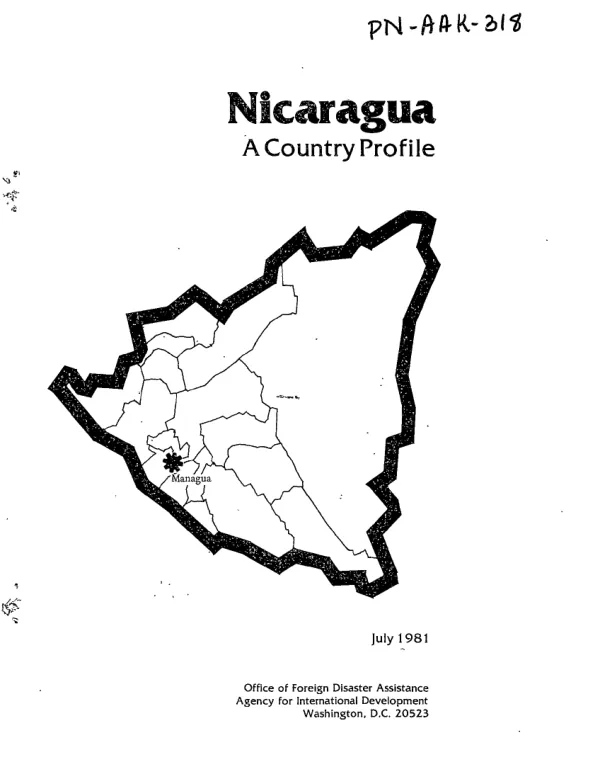
NICARAGUA : A COUNTRY PROFILE
Sixty percent of Nicaragua"s population lives in the geologically unstable Pacific area, which is subject to earthquakes and volcanism.
1970
Sign in to readA free account is required to download.
Abstract
This report examines the country"s vulnerability to these and other natural disasters, including epidemics, hurricanes, floods, and drought. A cultural and political overview is followed by an assessment of disaster preparedness, covering Honduran, U.S., and voluntary institutions and resources. The circumpacific belt of seismic activity passes through western Nicaragua, while most volcanism occurs in a narrow zone (part of the Central American volcanic chain) which runs through Managua. A 1972 earthquake destroyed the capital city"s center, and volcanic activity has been continuous throughout the country"s recorded history, with both lava and pyroclastic eruptions. Contaminated water, poor sanitation, and crowded living conditions in urban and rural slums contribute to a high incidence of communicable diseases, including tuberculosis, typhoid, leprosy, and malaria. The Atlantic coast is vulnerable to hurricanes, while flash floods, although rare, have occurred in Chinandega, Leon, Masaya, Granada, and Rivas. Drought from 1969-1973 resulted in crop losses of 15%-40%. Final sections provide information helpful to disaster relief planning in the areas of population; health, nutrition, and housing; economy; agriculture; physical geography; and transportation, energy, and communications infrastructure.
Related documents