USAID DEC
Nurturing Future Community Health Leaders to Deliver Comprehensive Primary Healthcare
Sign inJHPIEGO
Nurturing Future Community Health Leaders to Deliver Comprehensive Primary Healthcare
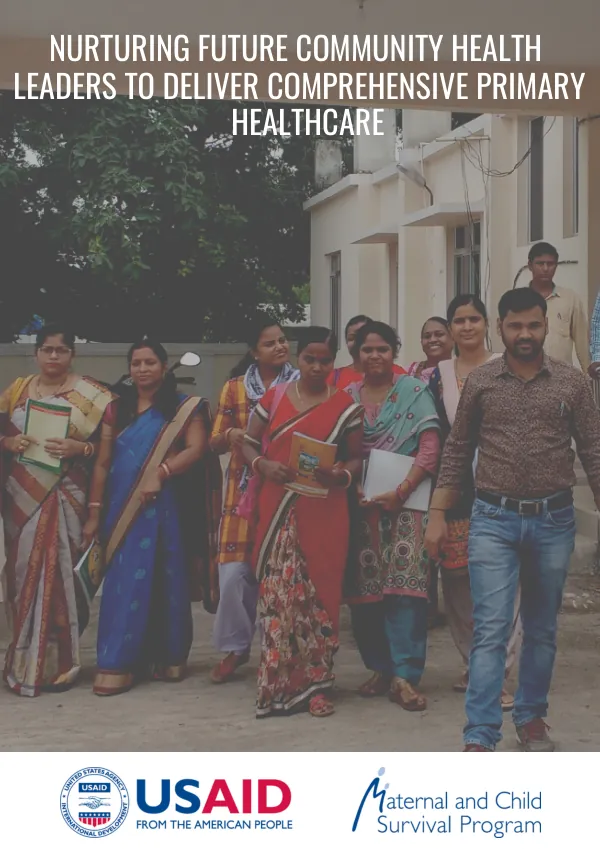
The Kandhamal District Hospital in Odisha, India, has been designated as a Program Study Center (PSC) by Indira Gandhi National Open University (IGNOU) to provide training in the certificate course in community health.
2018 · 4 pages
Sign in to readA free account is required to download.
Abstract
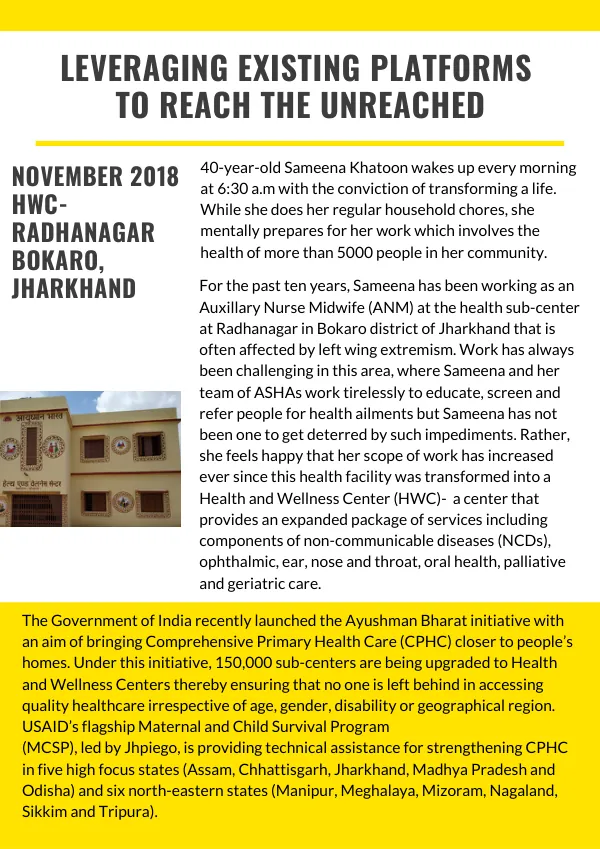
This course is a prerequisite for becoming a Community Health Officer (CHO) under the Ayushman Bharat program. The hospital is currently training 28 community health leaders, comprising nurses and Ayurveda practitioners, to become CHOs. The certificate course in community health is designed to build the capacity of mid-level providers to deliver quality healthcare services in community settings, particularly in hard-to-reach areas. This course is a six-month program offered by IGNOU twice a year, with students graduating in June and December. The course includes 120 hours of theory classes, 120 hours of self-study, and 300 hours of practical learning sessions. Dr. Kalpana Kumari Dal, the PSC in-charge, believes that the certificate course in community health is a timely initiative, given the chronic shortage of doctors and specialists in the country. She notes that the course enables the delivery of healthcare services in community settings without compromising on quality care. Dr. Kalpana was given charge of the Kandhamal PSC in December 2017, but administrative delays led to a delay in accreditation by IGNOU until March 2018. The Kandhamal PSC received support from the Maternal and Child Survival Program (MCSP) to initiate the course. The MCSP team worked with Dr. Kalpana and her team to develop an academic and clinical posting plan to ensure the completion of classes on time. The certificate course was conducted in a record 15 days, with back-to-back theory classes. Dr. Kalpana credits the cooperation of the academic counsellors and the MCSP team for the successful completion of the course. The USAID's Maternal and Child Survival Program (MCSP) is providing technical assistance in the implementation of Health and Wellness Centers in five high-focus states and six north-eastern states. The program is extending onsite handholding support to ensure quality training and address operational challenges. A recent knowledge assessment conducted to assess the technical knowledge of the candidates showed a positive outcome, increasing the confidence of the faculty in the students' abilities. Dr. Kalpana is confident that her students will lead by example and provide quality healthcare services in the most remote villages. She believes that the IGNOU certificate course in community health, implemented with support from MCSP, has the potential to equip health professionals with the knowledge and skills to provide comprehensive primary healthcare and ensure the wellbeing of communities, particularly in hard-to-reach areas of the country.
Related documents