USAID DEC
Nutrition of Adolescent Girls and Women of Reproductive Age in Low- and Middle-Income Countries: Current Context and Scientific Basis for Moving Forward
Sign inHELLEN KELLER INTERNATIONAL
Nutrition of Adolescent Girls and Women of Reproductive Age in Low- and Middle-Income Countries: Current Context and Scientific Basis for Moving Forward
The nutritional status of adolescent girls and women of reproductive age in low- and middle-income countries has undergone significant changes in recent years.
2015 · 122 pages
Sign in to readA free account is required to download.
Abstract
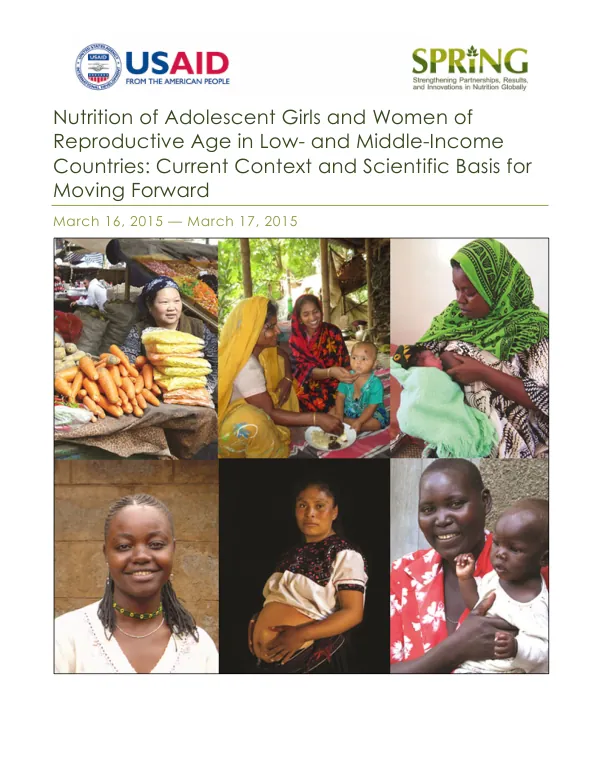
The prevalence of underweight among women has decreased globally, with less than 10 percent of women affected, except in South Asia. Conversely, the prevalence of overweight and obesity has risen, approaching 50 percent in many regions. This shift has led to an increase in risk factors for chronic diseases, indicating that a greater percentage of women will enter pregnancy with underlying chronic conditions and are therefore at high risk. The findings of a systematic literature review revealed a common set of inadequacies in dietary intake among adolescent girls and women of reproductive age, regardless of age and reproductive stage. These inadequacies include deficiencies in iron, zinc, vitamin A, vitamin C, and calcium. Given the diminishing problem of underweight and the increasing problem of overweight, efforts are needed to identify effective means of facilitating weight loss. Attention must be given throughout the continuum of care, from adolescent girls to women of reproductive age, to achieve and maintain a healthy diet and eating practices. The recognition that early life nutrition affects health in later years has led practitioners and researchers to advocate for a life-cycle approach to nutrition. This approach emphasizes the importance of considering nutrition over the life course, from adolescence to old age. The significance of this approach is highlighted in the recent series on maternal and child nutrition published in The Lancet, which specifically identifies adolescent girls as a group vulnerable to the effects of undernutrition. As adolescence is a period of rapid growth, some argue that the potential exists for height catch-up during this time for children stunted in early childhood. The life-cycle approach to nutrition is essential for improving the nutritional status of adolescent girls and women of reproductive age. This approach recognizes that the nutritional and health status of a woman before and/or during early pregnancy affects physiologic adjustment to pregnancy and the condition of the periconceptional environment for the embryo, and ultimately the fetal environment. Periconceptional problems, such as low maternal prepregnancy weight, severe iodine deficiency, and folate deficiency, negatively affect pregnancy outcomes. Comprehensive research is still needed to evaluate other aspects of periconceptional nutritional status and to identify effective programs models for improving maternal nutrition during the periconceptional, gestational, and postpartum periods. The Strengthening Partnerships, Results, and Innovations in Nutrition Globally (SPRING) project, along with the Pan American Health Organization (PAHO/WHO), has identified a need for a core set of key practices that characterize the diet and feeding practices associated with good nutrition among adolescent girls, women, and pregnant and breastfeeding women. This paper summarizes existing information on the current nutritional status of adolescent girls, women of reproductive age, and pregnant and lactating women in low- and middle-income countries, representing a fundamental first step toward identifying key principles for improving the nutritional status of adolescent girls and women throughout their reproductive years.
Related documents
Documents in this collection
 2012
2012USAID DEC
Strengthening Partnerships, Results and Innovations in Nutrition Globally (SPRING) Project: Studying the integration of maternal, infant, and young child nutrition (MIYCN) with agriculture, water, sanitation, and hygiene (WASH), or HIV programs
Open record 2015
2015USAID DEC