HEALTH ALLIANCE INTERNATIONAL
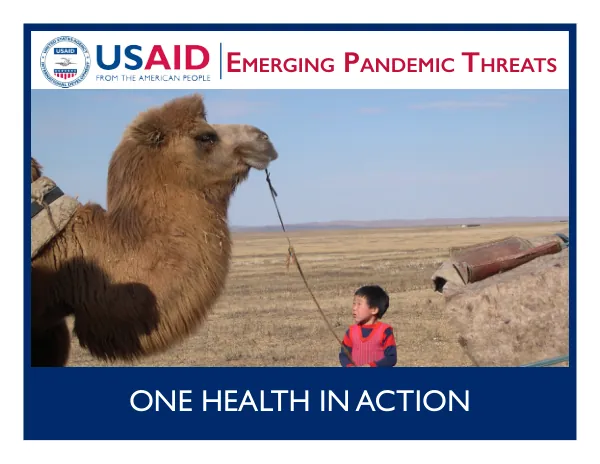
One Health in Action: Emerging Pandemic Threats
The One Health in Action publication highlights the importance of addressing emerging pandemic threats through a collaborative approach that bridges human, animal, and environmental health.
2016 · 16 pages
Sign in to readA free account is required to download.
Abstract
The publication was prepared by the PREDICT Consortium, headquartered at the One Health Institute, University of California, Davis, in collaboration with EcoHealth Alliance. Recent disease outbreaks, such as the Ebola outbreak in West Africa, have drastically threatened local and global health, as well as country development. The outbreak resulted in over 28,600 cases, reducing gross domestic product growth in affected countries and disrupting progress in key development priorities, including educational attainment, vaccination campaigns, and management or treatment of diseases such as HIV/AIDS and malaria. The publication emphasizes that the world remains unprepared to tackle new disease outbreaks in the future. To address this challenge, the Global Health Security Agenda was launched in February 2014 to pursue a multilateral and multi-sectoral approach to strengthen global capacity and nations' capacity to prevent, detect, and respond to human and animal infectious disease threats. The publication highlights the trend of zoonotic diseases, where the majority of known human infectious diseases have originated from animals. The recent spread of Zika virus in the Americas represents the potential for new diseases to emerge and have rapid nation-level impacts. The underlying causes of diseases being transmitted from animals to humans include conversion of landscapes, changing agriculture and food production systems, and wildlife trade. The publication also emphasizes the importance of understanding the connections among humans, animals, and ecosystems within the political, economic, and social systems in which they operate. A One Health approach is needed to identify more effective solutions to disease transmission, and collaboration among public health, veterinary, agriculture, and environmental communities can result in more comprehensive and cost-effective outcomes. The publication presents case studies from partner countries, including Bangladesh, which has a strong legacy of interest and leadership in One Health efforts. The country's Pandemic Influenza Preparedness and Response plan, initiated in 2005, involved veterinary, public health, and wildlife health sectors working together to coordinate efforts and address the need for a One Health approach. The publication highlights the importance of addressing emerging pandemic threats through a collaborative approach that bridges human, animal, and environmental health. The One Health approach is essential for identifying more effective solutions to disease transmission and for promoting global health and development. Bangladesh's experience with One Health efforts demonstrates the type of approaches, partnerships, and benefits that One Health can yield. The country's legacy of interest and leadership in One Health efforts has been instrumental in promoting a collaborative approach to addressing emerging pandemic threats. The publication emphasizes that the One Health approach is especially needed in light of the rapid global environmental and agricultural changes that are presently occurring and expected to increase over the coming decades. These changes are creating pressures on natural systems and increasing contact between humans and other species, facilitating the emergence of both infectious and noninfectious disease problems. The publication highlights the importance of supporting One Health efforts and demonstrating the type of approaches, partnerships, and benefits that One Health can yield. The case studies presented in the publication represent a compilation of examples to date, noting that One Health examples will be further established and refined in the work of Emerging Pandemic Threats projects and partners. The publication concludes by emphasizing the need for a more integrated understanding of the connections among humans, animals, and ecosystems within the political, economic, and social systems in which they operate. A One Health approach is essential for promoting global health and development, and its implementation on the ground remains limited due to a wide range of competing priorities.
Related documents