MANAGEMENT SCIENCES FOR HEALTH
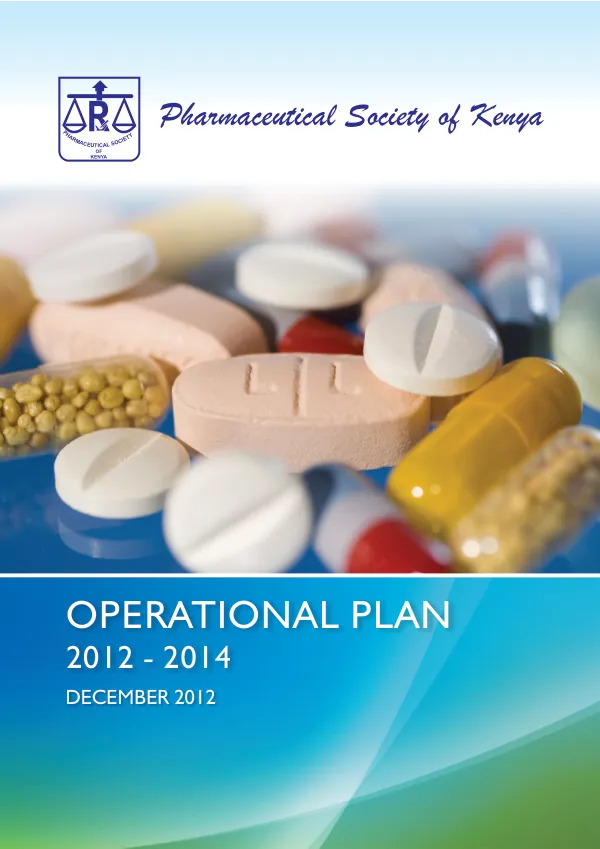
Operational Plan 2012 – 2014: Pharmaceutical Society of Kenya
The Pharmaceutical Society of Kenya (PSK) was established in 1964 under the Societies Act Cap 108 laws of Kenya.
2012 · 36 pages
Sign in to readA free account is required to download.
Abstract
Since its inception, the Society has experienced significant growth, promoting a common standard of professional conduct and ethics while advocating for the welfare of its members. However, PSK faces numerous challenges, including low standards of pharmaceutical services, high prevalence of counterfeit drugs, and uncontrolled and illegal outlets run by unqualified persons. The capacity of PSK to deal with these challenges is wanting due to low membership, weak resource base, high dependence on donor funding, and inactive registered members. The main goal of the operational plan is to position PSK to face an increasingly turbulent future while turning these adversities into challenges and opportunities for the Society. The plan aims to realign the direction of PSK to focus energies and resources on a clear blueprint that indicates where the Society is headed. The operational plan highlights the strategic objectives and action plans that will help attain the set goals. The plan is structured around eight strategic objectives, including developing consistent use of required processes and administrative policies, empowering branches to operational independence, and institutionalizing collaboration with local and international organizations. The plan provides a framework and mapping of all activities through which intended outputs and outcomes outlined in the Strategic Plan will be achieved. The activities are specific, targeted, and time-bound, and the plan seeks to inform implementers on the specific ways they will contribute to the results in the Strategic Plan. Quarterly results-based planning offers flexibility to allow for changes and relevant adjustments, as well as capture potential gaps and delays in real-time. The plan requires implementers to report on results achieved during respective implementing quarters. They must identify the results for which they are responsible, key process indicators to measure progress and achievements, and breakdown key activities to specific process activities and link them to available budgets. Implementation results will be consolidated into one overall quarterly report, outlining respective quarter targets, implementation status, and comments on variance with regard to planned targets. The operational plan aims to help achieve the results outlined in the Strategic Plan. The planned activities are captured and presented in a table, detailing the activities, timelines, and those responsible for implementation. The plan seeks to inform implementers on the specific ways they will contribute to the results in the Strategic Plan, and quarterly results-based planning offers flexibility to allow for changes and relevant adjustments. The Pharmaceutical Society of Kenya has identified the need for an operational plan to address the challenges facing the Society both internally and externally. The National Council constituted a team to help create the operational plan, which highlights the strategic objectives and action plans that will help attain the set goals. The plan aims to position PSK to face an increasingly turbulent future while turning these adversities into challenges and opportunities for the Society. The operational plan is a critical document that outlines the activities and action plans that will help achieve the results outlined in the Strategic Plan. The plan is structured around eight strategic objectives, including developing consistent use of required processes and administrative policies, empowering branches to operational independence, and institutionalizing collaboration with local and international organizations. The plan seeks to inform implementers on the specific ways they will contribute to the results in the Strategic Plan, and quarterly results-based planning offers flexibility to allow for changes and relevant adjustments. The Pharmaceutical Society of Kenya has a long history of promoting a common standard of professional conduct and ethics while advocating for the welfare of its members. However, the Society faces numerous challenges, including low standards of pharmaceutical services, high prevalence of counterfeit drugs, and uncontrolled and illegal outlets run by unqualified persons. The operational plan aims to address these challenges and position PSK to face an increasingly turbulent future while turning these adversities into challenges and opportunities for the Society.