FHI 360
Optimizing HIV Testing Performance in Selected PEPFAR Sites
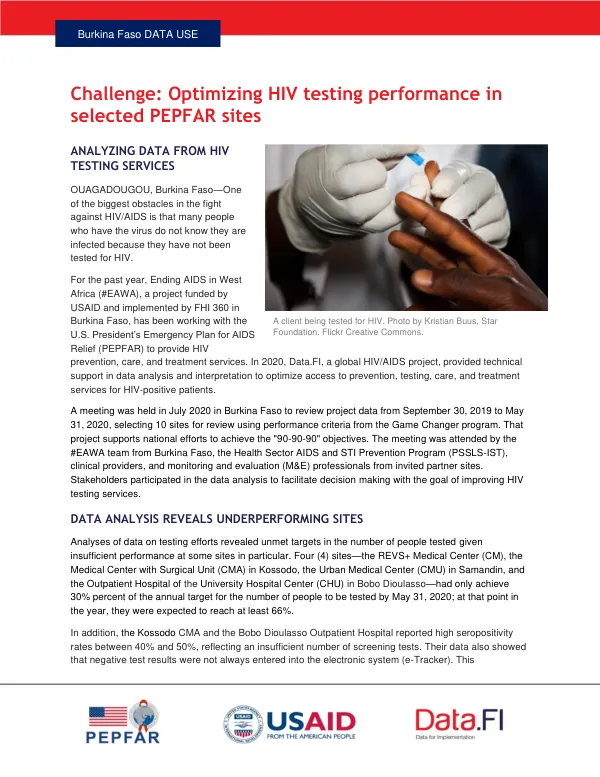
The HIV testing performance in selected PEPFAR sites in Burkina Faso was analyzed to optimize access to prevention, testing, care, and treatment services for HIV-positive patients.
2020 · 4 pages
Sign in to readA free account is required to download.
Abstract
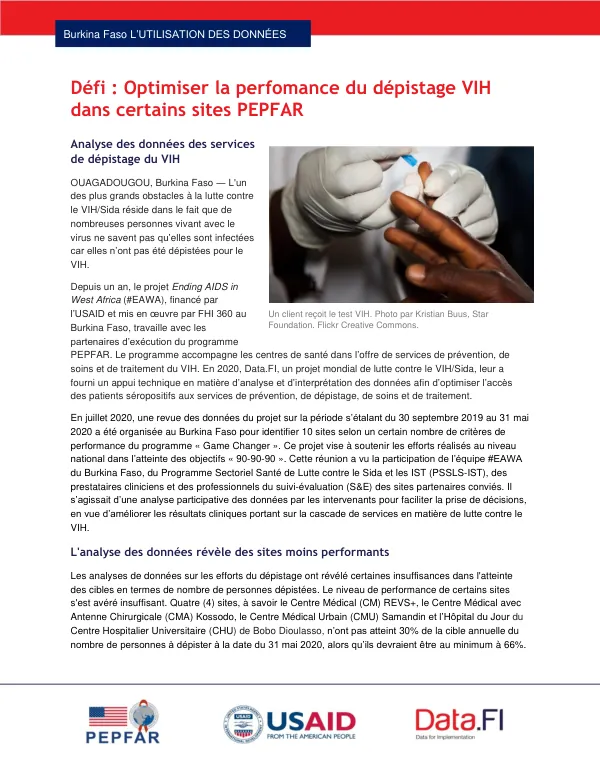
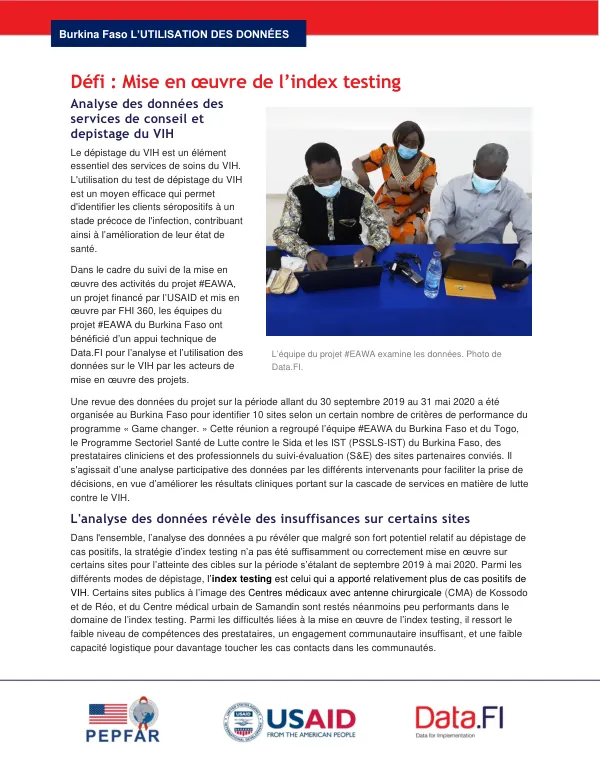
The analysis was conducted by the Ending AIDS in West Africa (#EAWA) project, a USAID-funded initiative implemented by FHI 360 in Burkina Faso, in collaboration with the U.S. President's Emergency Plan for AIDS Relief (PEPFAR) and Data.FI, a global HIV/AIDS project. The analysis revealed that four sites, including the REVS+ Medical Center, the Medical Center with Surgical Unit in Kossodo, the Urban Medical Center in Samandin, and the Outpatient Hospital of the University Hospital Center in Bobo Dioulasso, had only achieved 30% of the annual target for the number of people to be tested by May 31, 2020. These sites were expected to reach at least 66% of the target at that point in the year. The Kossodo CMA and the Bobo Dioulasso Outpatient Hospital reported high seropositivity rates between 40% and 50%, indicating an insufficient number of screening tests. The data analysis also showed that negative test results were not always entered into the electronic system (e-Tracker), and issues such as the lack of support from a community association for public sites to conduct community testing, shortages of testing supplies, and a failure to enter all information sources contributed to the low testing numbers. To address these challenges, #EAWA implemented urgent corrective measures at the CMO Kossodo and Bobo Dioulasso Inpatient Hospital locations, including operationalizing support for public sites through a partner community association, providing sites with sufficient supplies to conduct screening tests, and harmonizing all testing data collection tools to ensure that all tests performed are entered in the e-Tracker system. Following the implementation of these corrective measures, there was a return to normal and an effective relaunch of testing and treatment activities for HIV-positive patients when the restrictions imposed for the COVID-19 pandemic were lifted. The seropositivity rate for the Bobo Dioulasso Inpatient Hospital and the Kossodo CMA showed a significant decrease after the intervention, indicating an improvement in HIV testing performance. To further improve the performance of HIV counseling/testing data, the following measures are needed: increasing counseling/screening services at the various sites, increasing the contributions of community associations and partners for public sites to conduct screening tests, providing sites with sufficient HIV testing supplies, and systematically collecting all primary reporting tools during the e-tracker data entry.
Related documents