DT GLOBAL
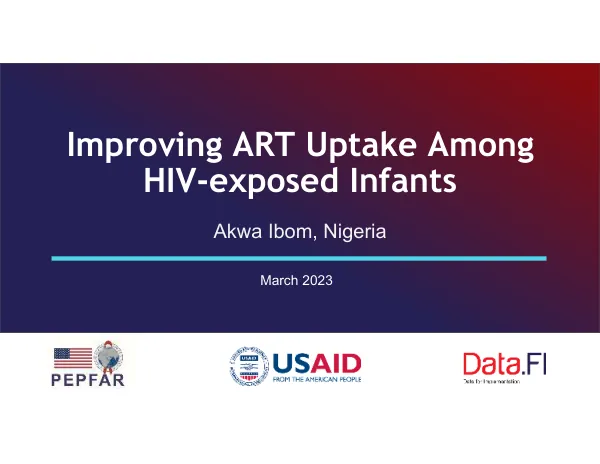
Improving ART Uptake Among HIV-exposed Infants
Improving ART Uptake Among HIV-exposed Infants in Akwa Ibom, Nigeria, began with the identification of mother-to-child transmission of HIV as a significant source of new HIV transmission.
2023 · 6 pages
Sign in to readA free account is required to download.
Abstract
Postnatal testing for Early Infant Diagnosis (EID) is crucial to increase participation in EID through postnatal testing. However, EID linkage rates varied significantly from quarter to quarter due to long delays between diagnosis and treatment. The primary causes of the variable EID linkage rates included stock-outs of reagents for testing of samples, long turnaround times for return of samples, migration of mothers with children after delivery, and low prioritization of EID samples compared to sputum samples. To address these challenges, several actions were implemented, including increased testing of EID samples, expansion of PCR labs for testing of EID samples, introduction of point-of-care technology for EID testing in certain facilities, and increased transfer of samples between facilities for faster testing. Collaboration between stakeholders was also crucial in addressing the slowdown in EID linkage rates. Partners convened at the situation room to discuss causes of the slowdown and brainstorm solutions. Improved collaboration between partners ensured the transfer of samples between testing sites. Additionally, advocacy efforts were made to increase focus on EID samples, with laboratory staff at health facilities prioritizing PCR samples. As a result of these efforts, significant improvements were observed in EID linkage rates. The linkage rate increased from 52% in the first quarter of 2021 to 82% in the fourth quarter of 2022. The percentage of newly diagnosed infants linked to treatment also showed a notable increase, from 43% in the first quarter of 2021 to 78% in the fourth quarter of 2022. These improvements demonstrate the effectiveness of the implemented actions in improving ART uptake among HIV-exposed infants in Akwa Ibom, Nigeria. The Data for Implementation (Data.FI) project, a five-year cooperative agreement funded by the U.S. President's Emergency Plan for AIDS Relief through the U.S. Agency for International Development, played a crucial role in supporting the implementation of these efforts. The project is implemented by Palladium, in partnership with several local and international organizations, and is supported by expert local resource partners.