USAID DEC
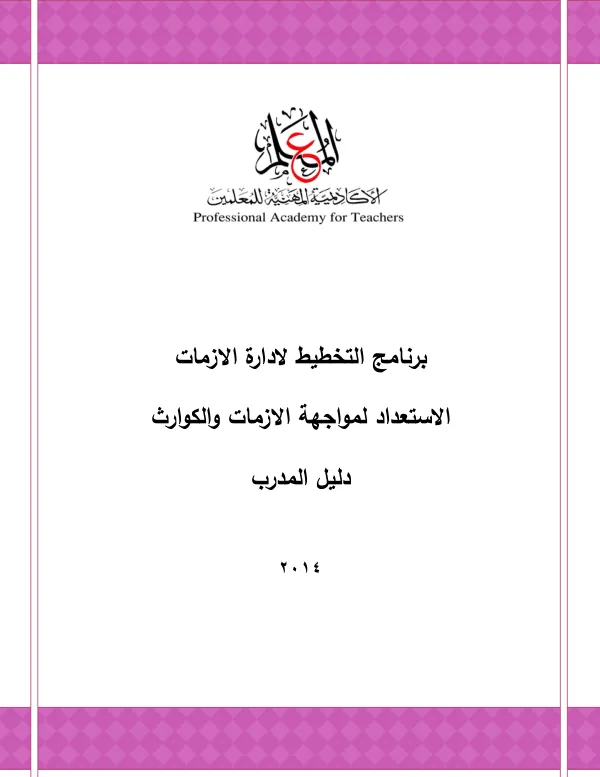
برنامج التخطيط وإدارة الأزمات
The emergency management initiative in the Arab region began with the establishment of the Arab Emergency Management Network in 2018.
2014 · 67 pages
Sign in to readA free account is required to download.
Abstract
The network aimed to enhance the preparedness and response capabilities of Arab countries to disasters and emergencies. The initiative was led by the Arab Emergency Management Center, which was established in 2019. The Arab Emergency Management Center conducted a comprehensive assessment of the emergency management capabilities of Arab countries, identifying key challenges and gaps in the sector. The assessment revealed that many Arab countries lacked effective emergency management systems, leading to inadequate response to disasters and emergencies. To address these challenges, the Arab Emergency Management Center developed a comprehensive emergency management framework, which included guidelines for emergency preparedness, response, and recovery. The framework was designed to be adaptable to the specific needs of each Arab country. The framework emphasized the importance of community-based emergency management, highlighting the need for active participation of local communities in emergency preparedness and response efforts. It also stressed the importance of collaboration and coordination among emergency management stakeholders, including government agencies, non-governmental organizations, and the private sector. The Arab Emergency Management Center conducted a series of training programs for emergency management officials and practitioners, focusing on topics such as emergency preparedness, response, and recovery, as well as disaster risk reduction and management. The training programs were designed to enhance the capacity of emergency management officials to develop and implement effective emergency management plans. The initiative also emphasized the importance of disaster risk reduction and management, highlighting the need for proactive measures to mitigate the impact of disasters and emergencies. The Arab Emergency Management Center developed a comprehensive disaster risk reduction and management framework, which included guidelines for disaster risk assessment, mitigation, and management. The framework emphasized the importance of integrating disaster risk reduction and management into national development plans and strategies, highlighting the need for a holistic approach to disaster risk management. It also stressed the importance of collaboration and coordination among disaster risk management stakeholders, including government agencies, non-governmental organizations, and the private sector. The Arab Emergency Management Center conducted a series of workshops and conferences to raise awareness about the importance of emergency management and disaster risk reduction and management. The workshops and conferences brought together emergency management officials, practitioners, and stakeholders from across the Arab region, providing a platform for sharing experiences and best practices. The initiative also emphasized the importance of research and development in emergency management and disaster risk reduction and management. The Arab Emergency Management Center conducted a series of research studies on emergency management and disaster risk reduction and management, focusing on topics such as emergency preparedness, response, and recovery, as well as disaster risk assessment, mitigation, and management. The research studies aimed to enhance the understanding of emergency management and disaster risk reduction and management in the Arab region, highlighting the need for evidence-based decision-making in emergency management and disaster risk reduction and management. The research studies also aimed to identify best practices and lessons learned in emergency management and disaster risk reduction and management, providing a basis for policy and decision-making. The Arab Emergency Management Center also developed a comprehensive emergency management information system, which included a database of emergency management stakeholders, a repository of emergency management plans and policies, and a platform for sharing emergency management information and best practices. The information system aimed to enhance the transparency and accountability of emergency management efforts in the Arab region, highlighting the need for effective communication and coordination among emergency management stakeholders. It also aimed to provide a platform for sharing emergency management information and best practices, enhancing the capacity of emergency management officials and practitioners to develop and implement effective emergency management plans. The initiative also emphasized the importance of international cooperation and collaboration in emergency management and disaster risk reduction and management. The Arab Emergency Management Center established partnerships with international organizations and agencies, including the United Nations Office for Disaster Risk Reduction, the International Federation of Red Cross and Red Crescent Societies, and the World Meteorological Organization. The partnerships aimed to enhance the capacity of the Arab Emergency Management Center to develop and implement effective emergency management plans, highlighting the need for international cooperation and collaboration in emergency management and disaster risk reduction and management. They also aimed to provide a platform for sharing emergency management information and best practices, enhancing the capacity of emergency management officials and practitioners to develop and implement effective emergency management plans. The initiative also emphasized the importance of community-based emergency management, highlighting the need for active participation of local communities in emergency preparedness and response efforts. The Arab Emergency Management Center conducted a series of community-based emergency management programs, focusing on topics such as emergency preparedness, response, and recovery, as well as disaster risk reduction and management. The programs aimed to enhance the capacity of local communities to develop and implement effective emergency management plans, highlighting the need for community-based emergency management. They also aimed to provide a platform for sharing emergency management information and best practices, enhancing the capacity of emergency management officials and practitioners to develop and implement effective emergency management plans.