MINISTRY OF HEALTH
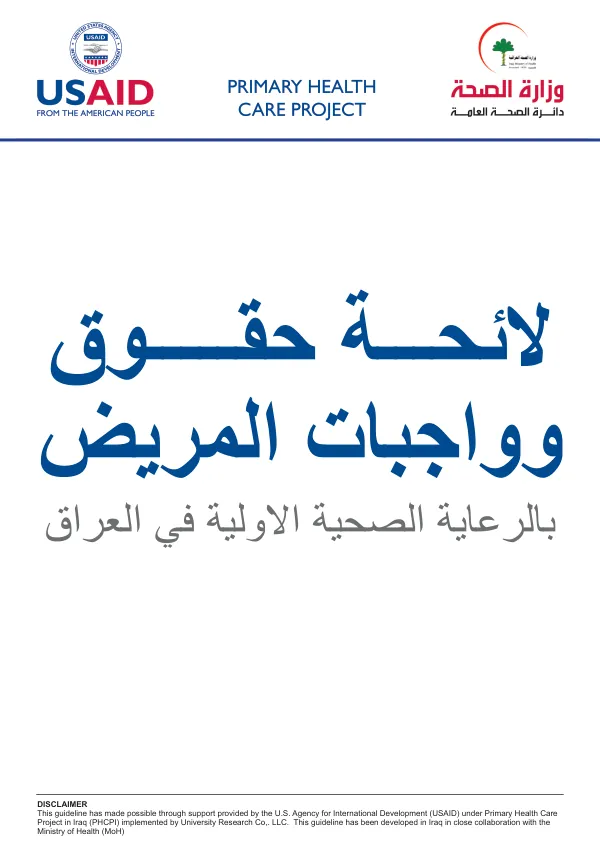
الئحة حقوق المريض في العراق
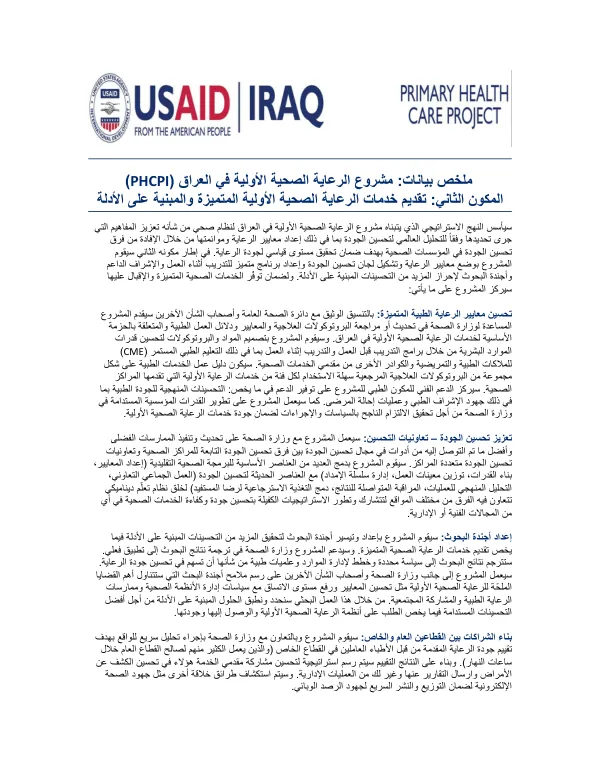
The Primary Health Care Project in Iraq (PHCPI) is a project implemented by University Research Co., LLC, with support from the U.S.
2014 · 12 pages
Sign in to readA free account is required to download.
Abstract
Agency for International Development (USAID). The project aims to improve the quality of primary healthcare services in Iraq, with a focus on promoting patient rights and empowerment. The project has developed a set of guidelines for patient rights in Iraq, which are based on the country's Constitution and international human rights standards. The guidelines outline the rights and responsibilities of patients, healthcare providers, and healthcare facilities. The guidelines emphasize the importance of patient autonomy, dignity, and confidentiality. Patients have the right to receive information about their health status, treatment options, and medical records. They also have the right to make informed decisions about their care, including the right to refuse treatment. Healthcare providers have a responsibility to respect patients' rights, including the right to confidentiality and the right to receive information about their health status. They must also provide patients with clear and accurate information about their treatment options and the potential risks and benefits of each option. The guidelines also emphasize the importance of patient-centered care, which involves involving patients in decision-making about their care and respecting their preferences and values. Patients have the right to participate in decisions about their care, including the right to refuse treatment and the right to receive information about their medical records. The project has developed a strategy for implementing the guidelines, which includes training healthcare providers, promoting patient education and awareness, and monitoring and evaluating the effectiveness of the guidelines. The project also aims to engage with stakeholders, including patients, healthcare providers, and policymakers, to promote the adoption and implementation of the guidelines. The guidelines are based on the following principles: * Patients have the right to receive information about their health status, treatment options, and medical records. * Patients have the right to make informed decisions about their care, including the right to refuse treatment. * Healthcare providers have a responsibility to respect patients' rights, including the right to confidentiality and the right to receive information about their health status. * Patients have the right to participate in decisions about their care, including the right to refuse treatment and the right to receive information about their medical records. * Patients have the right to receive care that is respectful, compassionate, and culturally sensitive. The guidelines are divided into several sections, including: * The right to confidentiality: Patients have the right to confidentiality, including the right to keep their medical records private. The guidelines also outline the responsibilities of healthcare providers, including: * Providing patients with clear and accurate information about their treatment options and the potential risks and benefits of each option. * Respecting patients' rights, including the right to confidentiality and the right to receive information about their health status. * Involving patients in decisions about their care, including the right to refuse treatment and the right to receive information about their medical records. * Providing patients with care that is respectful, compassionate, and culturally sensitive. The project aims to promote the adoption and implementation of the guidelines through a range of activities, including: * Training healthcare providers on the guidelines and their implementation. * Promoting patient education and awareness about the guidelines and their importance. * Monitoring and evaluating the effectiveness of the guidelines. * Engaging with stakeholders, including patients, healthcare providers, and policymakers, to promote the adoption and implementation of the guidelines. Overall, the guidelines aim to promote patient-centered care and respect for patients' rights in Iraq, and to improve the quality of primary healthcare services in the country.
Related documents