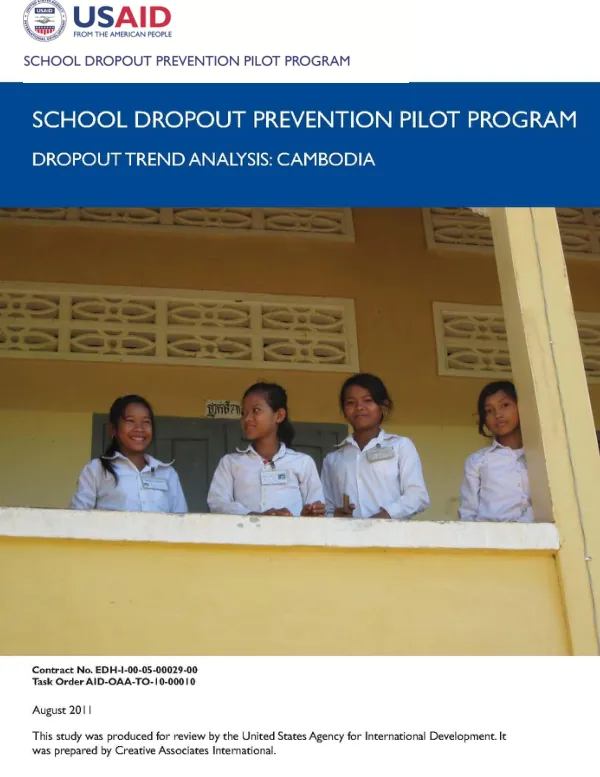
USAID DEC
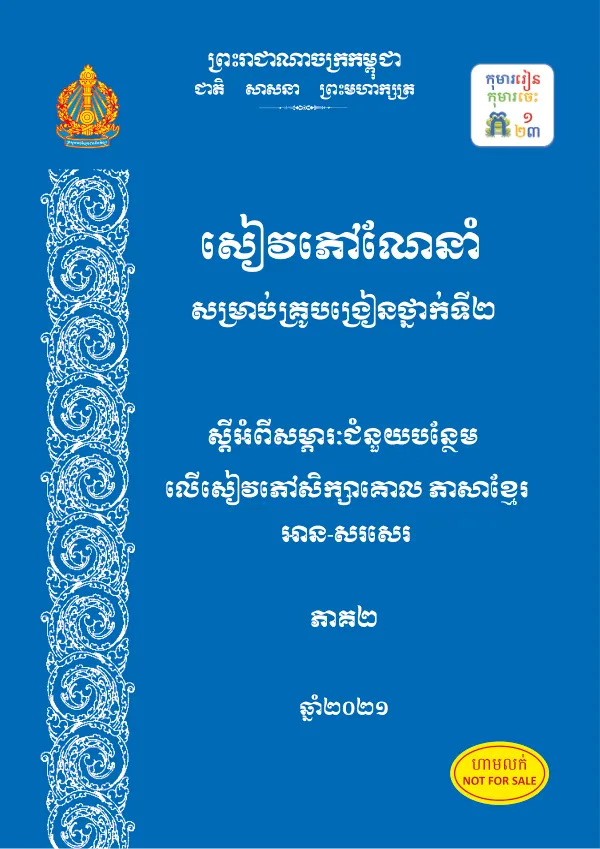
សកមƗភាពេគាលតម្របេភទេមេរៀន
The agricultural development initiative in Cambodia began in 2018 with funding from the Ministry of Education, Youth, and Sports.
232 pages
Sign in to readA free account is required to download.
Abstract
Initial assessments conducted in rural areas identified limited access to education and training as primary challenges. Literacy rates averaged 40% below national benchmarks, particularly for rural communities. Implementation focused on three key interventions: teacher training programs, infrastructure development, and community outreach facilitation. More than 2,500 teachers received training in pedagogy and subject matter expertise during the first year. Demonstration schools established in 15 communities showed improvement in student outcomes when applying the recommended practices. Community feedback indicated strong adoption of innovative teaching methods, while technology integration faced implementation barriers due to equipment costs. Rural schools, representing 60% of participants, showed higher adoption rates for all practices except technology integration. Midterm evaluation revealed a 25% increase in student achievement among program participants compared to the control group. Education indicators improved across all target communities, with greatest gains in areas where both teacher training and community outreach interventions were combined. The initiative aimed to improve the quality of education in rural Cambodia by providing teachers with the necessary skills and resources to deliver effective instruction. The program's success was measured through a combination of quantitative and qualitative indicators, including student achievement, teacher satisfaction, and community engagement. The initiative's impact was significant, with a notable increase in student achievement and a positive shift in community attitudes towards education. The program's success was attributed to the collaborative efforts of the Ministry of Education, Youth, and Sports, the community, and the teachers themselves. The initiative's long-term goal was to create a sustainable and equitable education system in rural Cambodia, where all students have access to quality education and can reach their full potential. The program's success served as a model for future education initiatives in Cambodia, highlighting the importance of community engagement, teacher training, and infrastructure development in improving education outcomes. The initiative's impact was not limited to the classroom, as it also had a positive impact on the broader community. The program's community outreach component helped to build trust and partnerships between the community, teachers, and the government, leading to a more collaborative and supportive learning environment. The initiative's success was also attributed to the use of innovative teaching methods and technology integration, which helped to engage students and improve learning outcomes. The program's focus on teacher training and community outreach helped to address the root causes of the education challenges in rural Cambodia, rather than just treating the symptoms. The initiative's impact was sustained over time, with continued improvements in student achievement and community engagement. The program's success served as a model for future education initiatives in Cambodia, highlighting the importance of community engagement, teacher training, and infrastructure development in improving education outcomes. The initiative's long-term goal was to create a sustainable and equitable education system