USAID DEC
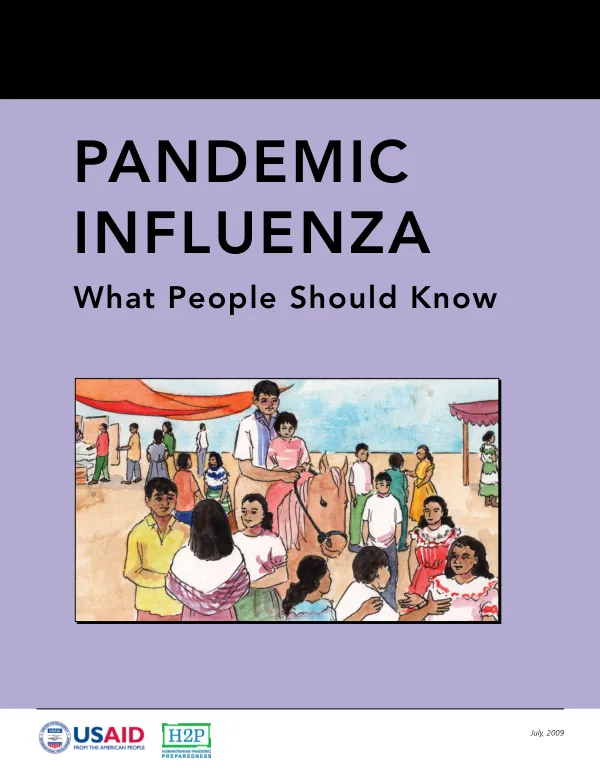
PANDEMIC INFLUENZA What People Should Know
The pandemic influenza virus can cause a range of symptoms, including coughing, sore throat, fever, headache or body aches, fatigue, and diarrhea or vomiting, especially in children.
2009 · 20 pages
Sign in to readA free account is required to download.
Abstract
Most people will only experience some of these symptoms. Influenza can be spread through breathing in air that contains droplets from the nose and mouth of a sick person, touching things that a sick person has touched, or being in close proximity to others in crowded areas. Influenza can be spread by individuals who appear healthy but are still contagious. People can help prevent the spread of influenza by taking several precautions. Covering the mouth and nose with a cloth or tissue when coughing or sneezing is essential. If a cloth or tissue is not available, coughing or sneezing into the crook of the elbow is recommended. Washing hands with soap and water is also crucial, especially before and after preparing food, before and after eating, and after using the toilet. Separating individuals who are ill from others in the household is another effective way to prevent the spread of influenza. Keeping a distance of at least 2 meters from people who are sick is also recommended. Washing hands correctly with soap and water involves wetting hands with water, rubbing hands with soap, rubbing the palms together, rubbing the back of each hand with the other hand, washing the spaces between fingers, washing under the nails, washing the wrists, and rinsing well with water. In addition to personal hygiene practices, it is essential to clean objects that are touched by a person with the flu. This includes items such as door handles, lamps, sinks, tables, linens, and eating utensils. Using soap and water is necessary to kill the germs that cause influenza. By following these guidelines, individuals can reduce the risk of contracting and spreading the pandemic influenza virus.
Related documents