EVALUATION TECHNOLOGIES, INC.
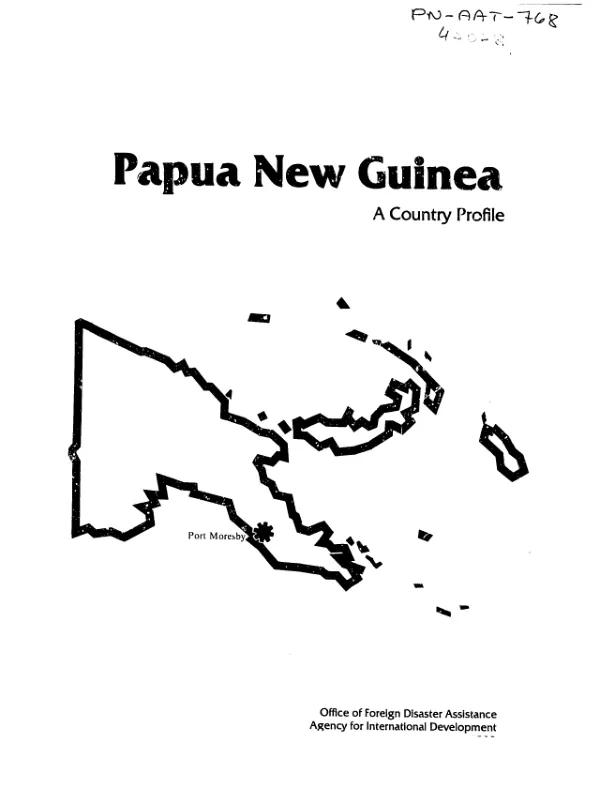
Papua New Guinea : a country profile
Sufficient rainfall, rich soils, moderate temperatures, and low population densities make Papua New Guinea a land of high agricultural and economic potential.
1985
Sign in to readA free account is required to download.
Abstract
This report profiles the disaster preparedness of Papua New Guinea highlighting the dangers posed by earthquakes and volcanic eruptions. Papua New Guinea is situated in a highly active seismic area and strong earthquakes capable of inflicting severe damage occur with relative frequency. Between 1967 and 1985, 11 major earthquakes caused numerous deaths and significant infrastructural damage. Tsunamis and landslides frequently accompany such earthquakes and result in additional damage to coastal areas and mountain regions. In addition, Papua New Guinea has 14 active and 22 dormant volcanoes which threaten the lives of some 204,000 people living in a 16,000-sq km area. Eight of the country"s 14 active volcanoes have erupted within the past century - an eruption in 1951 killed 3,000 people and devastated 230 sq kms of surrounding land. Cyclones, floods, and frost occur less frequently, but can sometimes result in heavy damage and/or loss of life. Increasing erosion has deposited large amounts of alluvial soil in lowland areas creating swamps and flood plains. The profile also covers such topics as health, economy, population, and government.
Connected topics
Related documents