USAID|MALAWI
Participant Guide-Engaging Families of Children with Disabilities
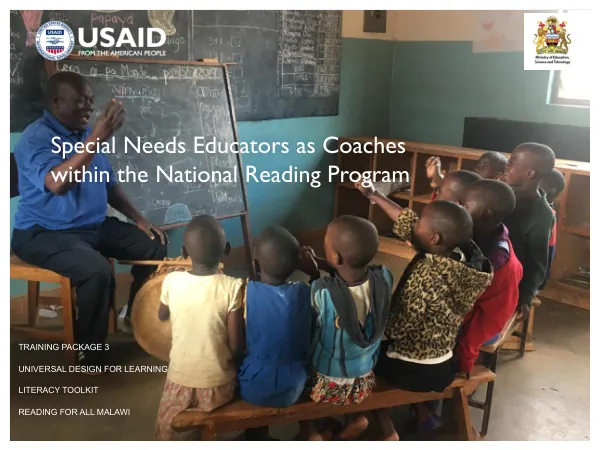
The Universal Design for Learning Literacy Toolkit is a participant guide designed to engage families of children with disabilities in Malawi.
16 pages
Sign in to readA free account is required to download.
Abstract
The toolkit is part of the Reading for All Malawi Activity, which aims to improve literacy skills among children with disabilities. The guide is intended for use by coaches and trainers who will work with families to support their children's literacy development. The toolkit emphasizes the importance of family engagement in a child's education, particularly for children with disabilities. It highlights the benefits of family engagement for the child, parents and families, and schools. These benefits include increased school attendance, improved attainment and achievement, increased motivation, higher levels of confidence and self-esteem, better social skills, improved behavior, and increased support for the school. The guide provides tips for families to improve their child's reading skills, including conducting after-school reading activities, ensuring books and other reading materials are available at home, guiding after-school reading lessons, creating literacy teaching and learning resources, and liaising with class teachers on learners' reading needs. For children with specific learning difficulties, such as blindness or deafness, the guide offers additional suggestions for supporting their literacy development. The toolkit also includes a case study of a child named Temwa, who is blind and enrolled in a primary school. The case study highlights the importance of involving families in their child's education and the need for schools to make families more engaged. The guide encourages families to observe their children's behavior at home, ask them questions about their school day, and talk to their child's teacher to better understand their child's needs. The toolkit includes several activities for coaches and trainers to work with families, including role-playing interventions for improved literacy at home. One such intervention is storytelling, which can take place anytime, anywhere, and can be done by anyone, including community members who are not fluent or confident readers. Storytelling can be used to tell meaningful, enjoyable, and curriculum-relevant stories to children, and can be done at home or in a communal village area. Overall, the Universal Design for Learning Literacy Toolkit is a valuable resource for coaches, trainers, and families in Malawi who are working to improve literacy skills among children with disabilities. The guide provides practical tips and strategies for supporting children's literacy development and emphasizes the importance of family engagement in a child's education.