USAID
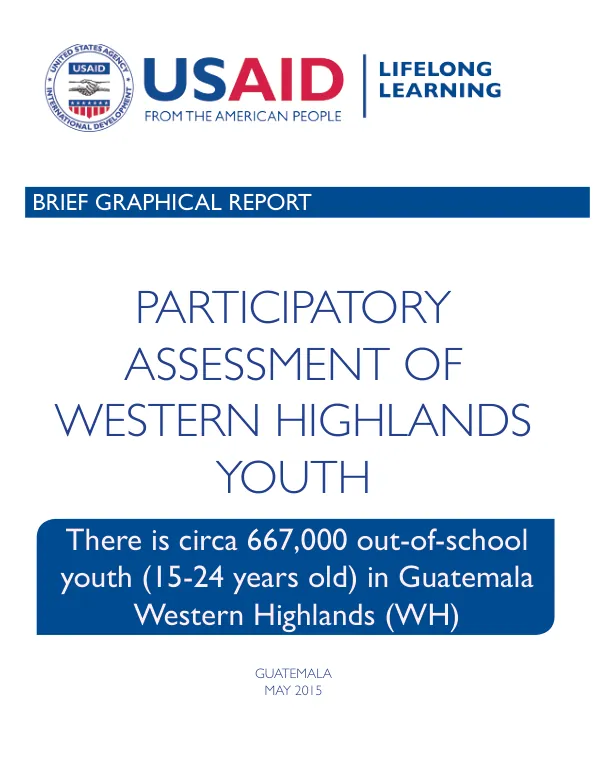
Participatory Assessment of Western Highlands Youth in Guatemala
The Western Highlands Youth Participatory Assessment in Guatemala was conducted in May 2015.
2015 · 3 pages
Sign in to readA free account is required to download.
Abstract
The assessment aimed to understand the challenges faced by out-of-school youth in the region. Approximately 667,000 youth aged 15-24 years old are out of school in the Western Highlands, representing 24% of the total out-of-school youth population in Guatemala. The survey revealed that 47% of out-of-school youth expect to live in poverty, while 14% consider themselves to be victims of violence. A significant proportion of youth, 44% of men and 33% of women, were looking for a job during the survey. The average wage received by youth with at least 9 years of schooling was $174, while those with less than 9 years of schooling earned an average of $141. Notably, 80% of youth earned less than the minimum wage of $300 in their last job. The assessment also highlighted the importance of education in improving job opportunities. A significant proportion of youth, 80%, reported interest in attending a workforce training center to attain better job opportunities. However, limited local opportunities for workforce training and education are available, leading to internal and external migration as an alternative for youth. The survey results also showed that economic problems are the main reason youth dropped out of school, followed by personal and family problems. The majority of youth, 60.7%, have upper secondary education, while 26% have primary education and 31% have lower secondary education. The assessment also found that 95% of urban areas have electricity at home, while only 23% of rural areas have drainage and sewage systems. The assessment was conducted in 12 municipalities through mixed research methods, with fieldwork conducted from December 2014 to February 2015. A total of 11,900 households were visited, and 1,227 women and 1,221 men were surveyed. The sample characteristics showed that 76% of the surveyed youth were indigenous, while 77% were non-indigenous. The assessment highlighted the need for targeted interventions to address the challenges faced by out-of-school youth in the Western Highlands. The assessment also found that 40% of out-of-school youth in Guatemala reside in the Western Highlands. Economic conditions at home drive youth to begin working before turning 15 years old, and the probability of achieving 9 years of education diminishes due to various factors, including parents not attending school, women marrying younger, and economic problems. The assessment emphasized the importance of addressing these challenges to improve the education and employment prospects of out-of-school youth in the Western Highlands.